 by Don'tForgetDad Team
Taking a loved one for their annual flu shot is a wonderful act of care. It’s a small step that provides a big shield of protection. The most important thing to know after a flu shot is that any reactions are usually mild, temporary, and a sign that their body is building powerful protection against the influenza virus.
What to Expect After Your Loved One Gets a Flu Shot
Getting a flu shot is a simple yet profound way to protect someone you care about, especially seniors or those with other health conditions. It's natural to feel a little worried, wondering how they’ll feel afterward. Will their arm be sore? Will they feel tired?
The wonderful news is that for almost everyone, any effects are very manageable and fade quickly.
Think of these reactions not as a problem, but as a quiet signal that the vaccine is doing its important work—teaching their immune system how to recognize and fight off the real flu virus. It’s a bit like a fire drill for their body; it’s just a practice run, not the real thing.
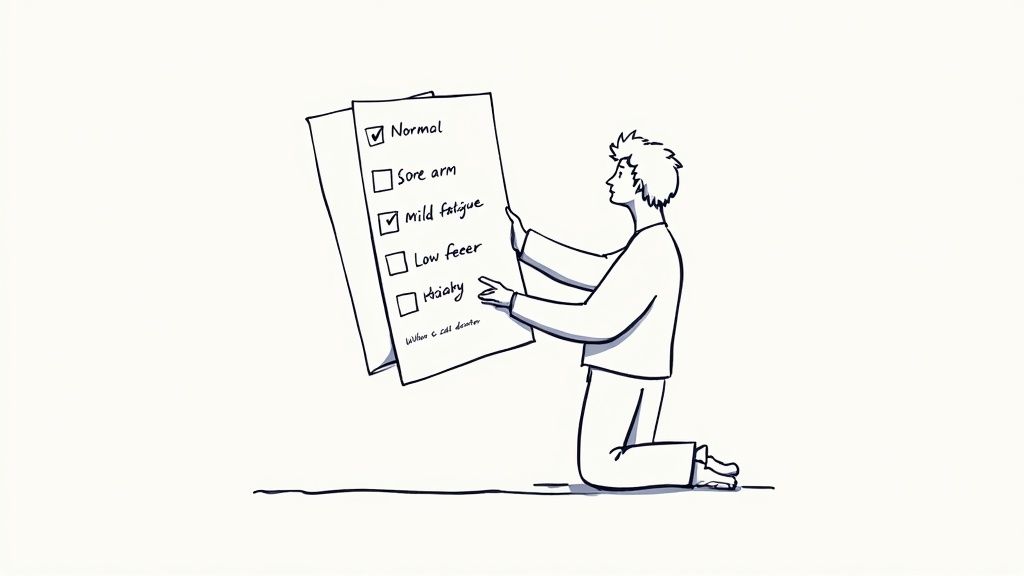
This brief period of adjustment is a small price for a season of much-needed protection. Knowing what's normal can turn a moment of worry into a feeling of reassurance and confidence.
To help you feel prepared, here is a simple guide to tell the difference between typical, mild side effects and the rare signs that might mean it’s time to call a doctor.
Quick Guide: Normal Reactions vs. When to Call a Doctor
It's helpful to have a quick reference for what's perfectly normal versus what might need a professional opinion. This little chart breaks down the common signals from the very rare ones.
| Symptom | What It Usually Means | What You Can Do |
|---|---|---|
| Soreness, redness, or swelling where the shot was given | This is the most common reaction. It's a local response as the body begins building immunity. | Apply a cool, damp cloth to the area and encourage gentle arm movement. |
| Low-grade fever (under 101°F / 38.3°C) | This is a positive sign the immune system is activated and learning to fight the virus. | Encourage rest and plenty of fluids like water, juice, or warm tea. |
| Mild body aches or a headache | This shows the body is having a normal, full-body response to the vaccine. | Rest is the best medicine. You can also talk to a pharmacist about appropriate over-the-counter pain relievers if needed. |
| High fever, hives, or difficulty breathing | These are very rare but could be signs of a more serious reaction. | Seek medical attention right away. Your peace of mind and their safety are the top priority. |
Seeing these mild, temporary signs can actually be comforting—it’s physical proof that their immune system is gearing up for the season ahead.
Why Mild Side Effects Are Actually a Good Sign
It's completely natural to feel a little worried when a loved one feels under the weather after their flu shot. Your first instinct is to make them comfortable, and seeing them tired or achy can be unsettling. But here’s the reassuring truth: those mild symptoms aren't just normal—they're a positive sign that the vaccine is doing its job.

Think of their immune system as a student who needs to get ready for a big test—in this case, the flu season. The flu shot acts like the perfect study guide. It gives their immune system all the key information about the flu virus without making them take the real, difficult test completely unprepared.
The Immune System at Work
When your loved one gets those mild aches, a low-grade fever, or feels a bit of fatigue after the shot, it’s simply their body hitting the books. This is their immune system hard at work, recognizing the components in the vaccine and building a powerful defense plan. It’s like the student is highlighting key passages and making flashcards.
This gentle response is the body creating protective antibodies. These are the specialized defenders that will be ready to leap into action if the actual flu virus ever shows up. It's a dress rehearsal for the real thing.
Imagine your father feels tired the day after his shot. He might say he feels like he "overdid it," but what’s really happening is that his body is busy building an invisible shield. The vaccine provided the blueprint, and that feeling of fatigue is just the energy his body is using to construct its defenses.
This is why doctors and nurses will often tell you that mild side effects are a good thing. They are the physical evidence that the immune system has been activated and is learning. Most of these effects, like a sore arm or feeling run-down, typically last only one to three days.
Turning Worry into Reassurance
Understanding this process can help turn that feeling of anxiety into a sense of confidence. You're not just seeing side effects; you're witnessing the incredible protective work happening inside their body. Every mild ache is a sign of a stronger defense being built for the months ahead.
So, when your mom mentions her arm is a little tender, you can confidently explain that it’s just her body practicing its moves. This small inconvenience now is a powerful investment in her health for the entire flu season.
A hopeful takeaway: Embrace these gentle signs as proof of protection. By encouraging rest and offering comfort, you are supporting their body as it prepares to keep them safe all season long.
A Day-by-Day Timeline for Post-Vaccine Care
Knowing what to expect can make the time after a flu shot much less stressful, both for you and the person you care for. The good news is that most reactions are very mild and tend to follow a pretty predictable pattern. Let's walk through a gentle day-by-day guide so you can feel confident and prepared.
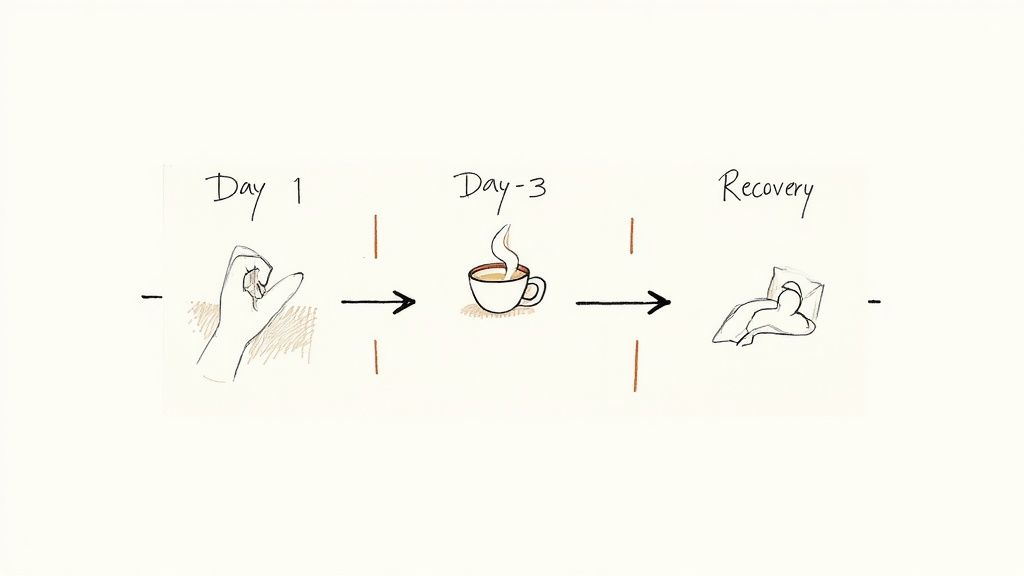
It helps to think of this as a quiet couple of days where their body is simply gearing up and getting stronger. By understanding the typical timeline, you can offer the right kind of comfort and reassurance at just the right time.
The First 24 Hours
The most common guest to arrive in the first day after a flu shot is a sore arm. Your loved one might mention that the injection site feels a little tender, looks a bit red, or is slightly swollen. This is perfectly normal and is, by far, the most frequent side effect people experience.
Imagine your dad got his shot in the morning. By that evening, he might tell you his shoulder feels a little achy—kind of like a muscle does after a good stretch. That’s actually a great sign his immune system is already responding right where the vaccine was introduced.
A sore arm is usually the main event of day one. It just means the body’s local immune cells have noticed the vaccine and are starting their important work of building protection.
A little gentle movement can actually help ease this discomfort. Encouraging him to slowly rotate his arm a few times can prevent it from getting too stiff.
Days Two and Three
As you move into the second and third days, you might notice a few other mild signs that their immune system is fully engaged. This is when things like a little fatigue, a mild headache, or some slight body aches might pop up. These feelings are also very common and won't stick around for long.
For example, your mom might feel like taking an extra nap or just want a quiet afternoon on the couch. This isn't a sign of illness; it’s simply her body dedicating energy to creating those powerful antibodies.
These symptoms typically last only one to three days and are a signal of a job well done by their immune system. They're just the background hum of an effective vaccine at work. By day three, most people find these feelings have faded away, leaving behind robust protection for the flu season.
If you’re managing care for a loved one from a distance, a simple tool like the Don’tForgetDad app for Android can be a big help. You can use it to set a quick reminder for yourself to call and check in on them during this period.
One small tip: Keep a comforting cup of tea or a glass of water nearby for them. Staying hydrated is a simple but effective way to help their body feel its best as it builds immunity.
Simple and Effective Comfort Measures
When someone you love feels under the weather, your first instinct is to make them comfortable. After a flu shot, even those mild, temporary side effects can be a little worrying for them, but your gentle support can make all the difference. It’s the simple, thoughtful things that ease their discomfort and make the whole experience feel smooth and reassuring.
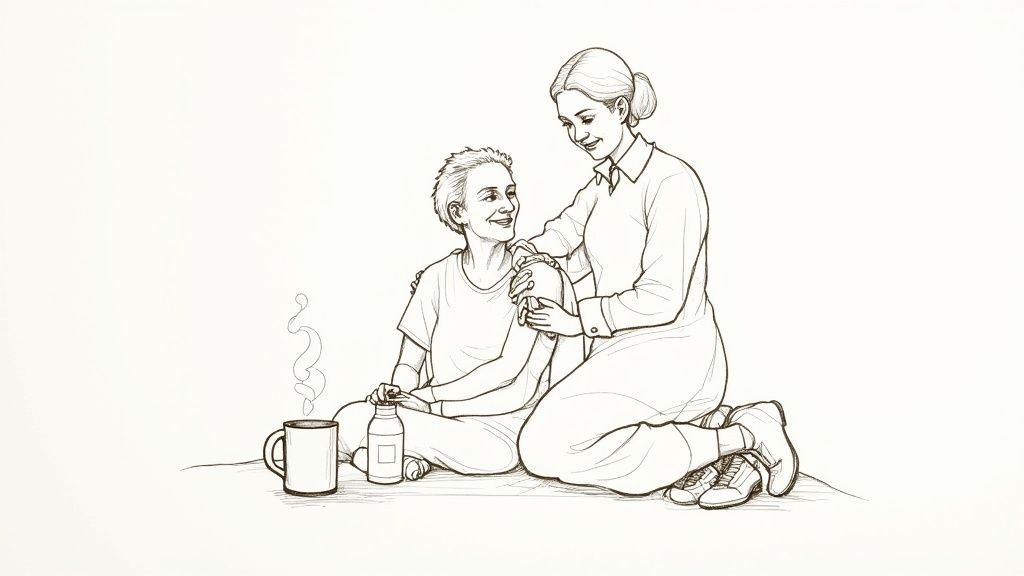
The goal isn't to magically erase every little ache. It’s about offering a calming presence and practical relief. Small gestures of care show them you're there, turning what could be a minor inconvenience into a moment of connection.
For a Sore Arm
The most common complaint after a flu shot is a tender, heavy-feeling arm. This localized soreness is actually a great sign—it means their immune system is getting right to work where the vaccine was given.
- Apply a Cool Compress: A clean washcloth dipped in cool water and placed on the injection site for 10 to 15 minutes can work wonders. It helps dial down the swelling and soothes that achy feeling.
- Encourage Gentle Movement: It might sound backward, but moving the arm a little actually helps. Encourage your loved one to do slow, gentle arm circles or simply raise and lower their arm throughout the day. Just be sure they avoid any heavy lifting or strenuous activity.
For General Aches and Fatigue
If your loved one feels tired or has some mild body aches, it just means their body is putting its energy into building powerful protection against the flu. This is the perfect time for them to rest and relax.
Think of it as their body’s quiet work time. By encouraging rest, you're giving their immune system the space and resources it needs to do its job effectively.
Offer them a cozy blanket, put on their favorite movie, or just sit with them for a quiet chat. Staying hydrated is also key. A warm cup of herbal tea or a simple glass of water can be very comforting and helps their body feel its best.
For those body aches, a headache, or a low-grade fever, it's always smart to consult a doctor or pharmacist before reaching for over-the-counter pain relievers like acetaminophen or ibuprofen. They can recommend the right option based on your loved one’s health history and other medications they might be taking.
For more caregiver tips and health guides, feel free to explore the other articles on the Don’tForgetDad blog.
Here’s a quick-reference table to help you match the right comfort measure to what they're feeling.
Comfort Tips for Common Side Effects
| If They Feel... | Try This Comfort Measure | Why It Helps |
|---|---|---|
| A Sore Arm | Apply a cool, damp cloth to the injection site for 10-15 minutes. | The coolness helps reduce local swelling and provides a soothing, numbing sensation. |
| Stiff or Heavy Arm | Encourage gentle arm movements, like slow circles or stretches. | Movement increases blood flow to the area, which can help ease stiffness and soreness. |
| Tired or Fatigued | Offer a cozy blanket, a quiet space, and encourage them to rest. | Rest conserves energy, giving their immune system the fuel it needs to build antibodies efficiently. |
| Generally Achy | Prepare a warm (not hot) bath or offer a comforting cup of herbal tea. | Warmth can help relax sore muscles, while hydration supports overall bodily function. |
| Headachy | Dim the lights, reduce noise, and offer a cool cloth for their forehead. | This creates a calm environment, reducing sensory input that can make a headache feel worse. |
A little extra care truly goes a long way in these situations. Remember, your supportive presence is often the most powerful comfort measure of all.
How Well Does the Flu Shot Really Work?
So, you've helped your loved one get their flu shot and held their hand through a sore arm or a bit of fatigue. Now comes the big question that every caring person asks: "How well does this actually work?" It's a great question, one that comes from a place of wanting to know you’ve done everything you can to keep them safe.
The simplest way to think about it is this: the flu shot is like a really good seatbelt. It can't prevent every single fender bender, but it dramatically lowers the risk of a serious, life-threatening crash. And when you're looking out for an older adult, preventing the big crashes is what matters most.
A Shield Against Serious Illness
The main job of the annual flu shot, especially for seniors, isn't just to stop a case of the sniffles. Its real purpose is to prevent the heavy hitters: severe illness, a trip to the hospital, and dangerous complications like pneumonia. And at that job, it truly shines. Even if someone who’s been vaccinated does get the flu, their illness is almost always much milder than it would have been otherwise.
Let’s play that out. Imagine your dad gets his flu shot in October. In January, he gets exposed to a nasty flu bug that’s going around. Instead of being completely knocked out with a high fever and a hacking cough for a week, his immune system—which has been training for this moment—kicks into gear. He might just feel a bit run-down and stuffy for a couple of days. That's a huge win, and it's the kind of difference that keeps him out of the hospital.
The real power of the flu shot is its ability to turn a potentially dangerous illness into something manageable. It's a proactive step that takes the teeth out of the flu virus, protecting your loved one's health and quality of life.
For any caregiver, that’s a powerful dose of reassurance.
Putting Protection into Perspective
So, what do the numbers actually look like? When the vaccine is a good match for the flu viruses circulating that year, it's a solid defender. On average, data shows that getting a flu shot can reduce your risk of having to go to the doctor for the flu by 40% to 60%. Recent studies in the UK have also consistently found that the vaccine prevents a significant number of flu cases across all age groups, season after season. To get a deeper look at the data, you can explore more about these vaccine effectiveness findings and see the protective power for yourself.
When you look at it that way, a day or two of minor post-shot discomfort is an incredibly worthwhile trade for a whole season of robust protection. By encouraging your loved one to get vaccinated, you’re giving them a vital tool to stay healthier and safer all winter long.
That small act of care provides a big shield of protection. It's a decision that helps ensure they can keep enjoying their routines, their hobbies, and their time with family, without the serious risks of the flu hanging over their heads.
Protecting Your Whole Family After the Shot
When one of your loved ones gets their annual flu shot, the protection doesn't just stop with them. It radiates outward, creating a wonderful ripple effect of safety that benefits everyone under your roof. It’s one of the simplest yet most powerful ways to guard your entire family.
Think of it as a neighborhood watch, but for germs. When one person gets vaccinated, they become like a vigilant neighbor, making it much harder for the flu virus to spread from house to house—or in this case, from person to person. The more family members who join the watch, the safer the entire neighborhood becomes.
Creating a Shield of Protection
This idea is often called community immunity, and it’s a beautiful example of how we protect each other. When your loved one gets their shot, they are helping build a protective shield around the most vulnerable people in their lives. This includes young grandchildren who are too little to be vaccinated, or other family members with health conditions that weaken their immune systems.
For instance, if your partner is managing a chronic illness, your father getting his flu shot directly lowers their risk of getting sick. His immunity becomes part of their defense. It’s a quiet but profound way of saying, “I’m looking out for you.”
This shared protection reinforces the idea that getting vaccinated isn't just a personal health choice; it's an act of love for the entire family. It builds a sense of shared purpose and makes your home a safer space for everyone.
The impact of this is real and measurable. Studies show that a flu shot’s effectiveness in preventing flu infections among household members is estimated at 21.0%. This means a vaccinated person is significantly less likely to pass the virus to someone they live with, and the protection against influenza B is even stronger. You can read the full research about these household protection findings to learn more.
By choosing vaccination, you aren’t just caring for one person; you're strengthening the health of your entire household. It’s a small effort that delivers a big, comforting sense of security all season long.
Common Questions from Caregivers
Even after you've done all the research, it’s completely normal to have a few questions rattling around in your head. That desire to be fully prepared is a reflection of how much you care. Let's walk through some of the most common concerns we hear from families after a loved one gets a flu shot.
Can the Flu Shot Give My Loved One the Flu?
This is such an understandable worry, but we have great news: it is impossible to get the flu from the flu shot. The vaccines use viruses that are either inactivated (meaning, they're not living) or just a single piece of the virus. Neither of these can cause an actual infection.
What your loved one might be feeling—like some mild aches or a bit of fatigue—is actually a good thing. It’s simply their immune system firing up and learning how to recognize the real flu virus. It's a sign that the vaccine is doing its job and building a strong defense, all without the actual illness.
How Long Until the Flu Shot Starts Working?
That’s a wonderful question. After the shot, the body needs about two weeks to build up its full protective forces. Think of it as a training period for their immune system.
This is exactly why doctors recommend getting vaccinated in early fall, well before flu season really kicks into high gear. It gives the body plenty of time to get ready, ensuring that protection is at full strength when it's needed most.
Why Bother If It's Not 100% Effective?
It's true that no vaccine is perfect, but the flu shot provides a powerful layer of defense that can make a huge difference. For example, recent data from a Southern Hemisphere flu season showed that the vaccine offered about 50% protection against both clinic visits and hospitalizations due to influenza.
For older adults specifically, the vaccine’s effectiveness against hospitalization was nearly 38%—a significant reduction in risk that could prevent a serious health crisis. You can learn more about these vaccine protection findings and see how it truly makes a difference.
When Should I Call a Doctor About a Reaction?
Trust your instincts on this one. While most reactions are very mild and short-lived, you should call a doctor if your loved one shows signs of a severe allergic reaction (like hives, swelling of the face, or difficulty breathing), has a persistent high fever, or if the soreness at the injection site gets much worse after a day or two.
If you ever have a concern that you just can't shake, our team is always here to help. Please feel free to contact us with your questions.
A Final Takeaway: You've taken a wonderful, proactive step to protect your loved one. Now, the best thing you can do is offer comfort, encourage rest, and feel confident in the powerful shield you’ve helped them build.
Coordinating care can be challenging, but you don't have to do it alone. With Don’tForgetDad, you can set up simple, shared reminders for medication, appointments, and daily check-ins, ensuring everyone in the family stays on the same page. Bring peace of mind to your caregiving journey by visiting https://dontforgetdad.com.