 by Don'tForgetDad Team
Stepping into a caregiving role for a parent is a journey of love, but it can feel like navigating a complex maze without a map. Suddenly, you're juggling doctor's appointments, medication schedules, and safety concerns, all while trying to honor their independence and protect your own well-being. It’s a profound act of devotion, and it’s completely normal to feel overwhelmed at first.
This guide is designed to be your map. We’ve created a comprehensive elderly parent care checklist to transform this immense responsibility into manageable, gentle steps. Think of this less as a list of chores and more as a warm framework for creating a supportive, safe, and loving environment for your parent. It's about feeling prepared and organized, so you can focus more on the precious time you have together.
From organizing crucial medical papers to making their home a little safer, this checklist covers the essential pillars of heartfelt care. We'll walk you through each area with simple, practical advice, sharing real-world scenarios that caregivers like you face every day. Our goal is to help you feel prepared, connected, and empowered on this path. This detailed elderly parent care checklist will provide the clarity you need to move forward with confidence and compassion. Let’s walk through it together, step by step, ensuring every detail is handled with love.
1. Gathering Health Information and Creating a Clear Medical Picture
The first step in any elderly parent care checklist is to gently gather and organize a clear picture of their health. This isn't just about knowing their current diagnoses; it's about understanding their day-to-day well-being, putting all their medical information in one easy-to-find place, and creating a simple routine for noticing any changes. This foundational work helps you become a calm, informed advocate for their health.
Why This Matters
Imagine getting a call from an emergency room doctor asking for your mom's medication list. Having a central health profile means you can answer confidently, saving precious time and preventing mistakes. Regularly checking in helps you and their doctors tell the difference between normal aging and a new health issue, allowing for early support that can make a world of difference.
How to Gently Implement This
Start by gathering all their health-related papers. This isn’t just a one-time task; think of it as creating a living document that brings peace of mind.
- Create a "Care Binder": Use a simple binder with dividers for categories like:
Doctors' Contact Info,Medication List(including how much and when),Allergies,Past Surgeries,Insurance Cards, andRecent Visit Summaries. It becomes your go-to resource. - Make a Digital Copy: Scan these documents and save them in a secure online folder (like Google Drive or Dropbox). You can share access with a trusted sibling or family member so someone always has the information handy.
- Ask About a Geriatric Check-up: Talk to their doctor about a baseline geriatric assessment. This is a special, in-depth look at their overall physical and cognitive health, fall risk, and nutritional well-being, giving you a complete picture to start with.
Caregiver Tip: After every doctor's visit, take five minutes to update the binder and digital files. A quick update ensures the information is always ready when you need it.
Creating this system provides a reliable foundation for all other aspects of care, helping you make loving, informed decisions whenever they are needed.
2. Organizing Financial and Legal Documents with Care
Just as important as their health information is organizing your parent's financial and legal life. This means gently creating an inventory of essential documents, from their will and power of attorney to bank account information. Having these papers in order before a crisis is a true gift, ensuring their wishes are honored and their affairs can be managed smoothly, without stressful guesswork.
Why This Matters
If a health event or memory issue makes it hard for your parent to manage their own affairs, having the legal paperwork in place is a lifesaver. It prevents a frantic search for documents during an already emotional time and empowers the right family member to pay bills or make medical decisions according to your parent’s wishes. It turns a potential crisis into a manageable, respectful process.
How to Gently Implement This
Gathering this information requires sensitivity and trust. Frame the conversation around planning for the future and creating peace of mind, not about taking control. A good way to start is, "Mom, I want to make sure we know where everything is, just in case, so we can honor your wishes perfectly."
- Locate and Organize Key Papers: Create a master list and gather the originals. You'll want to find their will, durable power of attorney for finances, healthcare power of attorney (or proxy), living will, bank statements, insurance policies, and property deeds.
- Choose a Safe Spot: Store original documents in a fireproof safe at home or a safe deposit box. Make sure the person named as power of attorney knows where it is and how to access it. Make digital copies and store them in a secure, password-protected folder online.
- Talk to an Elder Law Attorney: While it can be tempting to use online forms, an elder law attorney offers personalized advice for your family’s unique situation and state laws. They are experts in making sure every document is solid and truly reflects your parent's wishes.
Caregiver Tip: Create a simple "document locator" sheet. This one-page guide lists each important paper and says exactly where to find it (e.g., "Dad's Will - Top drawer of filing cabinet"). Give a copy to trusted family members.
This step in the elderly parent care checklist provides clarity and legal authority, ensuring you can act lovingly and effectively on your parent's behalf when they need you most.
3. Creating a Safe and Comfortable Home Environment
A huge part of helping your parent stay independent is making their living space as safe and comfortable as possible. A home safety check involves looking at their house through a new lens, spotting and fixing potential hazards room by room. This proactive step helps prevent falls and other accidents, allowing them to continue living in the home they love with confidence.

Why This Matters
The familiar comfort of home can sometimes hide risks like a slippery floor in the bathroom or a poorly lit hallway. A simple walk-through can turn a home from an obstacle course back into a supportive sanctuary. For instance, preventing a single fall can avoid an emergency room visit and help preserve your parent’s autonomy for years to come.
How to Gently Implement This
You can make a home safer in small, manageable stages, starting with the areas where they spend the most time. Focus on simple changes that make a big difference.
- Focus on High-Traffic Areas: Start with the bathroom and bedroom. Install grab bars near the toilet and in the shower—they offer sturdy support. Add a non-slip mat to the tub and consider a comfortable shower chair. Make sure the path from their bed to the bathroom is clear and softly lit with motion-activated nightlights.
- Clear the Pathways: Secure or remove throw rugs, which are a common tripping hazard. Tape down any loose electrical cords along the walls and clear clutter from walkways, making sure there's plenty of room to move around.
- Brighten Things Up: Replace dim bulbs with brighter ones to make it easier to see. Install sturdy handrails on both sides of any stairways. These small adjustments can dramatically improve their confidence when moving around the house.
Caregiver Tip: Ask your parent's doctor for a referral to an occupational therapist (OT). An OT can visit the home and offer personalized, expert advice on modifications based on your parent's specific needs and daily routines.
Making these changes not only protects your parent physically but also brings peace of mind to the whole family, knowing they are safer in the place they love most.
4. Setting Up a Simple Medication Management System
For many families, keeping track of a parent's medications can feel like a complex, high-stakes job. Creating a simple, organized system is key for their safety and your peace of mind. This means tracking prescriptions, using tools to prevent missed doses, and gently watching for any side effects. A good system can turn a source of daily stress into a calm, manageable routine.

Why This Matters
Many older adults take multiple medications, which increases the risk of mistakes or harmful interactions. A simple, clear system helps ensure your parent gets the right medicine at the right time. For someone managing a chronic condition like heart disease or diabetes, this consistency is vital for their health and helps them stay independent.
How to Gently Implement This
A reliable medication routine uses a mix of simple organization, helpful technology, and teamwork with their pharmacist.
- Use a Pill Organizer: A weekly pill organizer is a fantastic tool. A family member can fill it once a week, making it easy to see at a glance if the day's pills have been taken. This simple box is a cornerstone of any effective elderly parent care checklist.
- Set Gentle Reminders: Use recurring alarms on a phone or smartwatch. If multiple family members are helping, you can explore reminder apps for Android that send notifications to everyone, so you can share the responsibility.
- Stick to One Pharmacy: Using a single pharmacy for all prescriptions allows the pharmacist to be a true partner in their care. They can automatically check for potential drug interactions and often provide helpful services like pre-sorted pill packs.
- Schedule a Yearly Medication Chat: Once a year, ask your parent's doctor or pharmacist to do a "medication review." It's a chance to look at everything they're taking—including vitamins—and see if any can be safely stopped.
Caregiver Tip: Keep an up-to-date, printed list of all medications and dosages in your parent’s wallet and on their refrigerator. In an emergency, this list is incredibly helpful for first responders.
Implementing a clear system empowers both you and your parent, turning medication time from a point of anxiety into a simple, controlled part of the day.
5. Nurturing Social Connections and Emotional Well-being
Beyond physical health, a truly vital part of any elderly parent care checklist is supporting your parent's heart and mind. Creating a plan to help them stay connected with others is just as important as managing medications. This means finding ways for them to enjoy hobbies, spend time with friends, and feel a sense of purpose and joy.
Why This Matters
Loneliness can have a powerful negative impact on an older adult's health. It can feel as heavy as a physical illness. Proactively nurturing your parent's social life helps keep their mind sharp, lifts their spirits, and gives them something to look forward to. It’s a loving way to support their overall quality of life.
How to Gently Implement This
Building a support system is about finding what brings them joy. Start by exploring activities that connect to their lifelong interests or gently introducing new, accessible ones.
- Explore Local Connections: Check out the local senior center. Many offer wonderful activities, from gentle yoga and art classes to book clubs. For some, volunteering or joining a group at their place of worship can provide a warm, built-in community.
- Use Technology to Connect: If getting out is difficult, tools like FaceTime or Zoom can feel like a warm hug from far away. Schedule regular family video calls where grandchildren can share their day, or help them join an online group that shares their passion, whether it's gardening or history.
- Prioritize Emotional Health: It’s okay to seek professional support. If you notice your parent seems down for a long time, talk to their doctor about a referral for counseling. Sometimes, just talking to someone who understands can make a world of difference.
Caregiver Tip: Schedule social activities on the calendar just like a doctor's appointment. Aim for a couple of engaging interactions each week—a coffee date, a phone call with a friend, or a visit from a grandchild—to create a rhythm they can look forward to.
By making their emotional well-being a priority, you are caring for the whole person, ensuring their later years are not just safe, but also joyful and fulfilling.
6. Planning for Nutritious and Enjoyable Meals
Good food is one of life's simple pleasures, and it's also a cornerstone of good health. This step in your elderly parent care checklist focuses on making sure they are eating well. This means understanding their dietary needs, planning meals they’ll enjoy, and finding a simple, reliable way to get those meals on the table.
Why This Matters
As we age, our bodies and appetites change. A parent might have trouble chewing, a smaller appetite, or a health condition like high blood pressure that requires a special diet. A lack of proper nutrition can lead to weakness and low energy. A thoughtful meal plan can help them feel stronger, brighter, and more energetic.
How to Gently Implement This
Creating a good nutrition plan is about observation, planning, and using available resources to make life easier.
- Chat with a Professional: Ask their doctor or a registered dietitian for advice. They can check for any nutritional gaps and offer personalized tips based on your parent's health needs and favorite foods.
- Create a Simple Meal System: Find a routine that works for your family. Maybe family members can take turns cooking for the week, or you could spend a Sunday afternoon preparing meals to freeze. Services like Meals on Wheels are also a wonderful option for a hot, friendly-delivered meal each day.
- Make Grocery Shopping Easier: Take the strain out of grocery shopping with a delivery service like Instacart or Amazon Fresh. You can manage the list from your own home, ensuring their kitchen is always stocked with healthy snacks, easy-to-prepare foods, and their favorite treats.
Caregiver Tip: Ask your parent to help with meal planning. When you include their favorite comfort foods and cherished family recipes, it can spark their appetite and make mealtimes a warm, positive experience to share.
By looking after their nutrition, you are providing the fuel they need to stay as strong, healthy, and vibrant as possible.
7. Supporting Their Vision and Hearing
Our senses connect us to the world, and supporting a parent's vision and hearing is a critical part of any elderly parent care checklist. Small changes in sight or sound can lead to feeling isolated or unsafe. Proactively managing their sensory health helps them stay engaged with loved ones and confident in their daily life.
Why This Matters
Uncorrected vision loss can make it hard to read a prescription bottle or see a step, while hearing loss can turn a lively family dinner into a frustrating experience. Addressing these issues with glasses or hearing aids can be life-changing, restoring their ability to communicate, enjoy their hobbies, and navigate their home safely.
How to Gently Implement This
Regular professional check-ups are the first step. From there, you can help them find the right tools to make their daily life easier and more enjoyable.
- Schedule Annual Check-ups: Book a yearly eye exam to check for things like cataracts or glaucoma. At the same time, schedule a hearing test with an audiologist. Many clinics offer free screenings, and it's a simple way to stay on top of any changes.
- Explore Modern Hearing Aids and Glasses: Today’s hearing aids are incredibly small and effective. For vision, simply making sure their glasses prescription is up-to-date can make a huge difference in their daily comfort and safety.
- Adapt Their Home for Comfort: Simple changes can have a big impact. Use brighter light bulbs in hallways. Put large-print labels on important items. When you're talking, reduce background noise from the TV so they can hear you clearly.
Caregiver Tip: When speaking with a parent who has hearing loss, face them in a well-lit room. Seeing your facial expressions helps them understand. Speak clearly and a little slower, but try not to shout, as it can make sounds harder to understand.
By prioritizing their senses, you help your parent continue to enjoy the simple pleasures of life, from reading a good book to chatting with their grandchildren.
8. Talking About Future Care and Housing Options
Gently talking about future housing and long-term care needs is a loving and essential part of this checklist. While most parents hope to stay in their own homes forever, it's wise to explore all the options together before a decision has to be made in a hurry. This means having an open, honest conversation about their wishes and looking at the full range of possibilities.
Why This Matters
Thinking about a potential move can be emotional, but having these conversations early avoids making rushed decisions during a crisis. A thoughtful plan ensures your parent’s preferences are heard and respected, and it reduces stress for the whole family if and when a change is needed. It allows everyone to choose a path based on what's best for their quality of life, not just in reaction to an emergency.
How to Gently Implement This
Begin the conversation gently, perhaps by saying, "Dad, I want to make sure we always honor your wishes. Can we talk about what you'd want for the future if things ever got more difficult at home?"
- Learn About the Different Options: Research the different kinds of support available. This could range from
Independent Livingcommunities for active seniors, toAssisted Livingfor help with daily tasks like dressing, orMemory Carefor specialized dementia support. - Understand the Financials: Look into how to pay for potential care. It's helpful to understand what Medicare does and does not cover, and if a long-term care insurance policy is in place. An elder law attorney can offer guidance on financial planning.
- Visit a Few Places Together: Don't wait for a crisis to see what's out there. If your parent is open to it, schedule a few casual tours of local communities. Have lunch, talk to the residents, and get a feel for the atmosphere.
Caregiver Tip: Create a simple "wish list" with your parent. Ask what's most important to them in a living situation—maybe it’s being close to family, having a small garden, or being able to keep their pet. This helps guide your search.
This forward-thinking conversation transforms a potentially difficult decision into a manageable process of planning together for a safe, comfortable, and fulfilling next chapter.
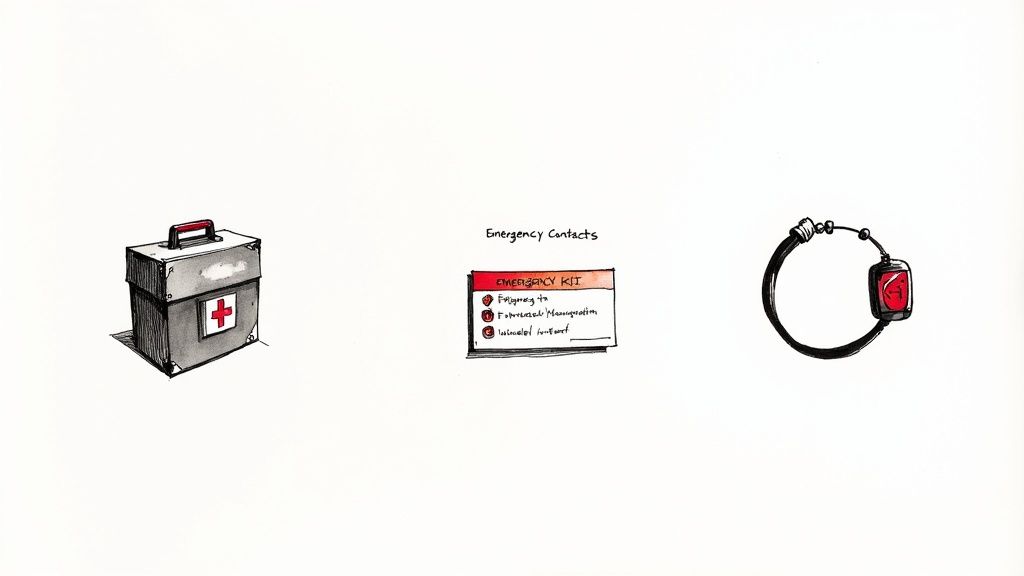
9. Creating an Emergency and Communication Plan
A sudden fall or health scare can happen without warning. Creating a simple emergency plan is a vital part of any elderly parent care checklist, ensuring that help can be reached quickly and that everyone knows what to do. This plan is like a safety net, providing clear steps for the whole family during a stressful moment.
Why This Matters
In an emergency, every second counts. A well-documented plan removes the guesswork, allowing family members and first responders to act quickly. It ensures your parent gets the right care, especially if they can't speak for themselves. This preparation offers immense peace of mind, knowing a system is in place to protect them.
How to Gently Implement This
Building this plan is about gathering key information and making it easy to find. The goal is to create layers of safety.
- Create an "Emergency Info Sheet": On a single sheet of paper, list
Emergency Contacts,Doctor's Phone Number,Medications, andAllergies. Post it on the refrigerator where paramedics are trained to look. - Consider a Medical Alert System: A simple wearable button from a company like Life Alert or Medical Guardian can be a lifeline, especially if your parent lives alone. Even an Apple Watch has fall detection features. It provides a direct connection to help with the push of a button.
- Pack a Small "Go-Bag": Keep a bag ready with a few days' worth of essential medications, copies of their ID and insurance cards, and a change of clothes. If you ever have to go to the hospital unexpectedly, you'll have everything you need.
Caregiver Tip: Gently walk your parent through how to use their medical alert button. Show all caregivers where the emergency information is kept. A quick review once a year keeps the plan fresh and effective.
A solid emergency plan is one of the most loving and responsible actions you can take, turning potential chaos into a calm, effective response.
10. Building Support for Yourself, the Caregiver
Caregiving is a journey of the heart, but you can't pour from an empty cup. This final, crucial step on your elderly parent care checklist is about building a support system for yourself. This means finding ways to take breaks, seeking emotional support, and protecting your own health so you can continue to provide loving care for the long haul.
Why This Matters
Ignoring your own needs leads to burnout, which isn't good for you or your parent. Creating a support system isn't selfish; it's a necessary part of being a good caregiver. Taking time to rest allows you to return to your duties with more patience, energy, and love.
How to Gently Implement This
Building your support network means actively seeking out and scheduling help. Treat your own well-being with the same importance as your parent’s appointments.
- Plan for Breaks (Respite Care): Arrange for someone else to step in so you can have a break. This could be a professional aide for a few hours a week, an adult day program where your parent can socialize, or even a trusted friend who can sit with them while you run errands.
- Find Your People: Connect with others who understand what you're going through. A caregiver support group, either online or in-person, can be a wonderful place to share stories and advice with people who truly get it.
- Share the Care: If you have siblings or other family members, hold a family meeting to gently divide up tasks. Creating a shared calendar for appointments or visits can help distribute the responsibilities so no one person carries the entire load.
Caregiver Tip: Write your own breaks on the family calendar. Whether it’s a walk in the park, coffee with a friend, or just an hour to read a book, scheduling this time for yourself makes it a priority. It's a non-negotiable part of providing great care.
By prioritizing your own support, you create a circle of care that is healthier and more sustainable for both you and your parent.
Elderly Parent Care: 10-Item Checklist Comparison
| Item | Implementation complexity | Resource requirements | Expected outcomes | Ideal use cases | Key advantages |
|---|---|---|---|---|---|
| Comprehensive Health Assessment, Medical Records Organization and Regular Monitoring | High — professional assessments and continuous tracking | Clinicians (PCP/geriatrician), assessment tools, secure record systems, time | Early detection, coordinated care plans, reduced emergencies | Complex medical history, chronic conditions, ongoing monitoring | Prevents medication errors, improves provider communication, tracks treatment effectiveness |
| Financial and Legal Documents Inventory | Medium — legal setup and thorough documentation | Elder-law attorney/accountant, secure storage (digital/physical), financial records | Clear decision authority, asset protection, faster estate settlement | Estate planning, imminent incapacity, transferring financial control | Reduces disputes, enables quick authorized action, tax/fee planning |
| Home Safety Assessment and Modifications | Medium — home evaluation and variable-scale modifications | Occupational therapist/contractor, materials, possible funding/grants | Fewer falls/injuries, increased independence, safer living environment | Mobility limitations, prior falls, preference to age in place | Prevents injuries, cost-effective vs hospitalization, promotes independence |
| Medication Management System Setup | Low–Medium — setup straightforward, requires maintenance | Pharmacy/pharmacist, pill organizers/apps, caregiver time | Improved adherence, fewer interactions, reduced medication-related hospitalizations | Polypharmacy, adherence issues, complex dosing schedules | Reduces errors, simplifies routines, improves treatment effectiveness |
| Social Engagement and Mental Health Support Planning | Low–Medium — coordinate activities and services | Community programs, transportation, time, mental health providers | Reduced depression/isolation, improved cognition and wellbeing | Socially isolated seniors, early cognitive decline, mood concerns | Low-cost options, improves quality of life, strengthens social ties |
| Nutrition and Meal Planning | Medium — assessment and ongoing coordination | Nutritionist/dietitian, meal delivery/services, grocery access, caregiver time | Prevents malnutrition, maintains energy/weight, supports recovery | Weight loss/gain, dietary restrictions, swallowing or appetite issues | Improves health outcomes, reduces hospitalizations, supports medication efficacy |
| Vision and Hearing Assessment and Management | Low–Medium — routine testing and device fitting | Optometrist/audiologist, corrective devices (glasses/hearing aids), follow-up care | Better communication, improved safety, reduced isolation and falls | Sensory decline, communication difficulty, increased fall risk | Preserves independence, enhances safety, improves adherence to care |
| Long-Term Care Planning and Housing Options | High — legal/financial planning and facility evaluation | Financial resources, elder-law counsel, time for research and visits | Preparedness for care transitions, aligned preferences, financial plan | Anticipated increased care needs, complex finances, family planning | Prevents crisis decisions, allows informed choices, reduces family stress |
| Emergency Preparedness and Communication Plan | Low — plan creation is straightforward; needs upkeep | Medical alert devices, emergency kit, documented contacts, training | Faster emergency response, clearer communication, improved outcomes | Seniors living alone, high-risk medical conditions, disaster-prone areas | Enables rapid action, reduces confusion, provides peace of mind |
| Caregiver Support and Respite Care Arrangement | Medium — arranging services and schedules | Respite providers, support groups, counseling, funding, backup caregivers | Reduced caregiver burnout, sustained care quality, improved family wellbeing | Primary caregivers with high burden, long-term caregiving situations | Prevents burnout, improves sustainability of care, offers training and emotional support |
Your Next Small Step: Embracing the Journey with Support
Navigating the world of elderly parent care can feel like a huge undertaking. This checklist is your guide—a map designed not to overwhelm, but to empower you with direction and clarity. By addressing each of these areas, you are not just ticking boxes; you are building a beautiful support system for your parent and a sustainable, loving practice for yourself. You are moving from a place of worry to one of organized, intentional care.
The Power of One Step at a Time
Looking at this entire elderly parent care checklist at once can feel like a lot. The secret is to remember that you don't have to do it all today. The goal is to make small, steady progress.
Your most powerful tool right now is choosing one small, manageable task. What feels easiest to start with?
- Could it be simple organization? Spend 15 minutes gathering all your parent's important phone numbers and saving them in your phone.
- Could it be a quick safety check? Walk through your parent’s home and fix just one potential tripping hazard, like a loose rug.
- Could it be scheduling? Make one phone call to book that overdue hearing or vision exam.
Each of these small actions is a victory. It’s a step forward that reduces future stress and keeps your parent safe. By breaking down the bigger tasks into these bite-sized pieces, you build momentum and confidence, turning an overwhelming list into a series of loving, achievable goals.
You Are Not Alone on This Path
Perhaps the most important takeaway is that you do not have to walk this path alone. Caregiving is a team sport. Asking for help from siblings, friends, or professionals is not a sign of weakness—it's a sign of strength.
Remember this: Sharing the responsibility multiplies the love and protects you from burnout. A supported caregiver provides better care.
Modern tools can help keep everyone connected, especially when family is spread out. A shared calendar for appointments or a group text for quick updates ensures everyone feels involved. This teamwork lightens the load and, just as importantly, reminds you that you are all in this together, wrapping your parent in a circle of support.
Your small, actionable tip for today: Pick one thing from this list that feels manageable. Maybe it's just putting a non-slip mat in the shower or starting a folder for medical papers. Taking that first small step is a beautiful act of love.
Ready to turn your checklist into a collaborative action plan? Simplify coordination and ensure no task is forgotten with gentle, automated reminders from Don’tForgetDad. It’s the perfect tool to keep your entire care team in sync, from medication schedules to doctor's appointments. Start sharing the care today at Don’tForgetDad.