 by Don'tForgetDad Team
Seeing a 125 over 85 blood pressure reading pop up on the monitor can feel a bit confusing. It doesn't scream "danger," but it’s a quiet signal from the body that it’s time to pay a little closer attention.
Think of it as your loved one’s heart giving you a gentle, friendly tap on the shoulder. It’s not an emergency, but it is a wonderful opportunity to be proactive and protect their health for years to come.
Understanding Your Blood Pressure Numbers
When you see a reading like 125 over 85 blood pressure, it’s easy to get lost in the numbers. What do they actually mean in a way that makes sense? I like to think of it like watering a garden with a hose.
The first number, 125, is your systolic pressure. This is like the peak pressure inside the hose right when you squeeze the handle and water surges out. It’s measuring the force on your loved one’s artery walls each time their heart beats to send blood out to their body.
The second number, 85, is your diastolic pressure. Now, imagine the feeling inside the hose when you let go of the handle and the water flow eases. That’s their diastolic pressure—the force on their artery walls when their heart is resting between beats.
Where 125/85 Fits in Blood Pressure Categories
So, where does a reading of 125/85 land on the official charts? According to the American Heart Association, this reading straddles two categories. It’s a clear sign that your loved one's heart might be working a little harder than it ideally should be.
This table gives you a simple, visual way to see exactly how 125/85 compares to the guidelines.
| Blood Pressure Category | Systolic Pressure (Top Number) | Diastolic Pressure (Bottom Number) |
|---|---|---|
| Normal | Less than 120 | Less than 80 |
| Elevated | 120 – 129 | Less than 80 |
| Hypertension Stage 1 | 130 – 139 | 80 – 89 |
| Hypertension Stage 2 | 140 or Higher | 90 or Higher |
| Hypertensive Crisis | Higher than 180 | Higher than 120 |
Looking at the table, you can see that while the top number (125) falls in the "Elevated" range, the bottom number (85) actually nudges into "Hypertension Stage 1." This is why a single reading doesn't tell the whole story, but it does show why it's so important to track these numbers together.
This infographic also helps put it all into perspective.
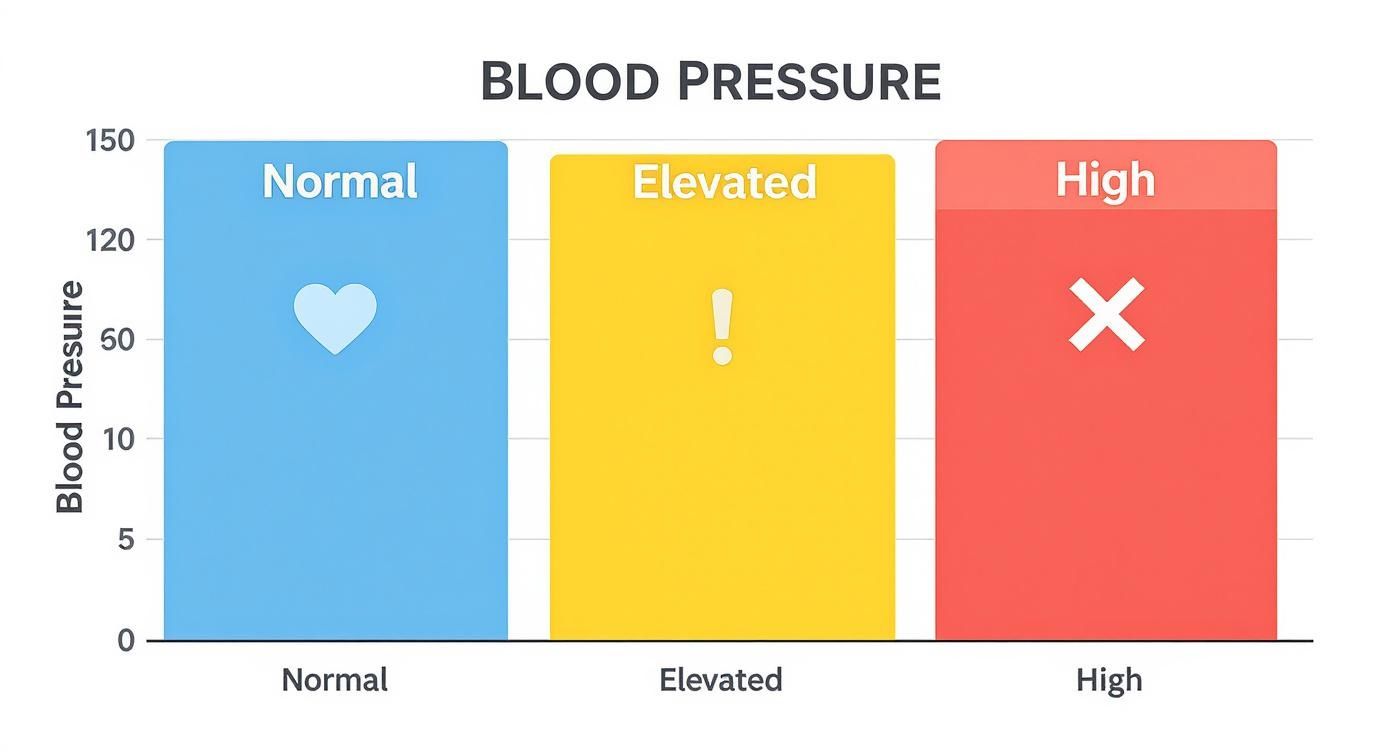
The "elevated" category is truly a gentle warning sign. Seeing numbers creep in that direction is a call to loving action, not a reason to feel worried. For a little more context, global data shows that an average adult man's systolic pressure is around 127 mmHg and a woman's is near 122 mmHg, which puts a 125 reading right in that common ballpark.
Catching elevated blood pressure early is one of the most powerful things you can do for long-term heart health. It gives you the chance to make small, positive changes that can have a huge impact down the road.
Understanding these numbers is the first step toward feeling in control and empowered. It turns a moment of uncertainty into a clear opportunity to support the person you care about. At Don’tForgetDad, our whole mission is to walk alongside families on this journey. You can learn more about our story and commitment to families if you'd like to know more about our hearts.
A small tip: Think of 125/85 as a helpful nudge. A fantastic first step is simply to start a small notebook to jot down daily readings. This turns numbers into a story you and the doctor can understand together, helping them provide the best possible care.
Why an Elevated Reading Is a Chance to Protect Future Health
It’s completely normal to feel a flicker of concern when you see a reading like 125 over 85 blood pressure. If it’s not officially "high," why does it matter so much? The answer is all about prevention and love. Seeing this number now is a golden opportunity to safeguard your loved one’s health for all the years to come.
Imagine a car that always runs just a little bit hot. It isn’t overheating, and it gets you where you need to go. But over thousands of miles, that small, constant strain causes extra wear and tear on the engine. In the same way, elevated blood pressure puts a quiet but continuous stress on the heart and arteries.
The Gentle Warning Before the Storm
A reading of 125 over 85 blood pressure is like the sky turning a bit gray before a downpour. It isn't raining yet, but it’s a sign that it might be a good idea to have an umbrella handy. This stage is a precious window of time where small, manageable changes can make a world of difference.
If we don't pay attention, elevated blood pressure often slowly progresses to high blood pressure (hypertension). It’s not something that happens overnight; it’s a gradual creep upward over months or years.
By responding to these elevated numbers now, you are taking a truly loving and proactive step to delay or even prevent more serious heart-related problems down the road. It’s a simple act of care that helps protect their future.
The Power of Small, Loving Actions
This is where your support as a caregiver is so incredibly powerful. You have a real chance to help guide them toward a healthier path, often before medication is even part of the conversation.
It’s about creating simple, shared moments together:
- A daily walk: Suggesting a stroll around the block after dinner isn't just about exercise. It’s a chance to connect, share stories, and get some fresh air.
- Exploring new flavors: Instead of just taking salt off the table, why not explore the world of herbs and spices together? You could turn a dietary suggestion into a fun adventure in the kitchen.
- Creating calm: Helping them find a few quiet minutes to read or listen to their favorite music before checking their blood pressure can lower stress and lead to a more accurate reading.
These aren't big medical procedures. They are small, consistent acts of love that can gently nudge their blood pressure back into a healthier range. A 125 over 85 blood pressure reading isn't a sign of failure—it's an invitation to build a stronger foundation for their health, together.
A small tip: Try to pick one small, positive change to focus on this week. It could be as simple as adding a side of their favorite green vegetable to dinner or swapping one sugary drink for a glass of water. Every little step forward is a victory for their future.
How to Confidently Monitor Blood Pressure at Home
Taking your loved one's blood pressure can sometimes feel like a high-stakes test, but it doesn't have to be. With a few simple steps, you can turn this task into a calm and confident routine. The goal isn't just to get a number; it’s to gather good, accurate information that tells a valuable story about their health.
An accurate reading starts before the cuff even goes on their arm. Imagine you're about to have a quiet, heartfelt conversation—you'd find a peaceful spot and take a moment to settle in first. It’s the same idea here.
This small pause helps ensure the number on the screen reflects their true resting state, not a moment of stress from rushing around.
Your Simple Checklist for Accurate Readings
To get the most reliable results, consistency is your best friend. Think of it like taking a family photo; you want the lighting and setting to be similar each time so you can really see how everyone has changed. Following a simple checklist can make all the difference.
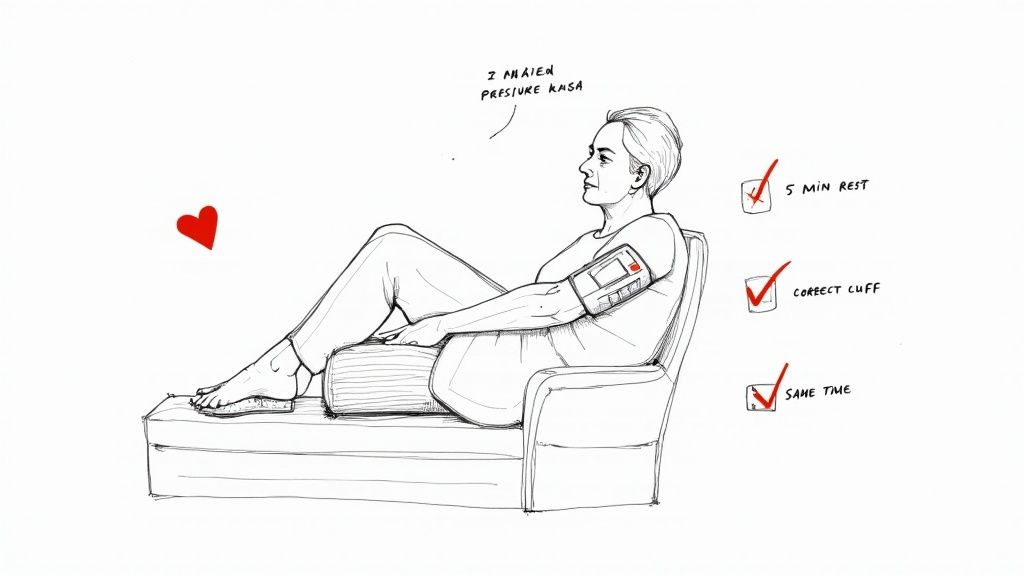
Before you press "start," gently run through these easy steps together:
- Find a Quiet Moment: Encourage them to sit quietly for at least five minutes beforehand. This means no TV, no phone calls, and no stressful conversations. Just a moment of peace.
- Get Comfortable: They should be seated in a supportive chair with their back straight and feet flat on the floor, not crossed.
- Support the Arm: Rest their arm on a table or pillow so the cuff is at about the same level as their heart. An arm that's dangling or held up can slightly raise the reading.
- Check the Cuff: The cuff should be snug but not uncomfortably tight on a bare arm. You should be able to slip two fingers underneath it. A cuff that’s too small or too large can give you a false reading.
Think of each reading as a single snapshot in a photo album. One picture doesn't tell the whole story, but a collection of them, taken around the same time each day, reveals a clear and meaningful pattern for the doctor.
Turning Numbers into a Meaningful Story
A single 125 over 85 blood pressure reading is just one piece of information. The real power comes from tracking these numbers over time in a simple logbook or app.
Note the date, time, and the reading itself. Was it taken before or after their morning coffee? Was your loved one feeling particularly relaxed or a little stressed? These small notes add important human context. You can use a simple notebook or a helpful tool like the Don'tForgetDad app for Android, to keep everything organized. This log transforms numbers into a clear story that helps you and the doctor make the best decisions together as a team.
A small tip: Try to pick a consistent time for readings each day, like every morning after they've sat quietly for a few minutes but before breakfast or medication. This simple routine is the single most important step toward confident and accurate home monitoring.
Gentle Lifestyle Shifts to Support Healthy Blood Pressure
When a reading like 125 over 85 blood pressure pops up, it’s not a moment for alarm. Instead, see it as a gentle invitation to lean in with love and support. This is where your care truly shines—not through drastic, sudden changes, but through small, consistent acts that nurture better health.
Let's forget about a restrictive list of "don'ts" and focus on the joyful, healthy things you can add to your daily routine together. These gentle shifts are about strengthening your bond while looking after their heart, turning simple moments into powerful acts of care.
Making Mealtimes a Joyful Experience
Instead of just hiding the saltshaker, why not make meals an adventure in flavor? Exploring the world of herbs and spices can be a wonderful activity to share. Maybe your dad always loved the smell of rosemary, or perhaps your mom used to grow basil in a pot on the windowsill.
- Discover New Tastes: Try adding smoky paprika to chicken, fresh dill to fish, or a sprinkle of cumin to roasted vegetables. You could even make it a fun weekly challenge to try one new herb or spice.
- Focus on Color: A simple guideline is to fill your plates with vibrant, colorful foods. Think bright red bell peppers, deep green spinach, and sweet blueberries. These foods are not only beautiful but also packed with nutrients that support heart health.
- Read Labels Together: Make a quick habit of glancing at the sodium levels on packaged foods when you shop. It can be an eye-opening and simple way to make healthier choices together.
A 125 over 85 blood pressure reading often responds beautifully to these small dietary tweaks, turning mealtime into a source of both health and happy connection. For more tips and stories from other caregivers, you can always visit the Don'tForgetDad blog.
Gentle Movement for a Stronger Heart
When we talk about movement, we're not talking about intense gym workouts. It's about finding enjoyable ways to move your bodies together, even for just a few minutes each day.
Think of it as adding little pockets of activity. A slow walk through the garden to admire the flowers, a few gentle stretches while watching television, or even putting on a favorite old song to dance to in the living room can get the blood flowing and lift spirits. The key is consistency and joy, not intensity.
The goal is to make movement a natural and happy part of your daily rhythm. Even 10-15 minutes of light activity each day can help support healthier blood pressure levels.
The Power of Calm and Rest
Stress and a lack of quality sleep can quietly nudge blood pressure upward. Creating a calm, restful environment is one of the most loving things you can do for your parent’s heart health.
This could be as simple as putting on some soothing instrumental music in the afternoon or encouraging a quiet moment with a good book before bed. Good sleep is also so important. A peaceful, dark, and cool bedroom helps promote deeper, more restorative rest—which is absolutely essential for helping the body heal and recharge.
The importance of addressing these subtle elevations is clear. Readings like 125 over 85 blood pressure are part of a continuum that affects millions, and research highlights a rising risk for cardiovascular issues as numbers climb above 120/80 mmHg. This makes early lifestyle adjustments an incredibly powerful preventive tool. If you want to dig deeper into the clinical significance, you can learn more about evolving blood pressure definitions from the American Heart Association.
A small tip: Choose one small, joyful activity to try together this week. It could be as simple as enjoying a cup of herbal tea in a quiet spot or taking a five-minute walk outside to feel the sun. These small shared moments are the true building blocks of better health.
Partnering with the Doctor About Elevated Readings

Knowing when and how to bring up health concerns with a doctor can feel a little intimidating. As a caregiver, you are your loved one's strongest advocate, and you want to share your concerns without feeling like you're overreacting. If you've noticed a consistent pattern of 125 over 85 blood pressure, that’s your perfect cue to start a collaborative, supportive conversation with their doctor.
Remember, a single reading doesn't define their health. What doctors find incredibly helpful is understanding the trend over time. A pattern of elevated readings is simply a signal to start a discussion, not a reason for immediate worry.
How to Start the Conversation
Walking into an appointment prepared can transform any anxiety into confidence. You don't need a complicated script—in fact, a simple, warm, and direct approach works best.
Your goal is to present your observations as a partner in your loved one's care. After all, you’re bringing valuable information from home that the doctor only gets to see for a few minutes every few months.
You could try saying something like this:
"We've been keeping a little log of their blood pressure at home for a couple of weeks, and we've noticed it's often around 125 over 85. We were hoping we could talk about what this means and what simple steps we might consider."
This approach is calm, factual, and opens the door for a productive, stress-free conversation.
What to Expect from the Appointment
Once you’ve shared your log of readings, the doctor will likely want to put those numbers into the context of their whole life. They’ll probably ask about diet, stress levels, sleep, and physical activity. Your home readings provide the "what," and this conversation helps uncover the "why."
This is especially important because a reading like 125 over 85 blood pressure falls into what's often called the elevated or prehypertension stage. While an estimated 1.4 billion adults worldwide have high blood pressure, many more are in this early stage, which can often be managed with lifestyle changes. You can discover more insights on why monitoring early is critical from the World Health Organization.
The doctor will almost certainly be grateful for your proactive monitoring. They will likely encourage you to continue the gentle lifestyle shifts you’ve already started. Think of the appointment as a team huddle—a chance to get expert guidance and reassurance that you’re all on the right track, together.
A small tip: Before the appointment, sit down with your loved one and jot down two or three key questions you want to ask. Having them written down ensures you won’t forget in the moment and helps you both leave feeling clear and confident about the next steps.
Common Questions About Elevated Blood Pressure
As a caregiver, seeing a number like 125/85 on the blood pressure cuff can bring up a lot of questions. It’s completely normal to feel a mix of confusion and concern. This is a learning process for you both, and asking questions is the very best way to build your confidence and know what to do next.
Let’s walk through some of the most common worries that families have. My goal here is to give you clear, reassuring answers that bring you peace of mind and show you just how powerful your loving support can be.
Can Stress or a Bad Day Cause a 125/85 Reading?
Absolutely. This is one of the most important things to remember about blood pressure—it isn't a fixed number. A tense phone call, the stress of running late for an appointment, or even just feeling a bit under the weather can make those numbers jump temporarily.
This is exactly why doctors value a log of readings taken over time so much more than a single measurement. If you notice your dad's reading is often around 125/85 when he’s feeling anxious about a bill, that’s actually very helpful information. You can try a few calming activities together—maybe listening to his favorite music or just sitting quietly on the porch for five minutes—before taking the measurement again.
A logbook tells a story. Noting that a higher reading happened right after a stressful event gives the doctor invaluable context. It helps paint a much more realistic and human picture of your loved one's heart health.
This kind of observation shows that your role as a caregiver goes far beyond just recording numbers. You're helping everyone understand the whole person.
Will My Loved One Need Medication for This Reading?
This is a very common and understandable worry. The reassuring answer is that for an elevated reading like 125/85, medication is rarely the first thought. Instead, doctors and nurses almost always start by recommending gentle, positive lifestyle adjustments.
Think of these changes as the body’s first, natural way of getting back into balance. The focus will be on things you can do together, such as:
- Adding more heart-friendly foods like fruits, vegetables, and whole grains to your meals.
- Taking regular, gentle walks or finding other fun ways to stay active.
- Finding simple ways to manage daily stress and make sure they're getting restful sleep.
Medication is typically only brought into the conversation if these loving, consistent efforts don't bring the numbers down and the readings start to creep into the high blood pressure range (hypertension). It’s always a decision made as a team with their doctor, based on a clear pattern of readings over time.
Is It Really Possible to Lower Blood Pressure from 125/85?
Yes, it absolutely is! This is the most hopeful and empowering part of catching elevated blood pressure early. Because the numbers aren't in the high blood pressure zone yet, the body often responds beautifully to small, consistent changes made with love.
Every positive step you take together contributes to this goal. Each time you add more vegetables to a meal, go for a short walk after dinner, or share a laugh that melts away stress, you are actively helping to guide their blood pressure back toward a healthier, happier place. It's a wonderful reminder that small acts of care, repeated daily, can lead to significant and lasting health benefits.
What if Some Readings Are Normal and Others Are 125/85?
This is perfectly normal and even expected. Blood pressure naturally rises and falls throughout the day. It’s usually lower first thing in the morning when we’re relaxed and can tick up in the afternoon, after moving around, or during a moment of excitement or stress.
The key is to look at the overall pattern, not to worry about any single reading. What’s the average reading over a week or two? If that average is consistently settling in the 125/85 range, that’s the gentle trend you’ll want to discuss with their doctor. Seeing this fluctuation is actually a good thing—it means you’re getting an accurate and honest snapshot of their daily rhythm.
Keeping track of readings, medications, and doctor's appointments can feel like a full-time job. Don’tForgetDad simplifies the process, sending gentle reminders to your whole family care circle so nothing falls through the cracks. It's a simple way to share the responsibility and ensure your loved one always gets the consistent care they deserve. Learn how Don’tForgetDad can bring your family peace of mind.