 by Don'tForgetDad Team
When a doctor suggests a loved one needs a 30-day Holter monitor, it can sound a bit overwhelming. But this small, wearable device is actually one of the kindest tools in heart care. It’s like a long-term EKG that quietly records your loved one's heart activity, day and night, for a whole month. Think of it as creating a detailed diary of every single heartbeat.
This extended time frame is the secret to its success. It’s designed to catch those tricky heart rhythm issues that don’t show up on command. It gives doctors a true picture of how the heart behaves not just in a clinic, but out in the real world—while sleeping, walking, or enjoying a quiet cup of tea.
What's the Story Your Heart Is Trying to Tell?
If your loved one experiences symptoms like a sudden heart flutter, dizzy spells, or unexplained fatigue, you know how unsettling it can be. These feelings are often gone as quickly as they appear, making them nearly impossible to capture during a brief doctor’s visit.
This is exactly where a 30-day Holter monitor comes in. It’s prescribed to get to the bottom of these "hit-and-run" symptoms. Imagine trying to find a random, occasional rattle in your car engine. You can't just have a mechanic listen for 60 seconds; you need to record the engine's sound over a long road trip to catch it in the act. The Holter monitor does the same thing for the heart.
By tracking the heart’s rhythm continuously, it helps doctors match a physical feeling—like your mom feeling lightheaded after climbing the stairs—to the specific electrical event happening in her heart at that exact moment.
Why Is This Test Recommended?
A heart specialist, or cardiologist, usually orders this test to get clear answers when other, shorter tests haven't found the cause. The main goal is to solve the mystery behind unpredictable symptoms.
- Catching the Culprit: It’s designed to record irregular heartbeats (arrhythmias) that might only happen a few times a month. A standard 24-hour monitor could easily miss them.
- Confirming a Diagnosis: For conditions like atrial fibrillation (AFib), which can come and go, a full month of data provides the strong evidence needed for a confident diagnosis.
- Checking on a Treatment Plan: It can also be used to see if a new heart medication or a procedure is working the way it should over time.
Getting the news that a loved one needs a 30-day monitor can feel intimidating. It’s natural to worry. But you can see it as a positive, proactive step. It's the most thorough, gentle way to give the medical team the information they need to create the best care plan.
The whole point is to gather this vital information while disrupting daily life as little as possible. The answers it provides can turn frustrating uncertainty into a clear, actionable path toward better heart health. As a caregiver, your loving support and encouragement during this month are a huge part of what makes it a success.
Actionable Tip: When you pick up the monitor, ask the technician for an extra roll of medical tape and a few spare electrode patches. Having these on hand at home can prevent a lot of stress if a patch comes loose unexpectedly.
Why 30 Days of Monitoring Makes a Difference
You might be wondering, "Why a whole month?" It's a fair question, and the answer is simple: some heart issues are incredibly sneaky.
Think of it like trying to spot a rare blue jay that only visits your backyard once or twice a week. If you only watch for a single day, your chances of seeing it are pretty slim. The same logic applies to heart rhythm problems. Fleeting symptoms like a brief flutter, a sudden dizzy spell, or unexplained fainting often come and go without warning.
A standard 24 or 48-hour monitor provides a helpful, but very short, snapshot of the heart's activity. It can easily miss an event that only happens every few days. The 30-day Holter monitor is designed specifically to solve this problem by casting a much wider net.
This longer timeframe is the key. It dramatically increases the odds of capturing the heart's exact electrical activity at the very moment a symptom occurs. That direct link between the feeling (the symptom) and the EKG data is what cardiologists need. It gives them the solid proof they need to make a confident diagnosis.
Capturing the Complete Picture
Beyond just catching sporadic events, a 30-day monitor reveals the full story of how a heart behaves through the rhythms of real life. It tracks everything, from quiet moments on the couch to a stressful phone call, and even what happens during sleep.
This continuous, long-term data helps doctors spot patterns that would otherwise be invisible. They can see if a specific activity, a certain time of day, or even emotional stress might be triggering an irregular heartbeat.
This infographic breaks down why this comprehensive view is so crucial for an accurate diagnosis.
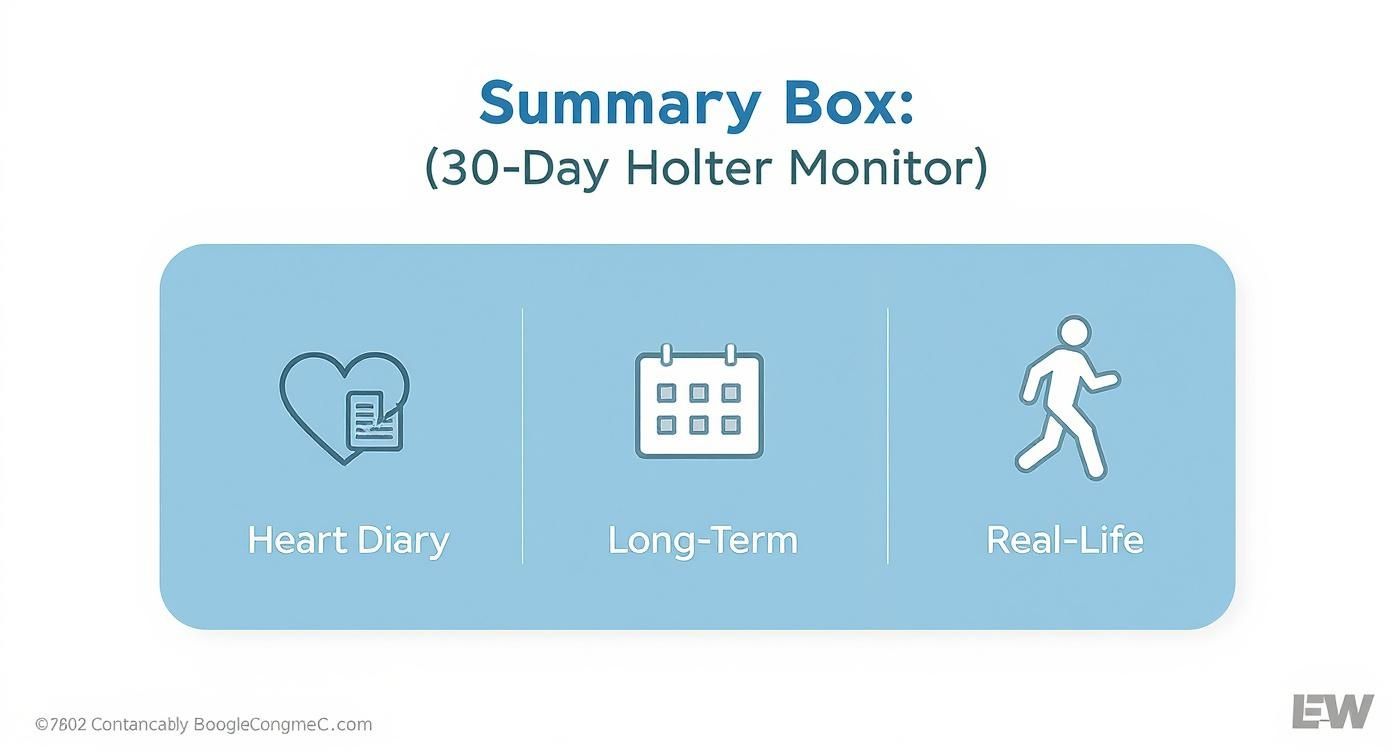
As you can see, the monitor essentially becomes a detailed diary of the heart's activity, providing insights that a quick test in a doctor's office never could.
Why Longer Monitoring Leads to Better Answers
When it comes to diagnosing tricky arrhythmias like atrial fibrillation (AFib), the difference between a 24-hour test and a 30-day one can be night and day. Clinically speaking, the shift toward longer monitoring is one of the most significant cardiac monitoring advancements in recent years.
Studies have repeatedly shown that prolonged monitoring substantially boosts the detection rate of arrhythmias—both those you can feel and those that are "silent" or don't cause symptoms—compared to the old standard of one or two days of recording.
By committing to this longer test, you are giving the medical team their best chance to solve the puzzle. It’s not just about running another test; it’s about gathering enough information to create a truly effective and personalized care plan for your loved one.
The ultimate goal is to move from a place of uncertainty and guessing to one of clarity and confidence. A 30-day Holter monitor provides the comprehensive data needed to do just that, turning fleeting feelings into actionable medical insights.
A great way to explain it to your loved one is to think of the monitor as their own personal health detective, working quietly 24/7 to uncover the clues needed to help them feel better.
Preparing for the Holter Monitor Appointment
Getting that initial fitting appointment right can make the whole 30-day monitoring process feel much less intimidating. A little prep work really does go a long way, helping the day run smoothly and making sure you both feel ready and in control from the very start.
Think of this as your simple checklist for a successful 30 day Holter monitor experience.
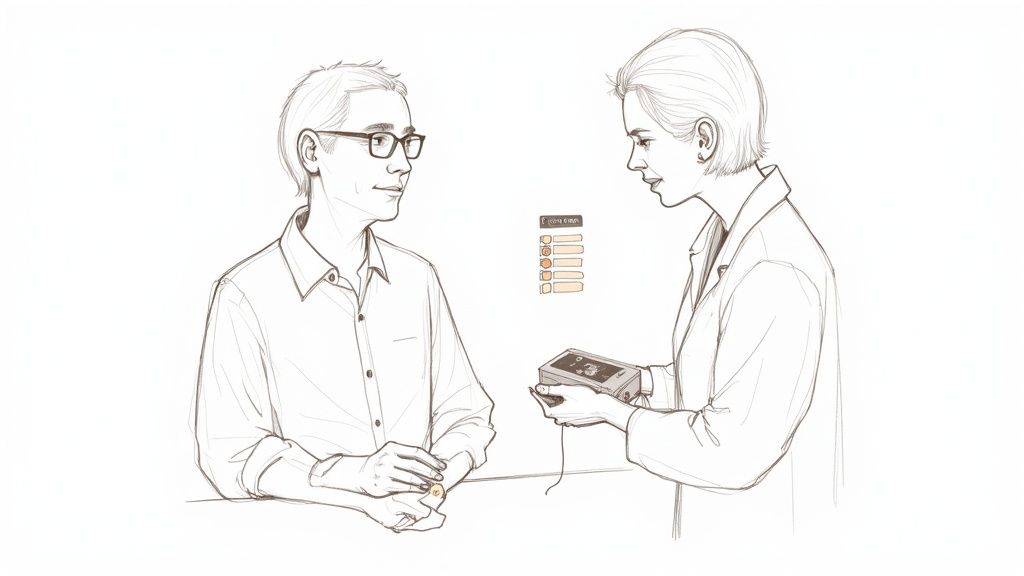
The appointment itself is very straightforward. A technician will carefully place a few electrode stickers on your loved one’s chest. These stickers are then connected by thin wires to the small recording device. To make this as quick and comfortable as possible, a few simple tips can really help.
Your Pre-Appointment Checklist
Getting everything organized ahead of time means less rushing around and more energy to focus on supporting your loved one. Here’s what to think about on the day of the fitting:
- Dress for Comfort: A loose-fitting, button-up shirt is the perfect choice. It gives the technician easy access to place the electrodes without your loved one having to undress completely.
- Shower Beforehand: Since the monitor can't get wet, taking a nice shower before the appointment is key. Make sure the skin is clean and completely dry, and skip any lotions or oils. This helps the adhesive patches stick properly for the long haul.
This simple prep step makes a huge difference in comfort. It's all about setting your loved one up for a positive start, helping them feel fresh and ready for the 30-day monitoring period.
What to Bring With You
Tucking your documents and a list of questions into a folder can make the check-in process a breeze. Don’t leave home without these items:
- Insurance and ID Cards: Keep them handy for the front desk.
- A Complete Medication List: Write down everything—prescriptions, over-the-counter meds, vitamins, and supplements, along with the dosages. This gives the medical team a clear and complete picture of your loved one's health.
- A Small Notebook and Pen: Jot down any questions that pop into your head before you go. Having them written down means you won’t forget to ask the technician something important.
Taking these small steps helps turn what could be a stressful appointment into an empowering first move toward getting clear answers about your loved one's heart health.
Getting Through Your Day with a Holter Monitor
The idea of wearing a 30-day Holter monitor can feel a bit daunting at first. But you'll find it quickly fades into the background of daily life. The best way to think of it is not as a cumbersome medical device, but as a silent partner working to get you and your doctor the answers you need.
The whole point is to capture your loved one’s heart activity during their normal routine. This isn't the time to sit on the couch for a month! It's about seeing how the heart responds to everyday life.
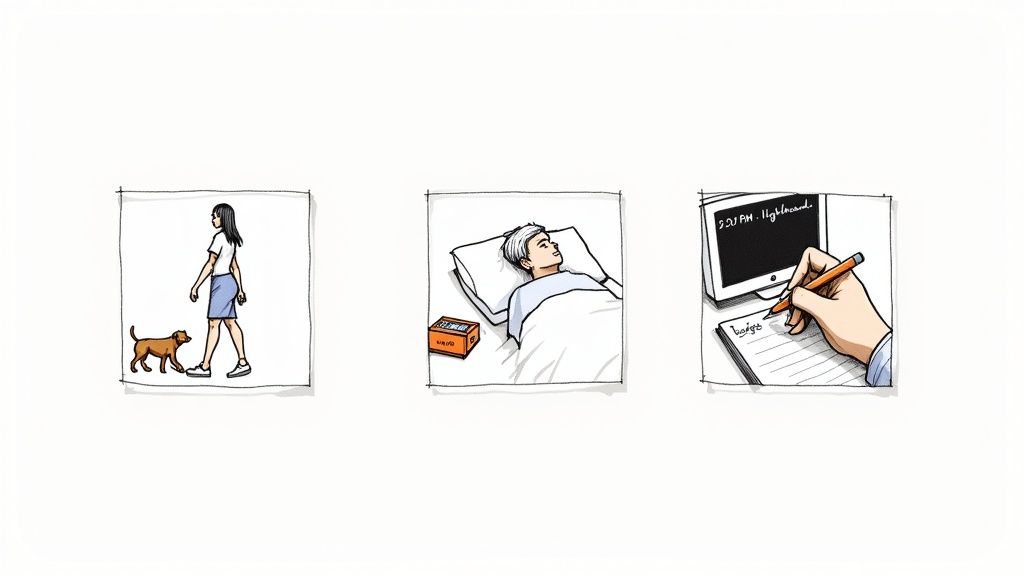
Encourage your loved one to stick to their usual schedule as much as possible. Whether they're out in the garden, taking the dog for a walk, or just relaxing with a book, those are the moments that provide the most valuable information.
The All-Important Symptom Diary
One of your most important jobs during this month is helping keep a symptom diary. This is where you connect the dots between what your loved one is feeling and what their heart is doing.
Your notes don't need to be long essays. Short, specific entries are perfect. Think of yourself as a detective, gathering clues for the cardiologist. A quick note jotted down in a notebook or even a phone app can make all the difference.
What a Good Diary Entry Looks Like:
- "Felt a flutter in my chest while watching TV at 7:15 PM."
- "Got dizzy after walking up the stairs around 10:00 AM."
- "Woke up with a racing heart at 3:30 AM."
When the doctor combines these real-time notes with the monitor's EKG data, they get a crystal-clear picture of what's going on. If you prefer using a phone, our guide to the best caregiving apps for Android might have a simple note-taking tool that works for you.
Practical Tips for Comfort and Care
A few small adjustments can make the next 30 days much smoother. The two biggest things to focus on are keeping the monitor dry and taking care of the skin where the electrodes are placed.
- Bathing: The monitor and electrodes can't get wet, so sponge baths are the answer. Carefully wash around the patches with a washcloth to keep them dry and firmly attached.
- Skin Care: Each day, take a quick look at the skin around the edges of the patches. If you see any redness or irritation, you can try shifting the next electrode patch just slightly to give the sore spot a break.
- Changing Electrodes: The clinic will show you exactly how to swap out the electrode patches every few days. A quick wipe with rubbing alcohol on clean skin (let it dry completely!) before applying a new patch helps it stick better and keeps irritation at bay.
It’s totally normal to feel a little stressed by this new routine. Just remember, it’s temporary. Every day you get through is one day closer to having the information needed to create a better care plan for your loved one.
Simple Troubleshooting Steps
Every now and then, a minor issue might pop up. Don’t panic—most are easy to handle at home.
What If an Electrode Comes Loose?
If you see a patch peeling up at the edges, try to press it back down firmly. If it just won't stick, take it off, clean the skin, and apply a fresh one in the same spot. Keeping a few extra patches and some medical tape nearby can give you a lot of peace of mind.
There's a reason these devices are so common. Wired Holter monitors still accounted for over 63% of the market in 2022, proving just how essential they are for diagnosing heart conditions. You can read more about the growth of the Holter monitor market to see how they're impacting patient care.
This month-long monitoring period is a huge step toward getting answers. Your help with these day-to-day details makes a massive difference in the quality of the results.
How You Can Provide the Best Support
As a caregiver, your support during this 30-day monitoring period is absolutely vital. It's more than just a medical test; it's a month-long commitment that can feel daunting. Your role in providing practical help and emotional reassurance can transform this experience, making it a productive and positive step toward better health.
Think of yourself as a trusted partner. You can help make this whole process feel less like a clinical procedure and more like a manageable part of everyday life.
This journey really is a partnership. Your encouragement can be the steadying hand that helps your loved one navigate each day with confidence. You don’t need to be a medical expert to offer incredible support—just being there makes all the difference.
Gentle Reminders and Practical Help
It’s easy for someone to feel a bit overwhelmed by the daily tasks involved with the monitor. A little help with the small details can lift a huge weight off their shoulders. The goal isn’t to take over, but to be a supportive teammate who makes things just a little bit easier.
- Symptom Logging: Offer gentle reminders to log any symptoms as they happen. A simple, "How are you feeling today? Did you feel that flutter again?" can open up a conversation and help them remember to make a note of it.
- Skin Checks: The adhesive on the patches can sometimes irritate the skin. You can help by taking a quick, gentle look at the skin around the electrodes each day, checking for any new redness or discomfort.
- Electrode Changes: When it's time to swap out the electrode patches, an extra set of hands is a huge help. Helping to clean the area and apply the new patch not only ensures it’s done correctly but also provides a moment of shared care.
Being a caregiver during this time is about so much more than just a list of tasks. It's about providing a sense of calm and normalcy. Your steady presence is a powerful reminder to your loved one that they are not going through this alone.
Becoming a Communication Partner
One of the most powerful things you can do is help your loved one describe exactly what they’re feeling. Vague symptoms like "feeling off" are tough to explain, but with your help, their diary can become an incredibly clear and useful tool for the doctor.
For instance, if your dad says he felt dizzy while getting the mail, you can gently ask, "Did the room feel like it was spinning, or was it more of a lightheaded feeling, like you might faint?" This kind of detail is invaluable.
There’s a reason extended Holter monitoring is becoming more common; it gives doctors a much better shot at catching those sneaky, infrequent heartbeats that shorter tests miss. This is especially vital for managing conditions like atrial fibrillation in older adults, and your detailed notes contribute directly to that accuracy. You can learn more about the importance of long-term Holter monitoring and its growing role in patient care.
By helping document these events clearly, you transform the symptom diary from a simple log into a powerful diagnostic tool.
Actionable Tip: At the end of each day, set aside five minutes to review the day’s events and any notes together. This simple habit ensures nothing gets forgotten and reinforces that you're in this as a team.
What Happens After the Test Is Over
Returning the 30-day Holter monitor is a huge relief, but it often opens the door to a new feeling: the anxiety of waiting. It’s completely normal to feel this way. After a month of diligent tracking, you’re eager for answers.
Just remember that the monitor collected a tremendous amount of information—potentially over 2.5 million heartbeats in a month. A heart specialist now needs to carefully go through this entire "heart diary" to find the important moments that line up with your loved one's symptoms.
This detailed analysis takes time, but it’s what allows for an accurate diagnosis.
Preparing for the Follow-Up Appointment
Walking into the follow-up appointment with a few questions ready can help you feel more in control and ensure you leave with a clear understanding. This is your chance to really partner with the doctor to create a solid plan.
Here are a few simple but powerful questions you might want to ask:
- What did the results of the monitor show us?
- Did you find a connection between the symptoms we wrote down and the heart's activity?
- What are our next steps?
- Are there any lifestyle changes you recommend based on these findings?
A "normal" result is still a successful result. If the test doesn't find any significant issues, it has successfully ruled out potential heart rhythm problems, which is incredibly valuable information. It helps the doctor look for other possible causes with more confidence.
No matter the outcome, these results are the key to moving forward. You've completed a crucial step, and now you have the data needed to build a clear path toward better heart health. For more details on how your information is handled, please review our commitment to your family's personal data outlined in our privacy policy.
Actionable Tip: Bring your symptom diary to the follow-up appointment. It allows you to reference your notes directly as the doctor discusses the findings, ensuring you don't miss any important connections.
Navigating Common Questions and Concerns
It’s only natural for questions or a few little worries to pop up during the 30-day monitoring period. Getting quick, clear answers can make all the difference and bring a lot of peace of mind. Let’s tackle some of the most common ones you might encounter.
Can They Still Use a Cell Phone or Microwave?
Yes, absolutely! This is one of the most frequent questions we hear, and the good news is you can put that worry to rest.
Modern Holter monitors are built to coexist with all the technology in our daily lives. Using a cell phone, watching TV, or warming up leftovers in the microwave won't interfere with the device's ability to get an accurate reading. Your loved one can go about their day as usual.
What Happens if an Electrode Patch Comes Off?
It happens more often than you’d think, especially over a full month, and thankfully it’s a simple fix. There is no need to panic.
Just follow these easy steps to get it back on securely:
- First, gently peel off the old, loose patch.
- Next, wipe that small patch of skin with a bit of rubbing alcohol and let it air dry completely.
- Finally, press a fresh electrode patch firmly onto the same spot.
A solid connection is the key to getting clear, usable data for the doctor, so making it a habit to check the patches each day is a great idea.
Your role is to be a source of comfort and support, not a medical technician. Knowing how to handle these small hiccups empowers you to manage minor issues confidently, which lowers the stress for both of you.
For more practical caregiving tips and ideas, check out our other articles on the Don'tForgetDad blog.
When Is It Time to Call the Doctor Immediately?
While the symptom diary is perfect for logging those fleeting or mild sensations, some symptoms are red flags that demand immediate medical attention. Don't hesitate to call your doctor or 911 if your loved one experiences any of the following:
- Severe chest pain or a feeling of intense pressure
- Fainting or any loss of consciousness
- Serious trouble breathing or sudden, severe shortness of breath
The diary is for tracking patterns, but these signs are urgent. Always trust your instincts—it’s far better to be safe and get help right away.
Remember, every symptom you log is another piece of the puzzle. You don't have to be perfect—just be consistent. Your effort is one of the most valuable parts of this entire process, and it helps bring everyone one step closer to peace of mind.