 by Don'tForgetDad Team
When a doctor mentions a heart rhythm condition like atrial fibrillation (AFib) or atrial flutter (AFlutter), it's completely normal to feel a wave of concern. These are common conditions, but they involve the heart—your loved one’s heart—and that alone can be frightening.
At its core, the issue with both AFib and AFlutter is a problem with the heart's upper chambers, which start beating irregularly or far too quickly. Imagine your dad, who has always been so strong, suddenly feeling dizzy or out of breath. He might describe his heart as “fluttering” or “racing.” While the feelings might seem similar, AFib is a chaotic, quivering rhythm, and AFlutter is a very fast but organized one. Understanding this difference is the first step to confidently helping your loved one manage their health.
A Gentle Introduction to AFib and AFlutter
Getting a diagnosis like AFib or AFlutter for someone you love can throw your world off-balance. Suddenly, you're navigating a maze of new medical terms and anxieties about what comes next. Take a deep breath. You are not alone in this. Millions of families are on this same path, and with the right information and support, you can navigate it successfully.
Think of this guide as a conversation with a knowledgeable friend who gets it. We're going to cut through the jargon and focus on what you actually need to know: understanding what's happening in your loved one's heart and how you can be their best advocate. This knowledge is your greatest asset, turning that initial fear into focused, confident action.
This infographic gives a great visual snapshot of AFib and AFlutter, breaking down the key features at a glance.
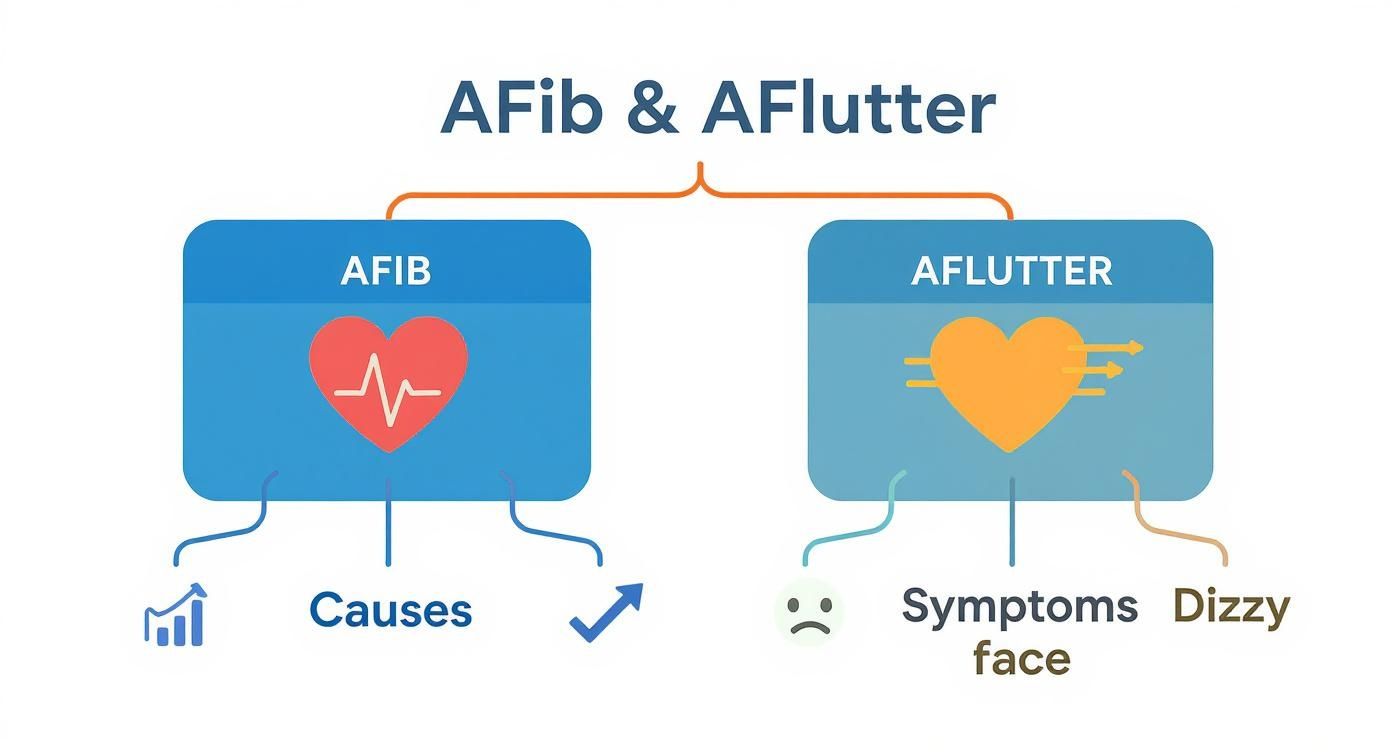
As you can see, both conditions start in the heart's upper chambers (the atria) and can cause similar symptoms. The real difference lies in the electrical patterns driving the heartbeat.
What This Guide Offers You
Our mission here is to give you both reassurance and practical advice you can put to use today. We’ll walk through these conditions together, focusing on what you, as a caregiver, need to understand to provide the best possible support. For more articles designed for family caregivers, you can always explore our blog.
Here’s what you’ll find in this guide:
- Simple explanations that make complex topics easy to grasp.
- Real-world examples from a caregiver’s point of view.
- Actionable steps that help you feel prepared and in control.
Caring for a loved one is a journey of partnership. Your role is not just about managing appointments and medications; it’s about providing comfort, stability, and love through a challenging time.
Remember, a diagnosis of AFib or AFlutter is a manageable part of life, not the end of a full and active one. With a solid care plan and a supportive family, your loved one can continue to thrive. You’ve already taken the most important step—seeking to understand.
What Is Happening Inside the Heart
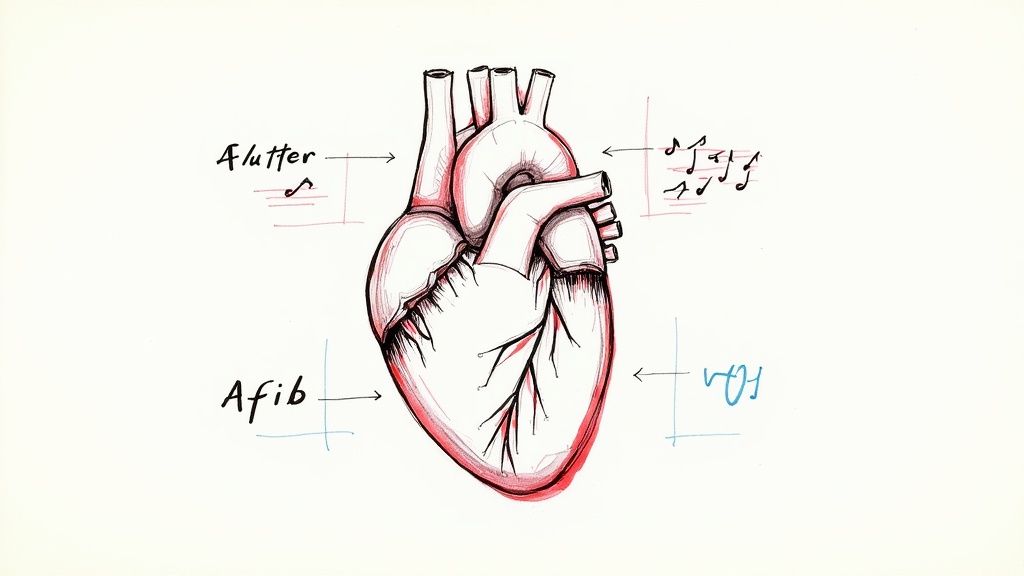
When you hear terms like atrial fibrillation (AFib) and atrial flutter (AFlutter), the medical language can feel cold and intimidating. So, let’s push the technical terms aside for a moment and talk about what’s actually going on inside your loved one’s heart. Sometimes, a simple story makes all the difference.
Think of the heart's two upper chambers, the atria, as a team of drummers. Their most important job is to keep a strong, steady beat. This rhythm tells the lower chambers, the ventricles, exactly when to pump blood out to the rest of the body. In a healthy heart, this rhythm is perfectly in sync, keeping everything running smoothly.
Atrial Flutter: A Fast but Organized Rhythm
Now, imagine what happens with atrial flutter. The drummers are still playing together, but they’ve started beating incredibly fast—maybe two or three times their normal speed. The key thing here is that even at this high speed, their rhythm is still coordinated and organized.
It’s like a very fast, but very regular, drumroll. This rapid-fire signal from the atria makes the lower chambers beat faster too, though often not quite as fast. For someone experiencing AFlutter, it can feel like their heart is racing, but the beat itself remains steady. For your mom or dad, this might feel like a constant, pounding heartbeat that leaves them feeling a bit breathless.
Atrial Fibrillation: A Chaotic and Irregular Rhythm
With atrial fibrillation, things get a lot messier. Instead of a fast but organized drumroll, you have total chaos. It’s as if every drummer on the team decided to play their own random, rapid solo at the same time, completely ignoring everyone else.
This disorganized electrical storm makes the upper chambers just quiver or “fibrillate” instead of contracting with a strong, unified beat. Because the signals sent down to the lower chambers are so jumbled and unpredictable, the heartbeat becomes not only fast but also completely irregular. This is the defining feature of AFib, which is a much more common cousin to AFlutter. Your parent might describe this feeling as a "fish flopping" in their chest.
The core difference is simple: AFlutter is typically fast but regular, like a speeding drumline. AFib is fast and chaotic, like a drum set falling down a flight of stairs. Both need attention, but understanding this helps clarify what doctors are treating.
These conditions are far more common than many realize, affecting millions of families around the world. In fact, the number of people living with these arrhythmias has surged. In 2021, there were an estimated 52.55 million people globally living with AFib or AFlutter—a staggering 137% increase since 1990. You can explore the data behind these global trends in this study from Frontiers in Cardiovascular Medicine.
Ultimately, both conditions prevent the heart from pumping blood as efficiently as it should. The next time a doctor mentions AFib or AFlutter, just think back to those drummers. Are they playing in an organized but overly fast rhythm, or is it complete chaos? Having that simple picture in your mind can make you feel more grounded during medical conversations and better prepared to support your parent.
The good news is that both conditions are very well understood and treatable. By just taking the time to visualize what's happening, you’ve already taken a huge step toward becoming a more confident and informed caregiver.
Recognizing the Common Signs and Symptoms

Knowing what to look for is one of the most powerful things you can do to support a loved one. The tricky part about afib and aflutter is that the symptoms can be all over the map—some are dramatic and impossible to ignore, while others are so subtle they barely register. Your job isn't to play doctor, but to be an extra set of eyes and ears, noticing the small changes in their day-to-day life.
People often describe an episode in very personal ways. Your dad might suddenly grip his chest and say it feels like his heart is "pounding out of his chest," even while he's just sitting and watching TV. Or your mom might describe it as a fluttering or flopping sensation, almost like a fish is flipping around in her chest.
These feelings can be scary, but listening closely to how your loved one explains them can provide crucial clues for their healthcare team.
What to Watch For Day to Day
Beyond the distinct heart sensations, AFib and AFlutter can have a ripple effect on the entire body. When the heart isn't pumping blood efficiently, everything else has to work harder. This can show up in ways you might notice during your daily interactions.
Here are a few common symptoms your loved one might experience:
- Overwhelming Fatigue: This isn’t just being a little tired. It's a deep-seated exhaustion that might make your mom, who used to love gardening, say she’s just too worn out to go outside.
- Shortness of Breath: You might notice they get winded very easily from light activity. For instance, your dad might have to stop and catch his breath halfway up the stairs, something he never used to do.
- Dizziness or Lightheadedness: A persistent feeling of being woozy or unsteady can pop up, and in some cases, it can even lead to fainting.
- Chest Discomfort: This isn't always sharp pain; it can also feel like a nagging pressure or tightness in the chest during an episode.
The Challenge of Silent AFib
It’s also crucial to understand that not everyone with AFib or AFlutter feels a thing. Some people, particularly older adults, experience what’s known as “silent AFib.” They don’t have any palpitations, dizziness, or chest discomfort. The condition is often only discovered by chance during a routine doctor’s visit.
This is exactly why regular check-ups are non-negotiable. A doctor can pick up on an irregular heartbeat during a standard exam, even when your parent insists they feel completely fine.
Your awareness of these signs—both the loud and the quiet ones—makes you an indispensable advocate for your loved one. Something as simple as telling the doctor, “Dad just seemed way more tired than usual last week,” is valuable information. Remember, your goal is to be a supportive observer, not to create more worry. A gentle, thoughtful observation can truly make all the difference.
Understanding Causes and Diagnosis
When a loved one gets a diagnosis like AFib or atrial flutter, it's natural to immediately ask, "Why?" It's a question that comes from a place of care and concern. It’s important to know that these conditions usually aren't caused by a single thing. Instead, think of it as a puzzle where different pieces have come together over many years.
So, what are those puzzle pieces? Often, they're common health issues that put long-term strain on the heart. Things like persistent high blood pressure, simply getting older, or other heart problems—such as coronary artery disease or leaky valves—are major contributors. Over time, this stress can disrupt the heart's delicate electrical system, leading to the unsettled rhythms of AFib and AFlutter.
This isn't just an individual problem; it's a massive global health issue. The number of people diagnosed with AFib and atrial flutter has more than doubled in the last 30 years, jumping from around 28 million to nearly 57 million people worldwide. And while traditional risk factors are still in play, researchers are seeing things like obesity become a much bigger driver. You can read more about these global trends from the American Journal of Managed Care.
How Doctors Uncover the Diagnosis
Figuring out exactly what's going on with the heart is a bit like detective work, and it can feel a lot less intimidating when you understand the tools doctors use. The goal is simply to get a clear picture of the heart's electrical activity and its physical structure.
Doctors rely on a few key tests, all of which are painless and non-invasive.
Electrocardiogram (EKG or ECG): This is usually the first stop. It's a quick, simple snapshot of the heart's electrical rhythm taken by placing small sensor patches on the chest. If your loved one is having an episode during the test, an EKG can spot the tell-tale chaotic pattern of AFib or the distinct "saw-tooth" wave of AFlutter right away.
Holter Monitor: But what if the irregular heartbeat comes and goes? That's where a Holter monitor comes in. Think of it as a "heart diary" that your loved one wears for 24 to 48 hours. This small, portable EKG machine continuously records every single heartbeat, catching those fleeting episodes that a quick in-office test might miss.
Echocardiogram: This is essentially an ultrasound for the heart. It uses sound waves to create a live, moving picture, letting doctors see if the heart chambers are enlarged, how well the heart is pumping blood, and if there are any issues with the valves. It gives them a ton of information about the heart’s overall health and function.
Remember, each test is just a tool to help the medical team piece together the full story. If you can approach the diagnostic process with a sense of curiosity, it can feel less like a source of anxiety and more like the first step toward a solid treatment plan.
Knowing what’s behind these conditions and how they’re diagnosed is empowering. It helps turn a scary, unknown situation into something you and your family can manage together.
Your small step: At your loved one's next appointment, don't hesitate to ask the doctor, "Could you walk us through what this test will feel like?" A simple question like that can build confidence and shows you're an active partner in their care.
Navigating Treatment and Stroke Prevention
Getting an AFib or AFlutter diagnosis can be a lot to take in. It's totally normal to feel a bit overwhelmed. But the path forward is actually quite clear, and understanding the treatment plan is the first real step toward regaining a sense of control for both you and your loved one.
The great thing is that the goals are straightforward and all aimed at helping them live a full, healthy life. Your family and the medical team will essentially be teaming up to tackle three main objectives.
The Three Pillars of Treatment
First, the immediate priority is usually getting the heart rate under control. A heart that's racing all the time can leave a person feeling exhausted and out of breath. For example, if your dad’s heart is constantly beating too fast, he won’t have the energy for his daily walk. Doctors often prescribe medications like beta-blockers to gently slow the heart down to a safer, more manageable rhythm.
The second goal is to get the heart back into a normal rhythm. This isn't the right approach for everyone, but for many, it can make a world of difference in their daily symptoms and energy levels. This might be done with medication or through a procedure called cardioversion—think of it like a quick electrical reset that helps the heart find its steady, reliable beat again.
The Most Important Goal: Stroke Prevention
Here's the single most critical part of managing both AFib and AFlutter: preventing blood clots. Because the heart's upper chambers are quivering instead of pumping strongly, blood can get sluggish and pool, which creates the perfect environment for clots to form. If one of those clots breaks free and travels to the brain, it can cause a devastating stroke.
This is why medications known as blood thinners (the technical term is anticoagulants) are so vital. They don't literally make the blood thinner, but they do make it less "sticky." This allows it to flow more freely through the heart, drastically lowering the odds of a dangerous clot ever forming. For most families, knowing their loved one is protected in this way brings an incredible amount of peace of mind.
Proactive management is your family’s strongest defense. By working with the medical team to control the heart’s rhythm and prevent clots, you are taking powerful steps to protect your loved one’s health and future.
Seeing the Bigger Picture
While your focus is, of course, on your parent or loved one, it sometimes helps to know you’re not alone in this. Far from it. Heart rhythm disorders are a major health challenge across the globe, and you're part of a massive, collective effort to improve care.
For instance, in areas with better healthcare access, AFib is more commonly diagnosed—at a rate of about 61.01 per 100,000 people. But here's the encouraging part: mortality rates in those same regions are going down. This is strong evidence that modern treatments are truly saving lives. You can read more about these global heart health trends here.
This progress is happening because of families just like yours who partner with their doctors and stick to the treatment plan. It’s a powerful reminder that the daily, sometimes tedious, work of managing medications and getting to appointments is part of a much bigger story of hope and success.
Every step you take makes a difference. You're not just managing a condition; you're actively building a safer, healthier future for someone you love.
Your small step: This week, create a simple, one-page summary of your loved one's medications. List what each one is for, the dosage, and when it needs to be taken. Pop it on the fridge or tuck it in your wallet so it’s always handy for doctor's visits or, in a pinch, an emergency.
Your Supportive Role as a Caregiver

When you first hear that someone you love has AFib or AFlutter, it’s easy to feel overwhelmed. But your support is one of the most powerful and stabilizing forces in their care. Your role goes far beyond managing appointments and medications—it's about offering a steady hand and a calm presence on this new path.
Stepping into this role makes you a partner, an advocate, and a cheerleader all rolled into one. You don't need to know everything right away. Just being there to listen, help with the daily details, and celebrate the small victories makes a massive difference.
Practical Ways You Can Help
Your support will make the biggest impact in the day-to-day management of their condition. Creating simple, reliable routines is the key to preventing complications and helping them feel their best. It's all about finding what works for your family's rhythm.
Here are a few meaningful ways to get started:
- Master the Meds: Get a weekly pill organizer. It's a game-changer. Filling it up together every Sunday can become a comforting ritual, taking the guesswork out of their daily regimen. Imagine the peace of mind knowing your dad has the right pills for the right day.
- Team Up on Meals: Instead of just telling your mom to eat better, try cooking a new, low-sodium recipe together. Discovering new flavors can turn what feels like a restriction into a shared, enjoyable activity.
- Track the Symptoms: Keep a simple notebook on the kitchen counter. If your parent mentions feeling dizzy, jot it down with the date and time. This log becomes an invaluable tool to share with the doctor during their next visit.
Keeping the Whole Family in the Loop
Trying to coordinate care with siblings and other relatives can get complicated, especially if everyone lives in different places. Miscommunication adds stress when you least need it. One week, you think your brother is taking Dad to his appointment, and he thinks you are.
Your family and support system are your greatest assets. When everyone is informed and working together, it lightens the load for any single person and wraps your loved one in a unified circle of care.
This is exactly where a service like Don’tForgetDad can become an indispensable part of your team. After a doctor's visit, you can quickly log the update for your siblings to see instantly. No more long-winded phone calls or confusing group texts. You can see how they’re helping families by checking out their about page.
The platform is built for simplicity, making it easy for families to share information and coordinate tasks without any confusion. This collaborative approach ensures that critical details—from medication alerts to questions for the next specialist visit—never fall through the cracks.
Most of all, remember to be patient. Be patient with your loved one, and just as importantly, be patient with yourself. Some days will be great, and others will be a challenge. Your consistent, loving presence is the anchor that will make all the difference.
Common Questions from Families Like Yours
When a loved one is diagnosed with afib or aflutter, it’s completely normal for a flood of questions and worries to surface. One of the first things families often ask is, “Can they still live a normal, active life?”
For most people, the answer is a resounding yes. With the right treatment plan and a doctor's okay, activities your dad loves, like walking, swimming, or tending to the garden, can absolutely remain a joyful part of his daily routine. It's all about managing the condition, not letting it manage him.
Another big concern is knowing when a situation is a true emergency. The most critical thing to watch for is any sign of a stroke. The easiest way to remember the symptoms is with the acronym F.A.S.T.:
- Face drooping (Does one side of their smile look uneven?)
- Arm weakness (Can they raise both arms, or does one drift down?)
- Speech difficulty (Is their speech slurred or strange?)
- Time to call 911 (If you see any of these signs, call immediately.)
Knowing these signs by heart means you can act quickly and decisively when every second counts.
Finally, don't forget to take care of yourself. Being a caregiver is a heavy lift, both physically and emotionally. It’s so important to lean on your support system, talk with other family members, and give yourself space to process everything. Your well-being is the anchor for your whole family.
If you need more support or want to find better ways to stay connected and coordinate care, please feel free to contact us at Don’tForgetDad.
A hopeful takeaway: Each day you help your loved one manage their AFib is a day you are actively protecting their heart and their future. Your small, consistent acts of love and support are the most powerful medicine of all.