 by Don'tForgetDad Team
Thinking about your family’s health can bring up a lot of emotions, especially when it comes to something as important as high blood pressure. This guide is a safe and caring space. It’s here to help you understand what hypertension means for you and your loved ones, so you can turn any feelings of worry into confident, loving action.
Understanding Hypertension in Our Community
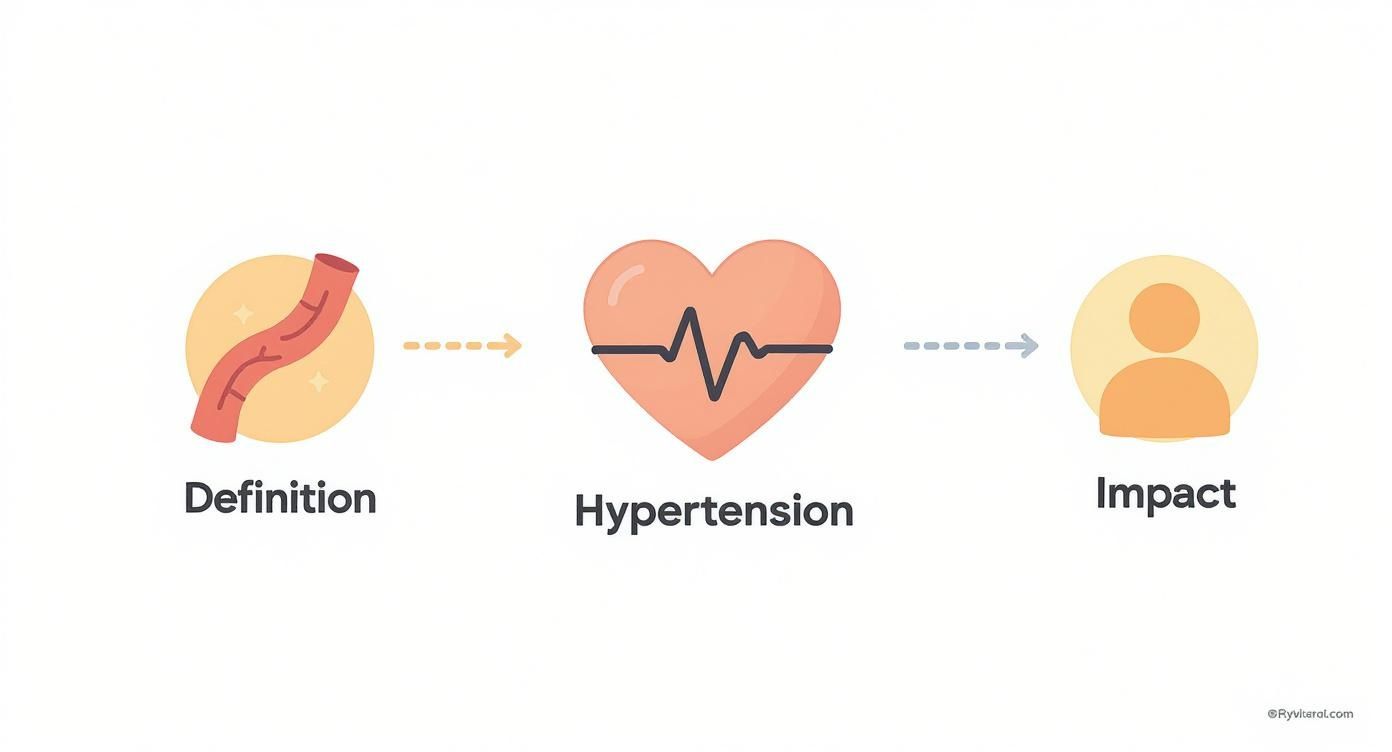
Think of high blood pressure, or hypertension, like the water pressure in your home’s pipes. When the pressure is too high for too long, it puts a constant strain on the pipes and can eventually cause serious damage. In the same way, hypertension puts extra strain on your blood vessels and vital organs—especially your heart, brain, and kidneys.
This condition is a major health issue for millions, but it touches the Black community in a particularly deep way. We’re going to walk through this topic with warmth and clarity, focusing not on fear, but on the empowerment that comes from knowledge. Our goal is to create a supportive space for families and caregivers, which is a value we hold deeply in our mission to help families care for one another.
The Numbers Tell a Story of Our Families
Statistics can sometimes feel cold and impersonal, but here, they tell an urgent story about our community’s health. When it comes to high blood pressure in African Americans, the numbers reveal a critical health disparity that we simply can't ignore.
Hypertension is more common, starts earlier in life, and is often more severe in African Americans. This isn't about anyone's fault; it's the result of a complex mix of historical, social, and biological factors that we’ll explore together.
The hard truth is that Black Americans have the highest rates of high blood pressure in the country. Let’s look at what that means for us.
Hypertension Rates: A Community Snapshot
To put this into perspective, the table below shows just how significant this health gap is. It highlights the rates of high blood pressure across different racial and ethnic groups in the United States, making the disparity crystal clear.
| Racial/Ethnic Group | Percentage with High Blood Pressure |
|---|---|
| Black, non-Hispanic | 58.6% |
| White, non-Hispanic | 48.7% |
| Asian, non-Hispanic | 45.8% |
| Hispanic | 43.7% |
Source: CDC/NCHS, National Health and Nutrition Examination Survey, 2017–2020.
As you can see, nearly six out of ten Black adults are living with high blood pressure. Seeing these numbers side-by-side really underscores why this conversation is so important for our families.
What This Means for Your Family
Understanding these numbers is the first step toward taking control. For family members and caregivers, this knowledge is a powerful tool. It means we can be more mindful during family get-togethers, more encouraging about getting regular check-ups, and more supportive in making small, heart-healthy changes together.
It’s about turning awareness into loving action. For example, maybe you're the one who cares for your aging father. This might look like:
- Starting conversations: Gently saying, "Dad, I was reading about blood pressure and it made me think of you. Have you had yours checked lately?"
- Leading by example: Preparing a family meal with a little less salt, or suggesting a walk around the block after Sunday dinner.
- Offering practical help: Giving a loved one a ride to their doctor's appointment or helping them set up a system to track their readings at home.
This guide will walk you through the reasons behind these health gaps, the risks involved, and—most importantly—the hopeful and practical steps you can take. Every small action you take contributes to a healthier future for the people you love most.
The Reasons Behind Higher Rates of Hypertension
When we see that high blood pressure affects our community more than others, it's natural to ask, "Why?" It’s a question that deserves a thoughtful and compassionate answer. Understanding the reasons isn’t about placing blame; it’s about seeing the whole picture so we can find the best ways to support each other and build a healthier future.
The story behind these higher rates is complex, weaving together threads of biology, history, and the realities of day-to-day life. It's never just one thing, but a combination of factors that have compounded over generations.
A Biological Predisposition
One part of the story may lie in our biology. Some research suggests that people of African descent may have a genetic trait that makes their bodies more sensitive to the effects of salt (sodium).
Imagine your body is a bit like a sponge. For some of us, that sponge holds onto salt and water more tightly. This extra salt and fluid in the bloodstream increases the volume of blood, which in turn raises the pressure inside the blood vessels—similar to how turning up the water full blast increases the pressure in a garden hose. This salt sensitivity could be one reason why what we eat plays such an important role in managing blood pressure in our community.
The Heavy Weight of Environment and Experience
But let's be clear: genetics are only a small piece of a much larger puzzle. The conditions in which we are born, grow, live, work, and age—what experts call social determinants of health—play a massive role. For many in the Black community, these factors create significant and unique challenges.
Here’s what this looks like in the real world for our families:
- Chronic Stress: Living with the constant, low-grade stress of systemic racism, discrimination, and economic pressure takes a physical toll. This isn't just a feeling; it causes the body to release stress hormones that can raise blood pressure over time.
- Food Deserts: Many predominantly Black neighborhoods are "food deserts," where getting affordable, fresh, and healthy food is a daily struggle. When the only options nearby are fast food or convenience stores, it becomes incredibly difficult to follow a heart-healthy diet.
- Historical Distrust: Generations of negative experiences with the healthcare system have created a deep and justified sense of distrust. This can lead to avoiding doctor's visits, delaying treatment, or not feeling heard—all of which allow hypertension to go unmanaged.
It's crucial to understand that high blood pressure in the African American community is not a personal failure. It is often a normal biological response to abnormal, stressful, and unjust circumstances that have been present for centuries.
The Lasting Impact of History
The roots of these challenges run deep. Consider the diet of our enslaved ancestors, which was often high in salt to preserve what little food was available. This has shaped cultural food traditions over time.
While soul food is a beautiful expression of resilience and heritage, some traditional preparation methods can contribute to high sodium intake. This doesn't mean we have to abandon our culture—far from it. Instead, it’s about understanding where these patterns come from so we can adapt them for our health today, flavoring our beloved dishes with rich spices and herbs instead of excess salt.
By acknowledging all these factors—from biology to the stress of daily life—we can approach this health challenge with more empathy and effectiveness. The first step to healing is understanding, and now that we see the full picture, we can focus on real, meaningful solutions.
The Hidden Health Risks of High Blood Pressure
Knowing that high blood pressure is more common in our community is the first step. The next, more personal step is to understand why it's so critical to manage it. The point here isn't to cause alarm—it's to give you the knowledge to protect yourself and your family. Honestly, understanding the risks is often the most powerful motivation we have to safeguard our health.
Imagine your blood vessels are a smooth, powerful river. When the water flows at a normal pace, the riverbanks stay strong and intact. But if that river is constantly raging, the forceful current slowly erodes the banks, weakening them over time until they start to crumble.
That’s exactly what persistently high blood pressure does inside your body. It puts constant, hammering pressure on the delicate inner lining of your arteries. Over months and years, this relentless force creates tiny injuries and inflammation, causing the arteries to become stiff, narrow, and less flexible. This damage doesn’t just stay in one place; it travels through your entire system, putting your most vital organs at risk.
How Hypertension Affects Your Heart and Brain
Your heart and brain are especially vulnerable to the long-term strain of high blood pressure. Your heart, the hardest-working muscle you have, is forced to pump much harder to push blood through those narrowed, rigid arteries. It’s like trying to force water through a clogged pipe—it takes a whole lot more effort.
Over time, this extra workload causes the heart muscle itself to thicken and weaken, which can lead to life-altering conditions.
- Heart Attack: When arteries supplying blood to the heart get damaged and blocked from the constant high pressure, it can trigger a heart attack.
- Heart Failure: The overworked heart eventually gets tired and struggles to pump enough blood to meet the body's needs.
- Stroke: High blood pressure is the number one cause of stroke. It can weaken blood vessels in the brain until they burst, or it can cause clots that cut off blood flow to parts of the brain.
For African Americans, these risks are unfortunately magnified. The real-world impact of african americans and hypertension is devastatingly clear in the rates of heart disease. In 2022, non-Hispanic Black individuals died from heart disease at a rate that was 4% higher than the total population. These aren't just statistics; they're a reminder of the urgent need for proactive care in our families and communities. You can learn more about these health disparities from the Office of Minority Health.
The Impact on Your Kidneys and Vision
Your heart and brain aren't the only organs in the line of fire. Your kidneys and eyes also depend on a network of tiny, delicate blood vessels to do their jobs.
The kidneys act as your body's master filtration system, constantly cleaning waste from your blood. High blood pressure damages these small blood vessels, making it harder for your kidneys to filter properly. Over the long haul, this can lead to chronic kidney disease or even kidney failure—a condition that is far too common in the Black community.
Think of it this way: high pressure damages the very filters designed to keep your body clean. Protecting your blood pressure is one of the most important things you can do to protect your kidneys for life.
It's a similar story for your eyes. The tiny blood vessels that feed your retina—the light-sensitive tissue at the back of your eye—can be damaged by uncontrolled hypertension. This condition, called hypertensive retinopathy, can cause blurred vision or even lead to permanent vision loss if it isn't addressed.
Understanding these connections isn't about dwelling on fear. It’s about seeing the full picture so you can take small but powerful steps to protect yourself and the people you love. Every time you check your blood pressure, choose a healthier meal, or go for a walk, you are actively defending your heart, brain, kidneys, and eyes.
Heart Health Challenges for Black Women
Within our community, Black women are so often the pillars of strength. They're the caregivers, the organizers, the providers—the very heart of so many families and neighborhoods. While this role is a source of deep pride and love, it can also bring a heavy, often invisible, health burden.
When we talk about african americans and hypertension, it’s vital that we hold a special space to honor and support the unique journey of Black women. They face the highest rates of high blood pressure, often while juggling countless other responsibilities and putting everyone else's needs first. This isn't just another statistic; it's a call for understanding and a gentle reminder that your health is not a luxury—it's your foundation.
The Overwhelming Numbers
The numbers paint a stark picture, one that validates what so many Black women already feel in their daily lives. Recent data shows that an astonishing 58.4% of Black women are living with high blood pressure. This is the highest rate of any demographic group in the entire country.
To put that in perspective, this rate is nearly 50% higher than that of non-Hispanic white women, spotlighting a major health disparity that we simply can't ignore. You can learn more about these hypertension rates from Franciscan Health. These aren't just numbers; they represent our mothers, grandmothers, sisters, and aunties navigating this every single day.
The Dangers During and After Pregnancy
One of the most critical times for a woman's heart health is during and after pregnancy. For Black women, this period carries even heavier risks. Hypertensive disorders of pregnancy, like preeclampsia, are not only more common but are often more severe.
These conditions pose immediate dangers to both mother and baby, but the story doesn't end at delivery. What's often overlooked is the long-term impact. Having high blood pressure during pregnancy significantly raises a woman's risk of developing chronic hypertension and heart disease later in life, making dedicated postpartum care absolutely essential.
Prioritizing your own health isn't selfish; it's a necessary act of love for yourself and for everyone who depends on your strength and presence. Your well-being matters deeply.
The Power of Speaking Up for Yourself
For generations, many Black women have felt dismissed or unheard in medical settings. This experience can make it incredibly difficult to speak up, ask tough questions, or challenge a diagnosis. But your voice is your most powerful tool.
Speaking up for yourself simply means trusting what your body is telling you and having the confidence to share that with your doctor.
- Listen to your body: Don't brush off symptoms like frequent headaches, shortness of breath, or unusual swelling. These can be important signals.
- Prepare for appointments: Jot down your questions and concerns beforehand so you don’t forget anything in the moment.
- Bring a support person: Ask a trusted family member or friend to come to your appointments. They can be a second set of ears and help you advocate for your health.
Your health journey is a partnership, and you are the most important person on the team. Taking that first small step—like asking one more question at your next doctor's visit—can make all the difference.
Practical Steps for a Heart-Healthy Lifestyle
This is where knowledge turns into loving action. This part of our conversation is all about taking small, manageable steps toward a healthier life for you and your family. Forget about drastic diets or impossible goals. We're focusing on progress, not perfection.
Managing blood pressure is a journey, and every positive choice you make is a victory. It’s about building a lifestyle that supports your heart in ways that feel good and bring joy.
Infuse Flavor Without the Salt
Our food is a beautiful and vital part of our culture, rich with history and flavor. The good news? You don't have to give up the dishes you love to protect your heart. The key is to rethink how we build those delicious, soulful flavors.
Many traditional recipes rely heavily on salt for taste, but our ancestors were masters of herbs and spices. Let’s bring that tradition right back to the forefront.
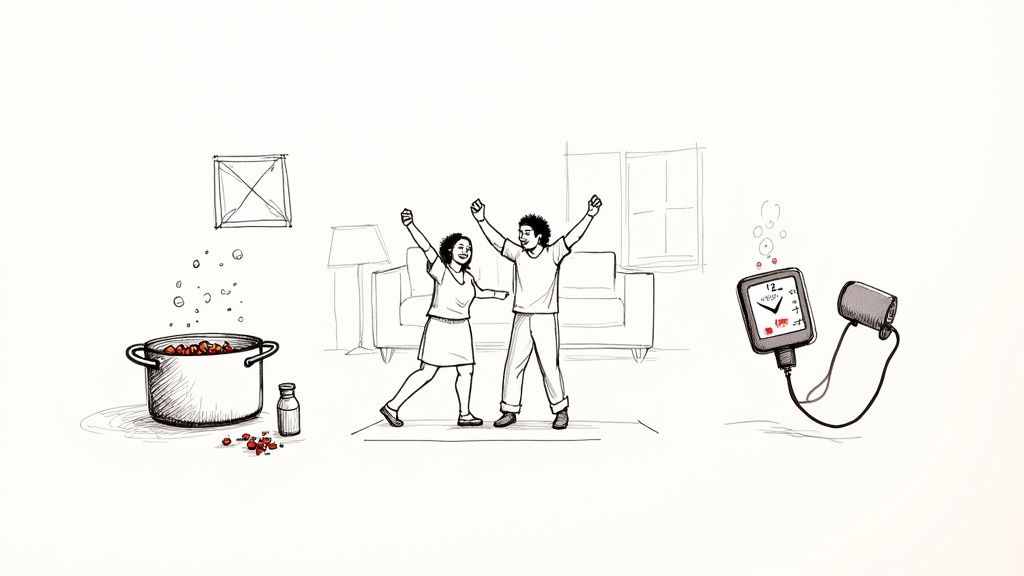
- Spice Up Your Life: Explore the vibrant world of spices. Smoked paprika, garlic powder (not garlic salt), onion powder, and a pinch of cayenne can add incredible depth and warmth to greens, meats, and stews.
- Embrace Fresh Herbs: Fresh cilantro, parsley, thyme, and rosemary bring a brightness to food that salt simply can't match. Try adding them near the end of cooking for the biggest flavor impact.
- Citrus is Your Friend: A squeeze of lemon or lime juice can awaken the flavors in a dish, often cutting down the need for any added salt at all.
For many of us, soul food and classic family recipes are packed with love—and often, a lot of salt. But a few simple swaps can make a huge difference without sacrificing the tastes we grew up with.
Heart-Healthy Swaps for Your Favorite Meals
| Instead of This (Higher in Sodium/Fat) | Try This Heart-Healthy Swap |
|---|---|
| Salted meats like ham hocks or salt pork to flavor greens. | Smoked turkey wings or smoked paprika for a rich, smoky flavor with far less sodium. |
| All-purpose seasoning salt or seasoning packets for chicken or fish. | A homemade blend of garlic powder, onion powder, black pepper, and herbs like thyme and oregano. |
| Canned vegetables packed in salted water. | Fresh or frozen vegetables, or no-salt-added canned versions. Rinse them well before cooking. |
| Store-bought sauces and gravies, often high in sodium. | Homemade sauces using low-sodium broth, thickened with a little cornstarch and flavored with herbs. |
By getting creative in the kitchen, you can honor our culinary heritage while making it beautifully heart-healthy. This is about adding more flavor, not taking anything away.
Find Joy in Movement
When you hear "exercise," it’s easy to picture a gym, but staying active can be so much more joyful and personal. The goal is simply to move your body in ways that make you feel happy and energized. Think of it as a celebration of what your body can do.
You don't need a fancy membership or expensive equipment. Joyful movement can happen anywhere, and it’s even better when you share it with people you love.
- Start a Family Dance Party: Put on your favorite music in the living room and just let loose. It’s a wonderful way to burn calories, relieve stress, and create beautiful memories.
- Join a Walking Group: Connect with neighbors or friends for a daily or weekly walk. It’s a chance to socialize, get fresh air, and support each other’s health goals.
- Explore Local Parks: Take a walk, play a game of catch, or simply enjoy nature. Being outdoors has its own unique benefits for lowering stress and blood pressure.
Understand Your Numbers at Home
Monitoring your blood pressure at home is one of the most empowering steps you can take. It puts you in the driver's seat, turning something that might feel mysterious into clear, understandable information. An at-home monitor is a powerful tool for managing African Americans and hypertension.
Don't let the numbers intimidate you. They are simply feedback—a helpful guide telling you how your body is responding to your efforts.
- The Top Number (Systolic): This measures the pressure in your arteries when your heart beats.
- The Bottom Number (Diastolic): This measures the pressure in your arteries when your heart rests between beats.
Keeping a simple log of your readings helps your doctor see the bigger picture. You can use a notebook or a helpful app. For families coordinating care, a shared reminder tool like the Don’tForgetDad app for Android can help everyone stay on the same page with medication and monitoring schedules. This team approach can make tracking feel like a shared effort instead of a solo chore.
Navigating Healthcare and Medication Together
Helping a loved one manage their high blood pressure is a true partnership, one built on a foundation of love, patience, and open conversation. For many families, this journey means coordinating medications and doctor’s visits, which can feel like a heavy weight to carry. But with the right approach and a few simple tools, you can navigate this path together, making it less of a burden for everyone.
This is a space of total non-judgment. It is completely normal for a parent or spouse to occasionally forget a dose or feel discouraged by side effects. The goal is never to assign blame but to gently find solutions that make sticking to the plan feel easier and more automatic.
Creating a Simple Medication Routine
One of the most compassionate things you can do is help design a simple, stress-free routine for taking medication. When you’re managing high blood pressure, consistency is everything, and a predictable system takes the daily guesswork out of the equation. For families managing african americans and hypertension, these small acts of support can make all the difference.
Here are a few gentle strategies that families have found incredibly helpful:
- Use a Weekly Pill Organizer: A simple plastic organizer with compartments for each day of the week can be a total game-changer. It offers a quick, visual check-in to see if the day’s medication has already been taken.
- Set Gentle Reminders: A daily alarm on a phone, an alarm clock, or even a smart speaker can serve as a friendly nudge. For a child living apart, you can set a recurring reminder on your own phone to make a quick, loving call to an aging parent.
- Connect Medication to a Daily Habit: Try linking pill time to something that’s already a firm part of their day, like right after brushing their teeth in the morning or just before settling in to watch their favorite evening TV show.
The most important part of this process is to approach it with love and respect. Frame it as, "How can we make this easier for us?" rather than, "You need to remember to do this." It transforms a chore into an act of shared care.
Building a Trusting Partnership with Your Doctor
A strong, trusting relationship with a healthcare provider is the cornerstone of good blood pressure management. Feeling heard, respected, and truly understood is essential. This is especially true given the history of medical distrust within the Black community. You and your loved one have every right to be active partners in the care you receive.
Preparing for appointments together can help you make the most of your limited time and ensure all of your concerns are heard and addressed.
- Write Down Questions in Advance: Before a visit, sit down together and make a simple list of any questions or concerns you have about medications, potential side effects, or blood pressure readings.
- Bring Your Blood Pressure Log: If you're keeping track of readings at home, always bring the logbook. This real-world data gives the doctor invaluable insight into how the treatment plan is working from day to day.
- Don't Be Afraid to Ask for Clarity: If a doctor uses a medical term you don't understand, it is perfectly okay to pause them and say, "Could you explain that in a simpler way for us?"
Frequently Asked Questions
When you're navigating a health condition like hypertension, a lot of questions can come up. This is true for the person who's been diagnosed and for the family members who love and support them. We've gathered some of the most common concerns we hear from families in our community to give you some warm, clear answers.
Does High Blood Pressure Have Symptoms I Should Watch For?
This is one of the most critical questions we get, and the answer often surprises people. High blood pressure is called the "silent killer" for a very good reason—it usually has no symptoms at all, especially in the beginning. You can feel completely fine even when your blood pressure is dangerously high.
That's why you can't afford to wait for a sign before getting it checked. The only way to know for sure if you have hypertension is to get your blood pressure measured regularly. That simple, painless check is the most powerful tool you have to protect yourself, and it's a key part of understanding the connection between African Americans and hypertension.
Can I Manage My Blood Pressure with Diet and Exercise Alone?
For some people, absolutely. Making consistent lifestyle changes can be enough to bring their blood pressure back into a healthy range. A heart-friendly diet, finding movement you enjoy, and managing stress can have a wonderful impact on your numbers and how you feel every day.
But for many others, medication is a necessary, life-saving part of the plan. It’s not a sign that you've failed; it's a powerful tool that works alongside your healthy habits to protect your heart, brain, and kidneys. The key is to work closely with your doctor to create a plan that’s right for your unique situation.
How Can I Best Support a Family Member?
Stepping up to support a loved one is one of the most loving things you can do. The best support is gentle, consistent, and full of encouragement—not criticism.
Your role isn't to be the "blood pressure police," but to be a loving partner in their health. Focus on positive actions you can take together, celebrating small wins and offering a hand without judgment.
Here are a few ideas to get you started:
- Be a walking buddy. Offer to join them for a walk around the neighborhood a few times a week. It’s good for both of you.
- Cook together. Explore new, low-sodium recipes and turn heart-healthy meals into a shared activity.
- Offer gentle reminders. A kind text or a simple, "Did you remember your medicine this morning?" can make a huge difference.
For more tips on building a supportive family environment, check out the helpful resources on our blog.
At Don’tForgetDad, we believe in the power of shared care. Our simple reminder tool helps families coordinate medication schedules and daily check-ins, turning worry into peace of mind. Learn how Don’tForgetDad can support your family’s health journey.
Your small, hopeful takeaway: Your involvement is a powerful gift. By simply offering to help organize pills or jot down questions for the next doctor’s visit, you reinforce the most important message of all: "You are not alone in this."