 by Don'tForgetDad Team
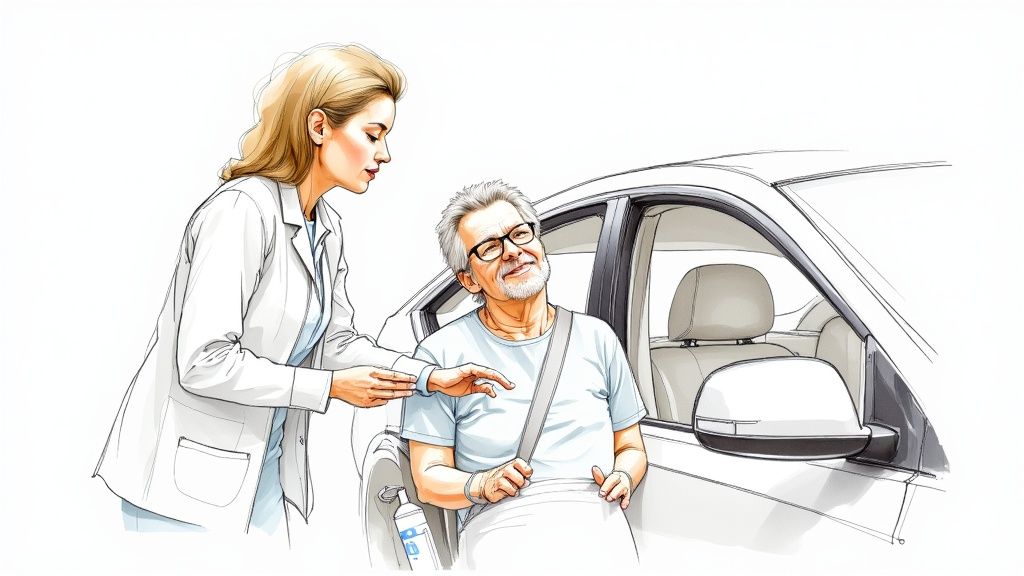
When the colonoscopy is over, your loved one will be resting in a recovery room as the anesthesia gently wears off. It’s completely normal for them to feel groggy, a little bloated, and a bit confused during this time. Your job is simple but so important: be a warm, comforting presence, listen carefully to the doctor's instructions, and make sure they get home safely to rest.
Navigating the First 24 Hours After a Colonoscopy
The time right after the procedure can feel like a blur. Your loved one is just waking up, and you’re both waiting to hear what the doctor found. Just knowing what to expect can make the whole experience feel calmer. Remember, you're not just their ride home—you're their advocate and a much-needed second set of ears during a foggy time.
It’s easy to forget just how important this procedure is for preventive health. When caught early, the cure rates for colon cancer can be as high as 90%, which really highlights its life-saving potential. The global market for these procedures was recently valued at around USD 4.1 billion, a testament to how common and critical this screening is. You can discover more insights about the colonoscopy market and its massive impact on public health.
Your Role in the Recovery Room
As your loved one is moved to the recovery area, your support really begins. They'll be connected to monitors that keep an eye on their heart rate and breathing as the sedative fades.
Here’s how you can be a huge help:
- Be a Calming Presence: Your familiar face and a soft, reassuring voice can do wonders to ease their anxiety as they wake up.
- Help Them Get Dressed: They'll likely be unsteady on their feet. Offer a hand to hold or a shoulder to lean on while they slowly get dressed.
- Listen to the Discharge Instructions: A doctor or nurse will come by to discuss what they found and give you care instructions. Because your loved one probably won't remember much of this conversation, it’s crucial for you to listen intently, take notes, and ask any questions you have.
The Journey Home
Just getting from the recovery room to the car can be a small adventure. Imagine your dad, still feeling the lingering effects of the anesthesia, trying to walk down a long hallway. He might feel dizzy or wobbly. The key is to take it slow. Let him lean on your arm, and don't rush.
"Your most important job in those first few hours is to be the memory keeper. Anesthesia can create a fog, and the doctor’s instructions about diet, medications, and warning signs are too important to get lost."
Once home, the focus shifts entirely to rest and recovery. The doctor's orders are clear: they must avoid driving, using any machinery, or making important decisions for at least 24 hours. Your role is to help create a peaceful, comfortable environment where their only job is to relax. This gentle start is the foundation for a smooth healing process.
Here’s a quick checklist to help you manage these first critical hours.
Immediate Post-Procedure Care Checklist
| Action Item | Why It's Important | Caregiver Tip |
|---|---|---|
| Review Discharge Paperwork | This paper has vital info on diet, medication, and signs of complications. | Keep the paperwork in a visible spot, like on the kitchen counter. Take a picture of it with your phone for easy access. |
| Prepare a Light First Meal | Their system is sensitive. Start with clear liquids or bland foods like soup, toast, or crackers. | Have these items ready at home so you don't have to stop at the store on the way back. A little prep goes a long way. |
| Set Up a Rest Area | They will be tired and need to sleep. A quiet, comfortable spot is essential. | Make sure their bed or favorite chair is ready with pillows, blankets, and water within easy reach. |
| Manage Pain/Discomfort | Gas and cramping are common. | Before you leave, ask the nurse what over-the-counter pain relievers are okay to use. A heating pad can also feel wonderful on a crampy belly. |
| Offer Hydration | Dehydration is a risk after the prep and procedure. | Encourage sips of water, clear broth, or electrolyte drinks throughout the day. It's best to avoid alcohol and caffeine for now. |
Having a plan for these first few hours makes everything feel less stressful for both of you and ensures they have the loving support they need right from the start.
Easing Back Into Eating After a Colonoscopy
After the whole prep process, your loved one is probably starving. They've been on a liquid diet and might be dreaming about a big, satisfying meal. But it's really important to take it slow. Their digestive system has been through a lot and needs to be eased back into action gently.
Choosing the right foods right after the procedure is a huge part of a smooth, comfortable recovery.

They're going to be hungry, no doubt about it. But that first meal needs to be light and easy on the stomach. Think of it less like a feast and more like a gentle "welcome back" to their digestive system.
The First Foods to Have on Hand
For the first 24 hours, the game plan is all about two things: hydration and simple nutrition. The colonoscopy prep is incredibly dehydrating, so getting fluids back into their system is the top priority.
Here are some perfect choices to have waiting for them at home:
- Clear Liquids: Warm broth (chicken or vegetable), diluted apple or white grape juice, and herbal tea are fantastic for rehydrating without overwhelming their gut.
- Soft, Bland Foods: Things like applesauce, gelatin, plain yogurt, or some smooth mashed potatoes are super easy to digest.
- Simple Carbs: Plain white toast (maybe hold the butter for now), saltine crackers, and plain white rice are great for providing a bit of substance without making their stomach work too hard.
Let's imagine a real-world scenario. You get Dad home, and the first thing he asks for is his favorite double cheeseburger with fries. It’s tempting to give in, but you’ll have to be the gentle voice of reason. You could say something like, "I know you're starving, Dad, but your stomach needs a little time to recover. How about we start with this warm chicken noodle soup I made? We can totally plan for that burger in a day or two once you're feeling 100%."
Foods to Put on Pause for a Day or Two
Knowing what not to eat is just as important. Some foods can trigger gas, bloating, and cramping—exactly what you want to avoid.
For at least the first 24 hours, it’s best to avoid:
- Greasy and Fried Foods: This means no pizza, french fries, or anything from a deep fryer.
- Spicy Foods: Hot sauce, curries, and anything heavily spiced can irritate their sensitive system.
- High-Fiber Foods: While normally great, raw veggies, whole grains, nuts, and beans are too tough to digest right after a colonoscopy.
- Alcohol and Caffeine: Both can cause dehydration and might not mix well with the lingering effects of the sedation.
The goal isn't to create a long-term diet plan. It’s just about giving their body a short break to heal. A day of bland-but-comforting food is a tiny trade-off for a much faster, smoother recovery.
A Sample Meal Plan for Day One
To make things super simple, here’s a little roadmap for that first day:
- On the Way Home: Start with small sips of water or an electrolyte drink in the car.
- First Meal: Once you’re settled, offer a small bowl of clear broth with a few saltine crackers on the side.
- A Few Hours Later: A cup of applesauce or a small dish of gelatin makes a perfect light snack.
- Before Bed: A warm, caffeine-free tea like chamomile can be very soothing.
This slow-and-steady approach lets their body get back into the swing of things without any extra stress. By the next day, they should be ready for more solid foods and well on their way to feeling like themselves again.
Creating a Comfortable Healing Space at Home

Once you’ve brought your loved one home, their only job is to rest. Seriously. The anesthesia takes time to fully wear off, and their body needs a quiet, calm space to start healing. Setting up a dedicated comfort zone can make a huge difference in how they feel over the next day.
This is about more than just fluffing a few pillows. It’s about thinking ahead and anticipating their needs so they can truly relax without having to ask for every little thing. Whether they settle into their favorite recliner or get tucked into bed, your goal is to create a little recovery nest.
Setting Up the Perfect Rest Stop
Try to get everything they might need within arm's reach. This simple act of preparation isn't just practical; it’s a powerful way to show you care and to give them permission to do absolutely nothing for a while.
Think about gathering these items:
- Hydration: A big water bottle, maybe some ginger ale, or an electrolyte drink with a cup.
- Entertainment: The TV remote, a good book, their reading glasses, or a crossword puzzle.
- Comfort: A soft, warm blanket and a few extra pillows to help them get into just the right position.
- Communication: Their phone, fully charged and close by.
"Rest isn't a suggestion; it's a prescription. For the first 24 hours after a colonoscopy, their body's primary task is to recover from the sedation and the procedure itself. Encouraging this downtime is one of the most supportive things a caregiver can do."
Why "Taking It Easy" Is Non-Negotiable
It’s pretty common for someone to feel surprisingly alert a few hours after the procedure. But the effects of sedation are sneaky and can linger for up to 24 hours. This is exactly why the doctor's orders are so strict: no driving, no operating machinery, and no making any big decisions.
For example, your mom might feel perfectly fine and decide she's going to start a load of laundry. This is the perfect time to gently step in. "Mom, your only job today is to relax and let me handle things. The laundry can wait." Reminding them of this isn't nagging; it's about keeping them safe while their judgment and coordination are still a bit off.
A colonoscopy is the gold standard for early cancer detection, and following the post-procedure instructions is a critical part of a successful outcome. Even though the procedure is common, ensuring patients get the right support afterward remains a focus worldwide. You can learn more about global colonoscopy market trends and the ongoing efforts to improve patient care.
By creating a peaceful space, you’re helping them honor this crucial healing period. One small but mighty tip? Offer to mute their phone notifications so they can nap without being disturbed.
Knowing the Warning Signs: When to Call the Doctor
Complications after a colonoscopy are rare, but knowing what to look for brings incredible peace of mind. This isn't about creating worry; it’s about being prepared so you can confidently tell the difference between normal recovery discomfort and something that needs a doctor’s attention.
It’s completely normal to feel some bloating or gas pains in the first day or two. This is usually just trapped air from the procedure working its way out. However, there are a few key signs that mean it's time to pick up the phone.
When a Symptom Needs Attention
Think of it this way: your loved one's body is giving you feedback. Most of the time, it's just saying, "I'm a little gassy," but sometimes it might be signaling something more. Always trust your gut—if a symptom feels severe or just plain wrong, it’s always better to make the call.
It’s easy to second-guess yourself, but you know the person you're caring for best. For instance, if your dad, who normally has a high pain tolerance, says his stomach pain is getting worse instead of better, that’s a clear signal to act.
"Your role as a caregiver isn't to diagnose the problem but to be a vigilant observer. Noticing a change and acting on it is the most powerful way you can support their recovery and ensure their safety."
Colonoscopies are a vital tool for preventative health. In a recent year, colorectal cancer led to around 153,000 new cases and over 52,500 deaths in the United States, which underscores just how crucial post-procedure care really is. You can discover more insights about colorectal cancer screening trends and the ongoing importance of these procedures.
Red Flags to Watch For
Keep this simple list handy. If you notice any of the following, don't wait to see if they go away on their own.
- Severe Abdominal Pain: This isn't the mild cramping that comes with gas. We’re talking about sharp, constant pain that doesn't ease up.
- A Hard or Swollen Belly: If their abdomen feels firm to the touch, tight, or looks unusually bloated, it could be a sign of trouble.
- Fever or Chills: A temperature of 100°F (37.8°C) or higher is your cue to call the doctor.
- Heavy or Continuous Rectal Bleeding: A tiny bit of blood on the toilet paper right after the procedure can be normal, especially if a polyp was removed. However, passing actual blood clots or seeing more than a teaspoon of blood in the toilet is not.
- Dizziness, Weakness, or Fainting: These can signal a more serious issue and require immediate medical attention.
- Nausea or Vomiting: A little bit of queasiness can happen after sedation, but persistent vomiting is definitely a red flag.
Having this information doesn’t mean something will go wrong—it just means you’re prepared for anything. If you’re ever unsure or just need reassurance, don't hesitate to contact a healthcare professional. You can also contact our team at Don’tForgetDad with general questions about caregiving support.
Your Actionable Tip: Before you even leave the facility, make sure you have the after-hours phone number for the doctor's office. Program it into your phone right away so it’s ready, just in case.
Your Practical Caregiver Checklist and Tips
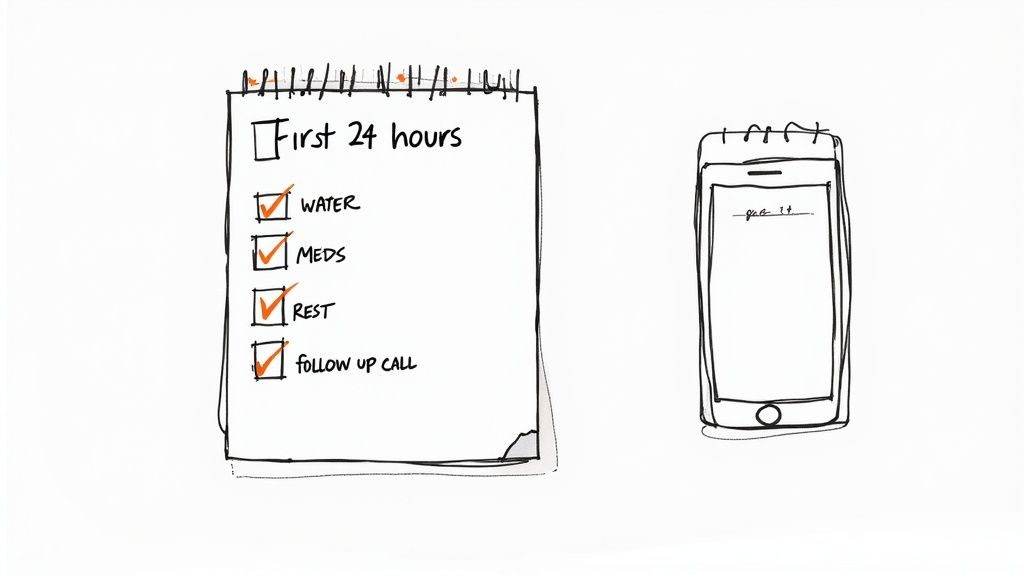
Trying to remember every little detail after a medical procedure can feel overwhelming. A simple, practical plan can make all the difference, cutting through the stress so you can focus on what really matters: your loved one’s comfort and well-being.
Think of this less as a rigid to-do list and more as a helpful roadmap. It breaks down the recovery process into manageable chunks, giving you a clear path from the moment you leave the clinic to the days that follow.
Before You Leave the Facility
Those last few minutes at the clinic are more important than you might think. Your loved one is likely still feeling foggy from the sedation, which makes you the official advocate and note-taker.
- Confirm Follow-Up: Ask for a clear timeline on when to expect biopsy results and who will be calling with that information.
- Clarify Medications: Double-check when they can restart their normal medications. This is especially important for things like blood thinners.
- Get Contact Info: Don't just grab a pamphlet—program the clinic's after-hours number directly into your phone before you walk out the door.
The First 24 Hours at Home
This is the most important period for recovery. Your main job is to make sure they rest, hydrate, and stay as comfortable as possible.
- Create a Rest Zone: Get them settled in a cozy spot. Make sure things like water, a warm blanket, and the TV remote are all within easy reach.
- Offer Gentle Foods: Stick with the recommended diet, which usually means clear liquids and bland foods like soup, toast, crackers, or applesauce.
- Monitor for Discomfort: Keep a gentle eye on them. Bloating and gas pains are common, and a little bit of walking or a warm compress on the abdomen can provide a lot of relief.
Your presence during this first day is incredibly reassuring. It allows them to fully rest, knowing someone is there to manage the small details and keep a watchful eye.
The Following Days
As they start to feel more like themselves, your role naturally shifts from hands-on care to gentle monitoring and coordinating follow-up items.
- Track Bowel Movements: Don't be surprised if it takes a day or two for their system to get back on track. A little blood on the toilet paper is often normal after a polyp removal, but keep an eye out for anything more significant.
- Schedule Reminders: When you're juggling so much, don't rely on your memory alone. A shared family calendar or a simple reminder tool can be a lifesaver.
- Coordinate with Family: You shouldn't have to do this all by yourself. Sharing the responsibility is key to avoiding caregiver burnout.
For instance, you could set up a shared reminder for your sister to call and check on Dad at 6 PM, giving you a much-needed breather. A simple automated message—"Just a reminder, it's your turn to check on Dad!"—can make a huge difference.
Tools designed specifically for family caregivers can help manage all these moving parts without making life more complicated. You can learn more about setting up simple, shared reminders for your loved ones at Don’tForgetDad.
This kind of teamwork ensures everyone is in the loop and that important tasks, like calling to get biopsy results, don’t get missed.
Your Actionable Tip: Take five minutes right now and set a calendar alert for one week from the procedure date. Label it: "Follow up on biopsy results if we haven't heard back." It's a small step that provides major peace of mind.
Common Questions After a Colonoscopy
When you bring a loved one home after a colonoscopy, lots of little questions can pop up. It's one thing to hear the instructions in the recovery room, but it's another to be at home dealing with things in real-time. Knowing the answers to common concerns can make the next day or two feel much smoother for both of you.
Here are some of the most frequent questions from family caregivers.
How Much Bleeding is Normal?
Seeing a bit of blood can be alarming, but it’s not always a cause for panic. If the doctor removed a polyp, it's very common to see a little spotting or a few streaks of blood on the toilet paper. This might last for a day or two. Think of it like a small scrape inside that's starting to heal.
The key is knowing the difference between a "little" and "too much."
It’s time to call the doctor's office right away if you see:
- Bleeding that doesn't stop
- Any blood clots, no matter how small
- More than a teaspoon of blood in the toilet bowl
Those are signs that something isn’t right, and you need medical advice.
When Can They Go Back to Normal Food and Activities?
The first 24 hours are all about taking it easy. Your loved one is probably starving after the prep, but their digestive system needs a gentle restart. For the rest of the day, stick with light, simple foods—soup, toast, eggs, that sort of thing. By the next morning, they can usually get back to their regular diet.
As for activities? The only thing on their schedule today is rest.
The sedation can affect judgment, coordination, and reflexes for up to 24 hours, even if they feel totally fine. That’s why driving, using machinery, or making big decisions is an absolute no-go for today.
Most people feel back to themselves the next day and can resume their normal routine, unless the doctor specifically told them otherwise.
They're Really Gassy and Bloated. What Can I Do?
This is easily the most common complaint after a colonoscopy. To get a good look inside, the doctor has to inflate the colon with air. All that air has to come out, and on its way, it can cause some pretty uncomfortable bloating, cramping, and gas pains.
Fortunately, you can help them find some relief:
- Encourage gentle movement. Even a slow walk around the house can work wonders to get things moving.
- Suggest they lie on their left side. It's a classic trick that often helps release trapped gas.
- Skip the fizzy drinks. Carbonated beverages like soda will just add more gas to the situation.
If the bloating seems extreme or the pain is sharp and won't let up, don't hesitate to call the doctor.
Your Actionable Tip: A warm compress or heating pad on the belly can be incredibly soothing for gas cramps. Just make sure it’s on a low setting, and don’t let them fall asleep with it on.
How Long Until We Get the Biopsy Results?
If the doctor removed any polyps for testing, the waiting begins. This wait can be a little nerve-wracking, but you can typically expect to hear back in about one to two weeks. The clinic will usually call with the results as soon as the report is ready.
Before you leave the facility, ask them about their timeline for results. If you haven't heard anything by the end of that window, it's perfectly okay to give their office a polite call for an update.
For more practical caregiving tips, you can always find helpful articles on the Don'tForgetDad caregiving blog.
Keeping track of everything—from follow-up calls about biopsy results to medication schedules—can feel like a full-time job. Don’tForgetDad makes it easier by letting you create and share reminders with the whole family. It's a simple way to make sure everyone is on the same page and nothing important gets missed. Bring some peace of mind to your caregiving and try it today at https://dontforgetdad.com.