 by Don'tForgetDad Team
It's completely normal to feel a surge of concern when you notice your loved one's heart beating a little faster after they use their albuterol inhaler. That brief moment of worry is something almost every caregiver experiences. But here’s the reassuring part: a temporary bump in heart rate is a very common and expected side effect of this medication.
It's actually a sign that the albuterol is doing its job—opening up their airways to make every breath a little easier.
What to Expect with Albuterol and Heart Rate
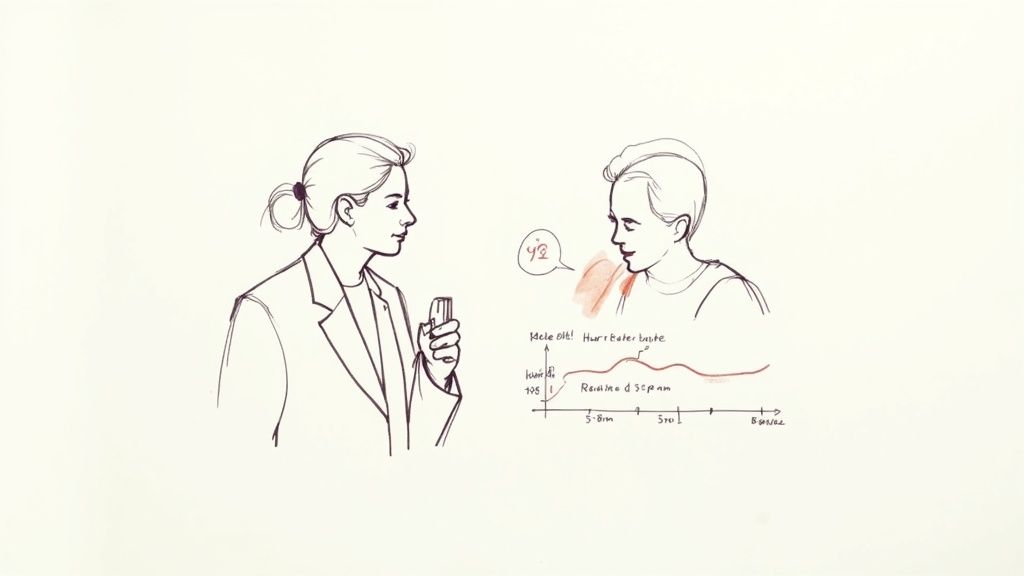
Watching over someone you love means you’re tuned into the small things, and a change in their pulse is definitely one of those details you'll pick up on. When your parent uses albuterol, its main job is to relax the tight muscles around their airways. Think of it like a key unlocking a constricted passage, allowing air to flow freely again.
However, that same key can sometimes give the heart a little nudge, too. This can cause a temporary, mild increase in their pulse. For most people, this feels like a slight flutter or the same feeling you get after climbing a flight of stairs.
A Common and Gentle Response
This response is well-documented and usually isn't a cause for alarm. Imagine your dad uses his inhaler and his heart rate, which is normally 75, goes up to 80 for a little while. This is very typical. In fact, some studies show an average increase of about 4.4 beats per minute after taking albuterol. It's often such a small jump it goes completely unnoticed. You can find more details about these findings from studies on albuterol's effects at consensus.app.
To help ease your mind, it helps to know what to look for. Here's a quick guide to help you tell the difference between a normal reaction and something that might need a closer look.
Albuterol Heart Rate at a Glance
This table breaks down what you might see and how to respond, helping you stay calm and confident.
| Symptom | What It Means | Your Loving Response |
|---|---|---|
| Slight Flutter or "Fast" Feeling | A common, mild side effect as the medicine starts working. | Reassure them this is normal and will pass. Maybe offer a glass of water. |
| Shakiness or Jitters | Also a very common response, similar to drinking too much coffee. | Sit with them quietly. Let them know you're there and this is expected. |
| Noticeable, Mild Pulse Increase | An expected temporary effect of the medication on the heart. | Check their pulse. A small, brief increase is typical. |
| Severe Racing Heart or Chest Pain | This is not a typical reaction and needs immediate attention. | Trust your instincts. Contact their doctor or seek emergency care right away. |
Knowing what to expect can turn a moment of worry into a feeling of reassurance.
A Note of Comfort: Most of the time, a faster heart rate is just a sign the albuterol is actively working to improve your loved one's breathing.
The key is that this effect is temporary. That feeling of a racing heart or shakiness should start to fade within an hour or two after their treatment. Understanding this from the start helps you stay calm and feel more in control of the situation.
Why Albuterol Can Make the Heart Beat Faster
It can feel a little strange—even alarming—when a medication meant for the lungs suddenly makes the heart race. Let's talk about why this happens in a simple way. Understanding the "how" can help turn that worry into reassurance, knowing it’s often a sign the medicine is doing its job.
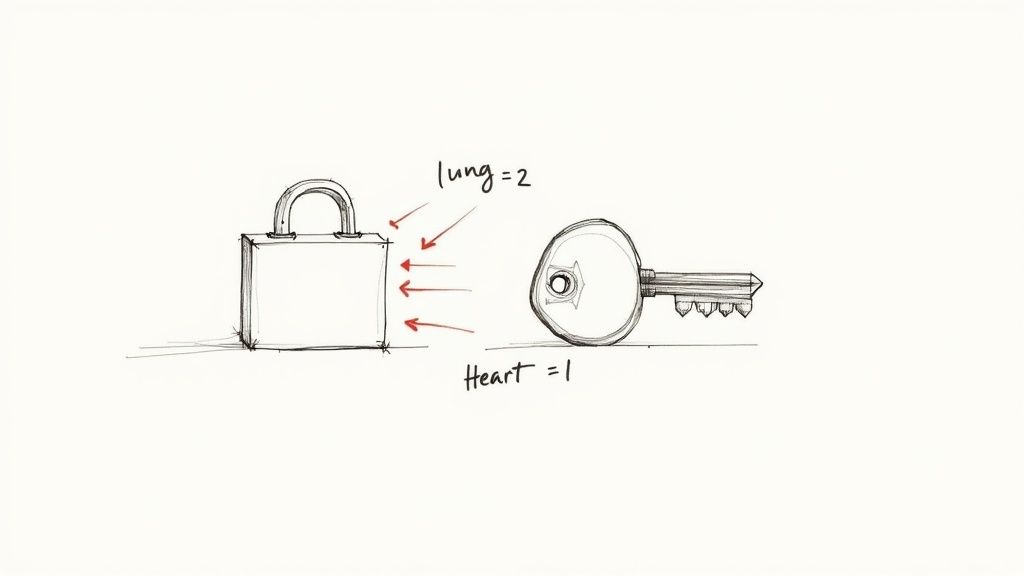
Think of albuterol as a special key, perfectly shaped to unlock and relax the tight muscles wrapped around your loved one’s airways. When they take their inhaler, this key goes right to work in the lungs, opening up those passages so they can breathe easier. The "locks" on these airway muscles are called beta-2 receptors.
The Lock and Key Connection
Now, here’s where the heart gets involved. Our bodies are wonderfully complex, and there are very similar-looking locks in other places—including on the heart. These locks on the heart are called beta-1 receptors.
Because the beta-1 and beta-2 locks are so alike, the albuterol key can sometimes pop into the heart's locks by mistake. It’s not the main target, but it’s a known side effect, especially with higher doses or with a nebulizer treatment, which sends more of the medication into the bloodstream.
When albuterol clicks into these beta-1 receptors on the heart, it gives it a gentle nudge to beat a bit faster and stronger for a little while. This is the simple reason your loved one might feel their pulse quicken, notice a slight tremor in their hands, or just feel a bit jittery. It's like the key accidentally jiggled a nearby lock.
The temporary increase in your loved one's albuterol heart rate isn’t a mistake; it’s a predictable and well-understood interaction. It's the medication signaling that it’s active in the body and working to open up their airways.
This response is a normal part of how albuterol works. For most people, this feeling is mild and short-lived, usually fading away within an hour or two. You can find a more technical deep-dive into this on the drug’s cardiac effects on ncbi.nlm.nih.gov.
Knowing this simple "lock and key" story helps take the mystery out of the science. That fluttery feeling or faster heartbeat isn’t something to panic about, but rather a temporary side effect of the key doing its work throughout the body.
The most important takeaway is just to be observant. Notice how your loved one feels after their treatment, and remember that this mild, brief response is often a normal part of the process.
Understanding a Normal Heart Rate Response
Knowing what to expect can turn a moment of worry into one of reassurance. When your loved one uses their albuterol, their body is responding to a powerful medicine designed to open up their airways and help them breathe. Let’s walk through what a typical, normal reaction looks like, so you can feel more informed and less anxious.
For most people, a temporary increase in heart rate is completely normal after taking albuterol. Think of it as a small bump, not a huge leap. A common response is an increase of about 5 to 20 beats per minute (BPM).
This change usually kicks in within a few minutes of the treatment and should start to settle back down within an hour or two. It’s a short-lived signal that the medication has entered their system and is getting to work.
What Does a Normal Response Look and Feel Like?
To make this feel more real, let's picture a scenario you might experience. Imagine your father’s breathing is a little tight, so you help him with his nebulizer treatment.
- Before the treatment: You gently take his pulse at his wrist and count 80 BPM, his usual resting heart rate.
- 30 minutes after treatment: You check it again. This time, you count 95 BPM. He also mentions that his hands feel a little shaky.
- An hour later: His breathing is much easier, the shakiness is gone, and his pulse is back down to 82 BPM.
This entire sequence is a perfect example of a normal, expected response. The slight shakiness or feeling of nervousness are also very common side effects. Consider them temporary signals that the medication is doing exactly what it's supposed to do.
These common side effects, like a slightly faster pulse or feeling a bit jittery, are signs that the albuterol is actively working to relax and open up the airways. They are temporary and part of the process of finding relief.
It’s interesting to note that this response is seen across different age groups. Even in studies with children, a noticeable but temporary jump in heart rate after albuterol is common and not considered dangerous. For example, one study observed kids’ heart rates increasing from around 111 BPM to 130 BPM during treatment, and this change wasn't linked to any significant health issues. You can explore more about these pediatric albuterol effects on Elsevier.es.
By setting these clear expectations, we hope you feel more confident. Seeing a small, temporary jump in your loved one’s heart rate doesn’t have to be a cause for alarm. Instead, you can see it for what it usually is: a sign of relief on its way.
Here’s a small, helpful tip: simply offer a glass of water and some quiet time after a treatment. This loving gesture can help your loved one relax as their body adjusts and the side effects gently fade away.
When You Should Contact a Doctor
As a caregiver, your instincts are your most valuable tool. Trust them. While a temporary, mild jump in heart rate after using albuterol is perfectly normal, knowing the specific warning signs will help you act with confidence when something just feels off. This isn't about creating alarm, but about giving you a clear, simple action plan so you can handle any situation calmly.
The key is learning to tell the difference between your loved one feeling "a bit jittery" versus them saying their "heart is pounding out of control." A mild flutter that fades within an hour or so is expected; a relentless, racing pulse that doesn't calm down is a reason to call for help.
Clear Red Flags to Watch For
It’s time to pick up the phone and contact a healthcare provider if you notice any of the following symptoms. These signs go beyond the typical side effects and need professional medical advice:
- A Very High or Racing Heart Rate: Their pulse jumps significantly higher than the usual 5-20 beats per minute increase and stays elevated for hours.
- Chest Pain or Tightness: Any report of chest discomfort, pressure, or pain after using albuterol is a serious red flag. Don't wait on this one.
- Severe Dizziness or Feeling Faint: While mild lightheadedness can happen, feeling like they might actually pass out is not a normal response.
- Irregular Heartbeat: If you check their pulse and it feels like it’s skipping beats or has an erratic, unpredictable rhythm.
This simple decision tree can help you visualize the difference between a normal response and when to seek medical advice.
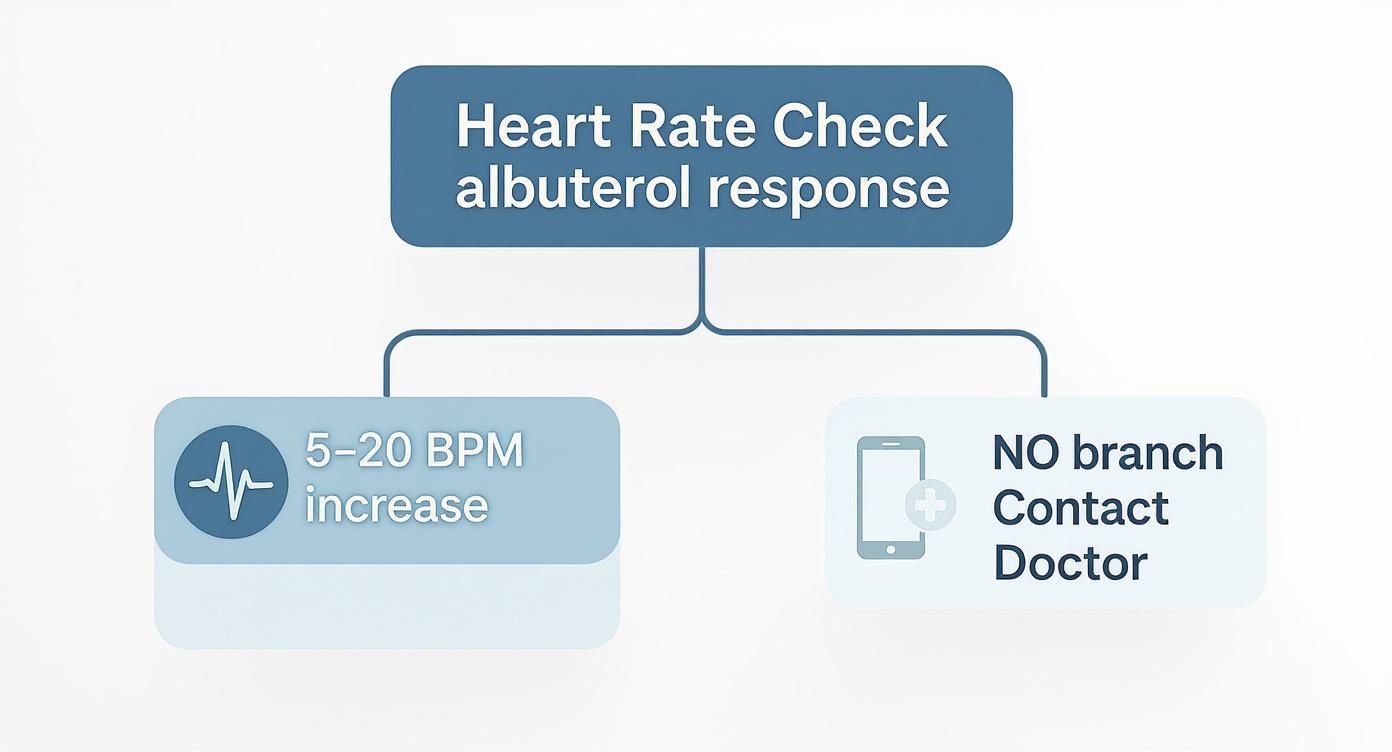
As the infographic shows, a minor, short-term increase in heart rate is an expected part of the process. Anything more severe warrants a call to their doctor.
Your role isn't to diagnose the problem, but to recognize when professional help is needed. Trust your judgment—if you feel worried, making that call is always the right decision for your loved one's safety and your own peace of mind.
Remember, a temporary faster heart rate is just the medication doing its job, but it should never be distressing or painful.
Here’s a small, hopeful action step you can take right now: save the doctor's and pharmacist's phone numbers directly in your phone’s contacts under a clear name, like "Mom's Doctor." This tiny bit of preparation ensures you can get help quickly without having to hunt for numbers in a stressful moment.
Practical Tips for Safe Monitoring at Home

Feeling in control as a caregiver often starts with creating a simple, predictable routine. When you're managing albuterol for a loved one, a little bit of tracking can make a world of difference, turning uncertainty into confidence. Let's walk through some easy, actionable steps for safely monitoring treatments at home that can fit right into your day.
These tips are designed to empower you, making you a more effective and knowledgeable partner in your loved one's care. Think of it as gathering small pieces of a puzzle. When you put them together, you give the doctor a perfect snapshot of what’s really happening between appointments.
Create a Simple Medication Log
Keeping a log is one of the most powerful tools you have. You don’t need anything fancy—a simple notebook or even a note on your phone works perfectly. The goal is to spot patterns and provide clear, factual information to the healthcare team. For example, if your mother always feels extra shaky with her evening dose, that's a valuable piece of information for her doctor.
Having this information on hand can be incredibly helpful during doctor visits.
Simple Medication and Symptom Log
| Date | Time of Dose | Heart Rate Before | Heart Rate After (30 min) | Notes (e.g., shaky, nervous, breathing improved) |
|---|---|---|---|---|
For each albuterol treatment, just try to jot down a few key details:
- Time of Dose: Note the exact time the medication was taken.
- Heart Rate Before and After: Measure their pulse just before the dose and again about 30 minutes later.
- Any Side Effects: Did they feel shaky, nervous, or dizzy? Did the feeling pass quickly?
- Breathing Improvement: Note whether their breathing seemed easier after the treatment.
This tiny bit of record-keeping provides an incredible amount of useful information for a doctor and helps you see what's normal for your loved one.
Focus on Correct Inhaler Technique
Here’s something that often gets overlooked: how the medication is actually taken. When an inhaler or nebulizer is used correctly, more of the medicine goes directly to the lungs where it's needed. Less gets absorbed into the bloodstream where it can cause side effects like a faster heart rate.
Ask the doctor or pharmacist to watch your loved one use their inhaler at their next appointment. It only takes a minute, but a quick check can confirm they are getting the full benefit of each dose with minimal side effects.
Your careful observations at home are invaluable. By tracking symptoms and ensuring proper technique, you’re not just managing medication—you're actively contributing to a safer and more effective care plan for the person you love.
For those juggling multiple schedules, a shared tool can bring some much-needed peace of mind. For example, you can use the Don'tForgetDad Android app to set up medication reminders and log doses, ensuring everyone in the family stays on the same page. This helps create a consistent and reliable record of their albuterol heart rate response over time.
Your small, daily actions create a powerful safety net. A simple log can be the key to fine-tuning treatment and ensuring your loved one feels their very best.
How to Talk with the Healthcare Team
As a caregiver, you are the expert on your loved one’s day-to-day life. You see the subtle shifts and small changes that a doctor, in a 15-minute appointment, simply can't. Sharing what you notice is one of the most powerful ways you can partner with the healthcare team to ensure your loved one gets the best care possible.
Walking into those appointments prepared can make all the difference, turning a quick check-in into a genuinely productive conversation. Your voice, backed by your careful observations, is absolutely essential in shaping a care plan that truly works.
Preparing for Your Conversation
Before you head to an appointment, take a few minutes to get your thoughts in order. That simple medication log we talked about? It’s your best friend here. It transforms a vague feeling like, "I think her heart is fast sometimes," into concrete information a doctor can actually use.
When you can share specific details—like, "After her 9 AM dose, her heart rate went from 80 to 98, and she felt shaky for about an hour"—you give the doctor a crystal-clear picture to work with. This is the kind of information that leads to smart, collaborative adjustments.
To get the ball rolling, here are a few questions you might want to have ready:
- For my mom, what specific albuterol heart rate number should we consider a red flag?
- Are there other medication options we could explore if the shakiness becomes too much for her?
- Could any of her other medications be interacting with the albuterol?
- What’s the best way to get in touch if we have a non-emergency question between appointments?
Remember, your active involvement is a gift. It ensures your loved one's needs are fully understood and met, fostering a sense of safety and teamwork. The care you provide is a cornerstone of their well-being.
Building this kind of partnership is about so much more than just managing medication; it's about making sure the person you love feels heard, supported, and safe. To learn a little more about the story behind our commitment to caregivers, you can read about Don'tForgetDad.
Here’s a small, hopeful step you can take today: jot down just one question you have for the next doctor’s visit. Having it ready helps you feel prepared and ensures your most important concerns get the attention they deserve.
Common Questions and Reassuring Answers
We know you've got questions, and finding clear, straightforward answers can bring so much peace of mind. Let’s walk through some of the most common worries caregivers have when it comes to albuterol and a loved one's heart.
How Long Does the Increased Heart Rate Usually Last?
This is a great question, and it’s one we hear all the time. For most people, that jump in heart rate after using an albuterol inhaler is very temporary.
You can expect the effect to kick in within a few minutes and then start to fade, returning to normal within about 30 minutes to 2 hours. It’s a short-lived response. If you notice your loved one's heart rate is still significantly high for more than a couple of hours, it’s always a good idea to check in with their doctor.
Are Some People More at Risk for This Side Effect?
Yes, and this is an important one to be aware of. Certain people are just more sensitive to albuterol’s stimulating effects on the heart. This is especially true for anyone with a pre-existing heart condition, like high blood pressure, coronary artery disease, or a history of arrhythmias. Seniors can also feel the side effects more acutely.
This is exactly why the prescribing doctor needs to know your loved one's complete health history. It helps them make sure albuterol is truly the safest and best choice for them.
Keeping a complete, updated health history and sharing it with all healthcare providers is one of the most proactive steps you can take. It helps the entire care team make the safest choices for your loved one.
Can Other Medications Interact with Albuterol?
Absolutely, and this is a crucial point for every caregiver to understand. Certain medications can ramp up the risk of heart-related side effects when taken with albuterol. The list can include things like:
- Some diuretics (often called "water pills")
- Certain types of antidepressants
- Other stimulants, like those found in some over-the-counter cold medicines
Always keep a current list of every single thing your loved one takes—that includes vitamins, supplements, and over-the-counter remedies—and share it with their doctor and pharmacist. For more practical tips and caregiver insights, you can explore helpful articles on our blog at https://dontforgetdad.com/blog.
Taking that extra step to review medications helps prevent dangerous interactions and keeps your loved one safe. A quick chat with the pharmacist is often all it takes.
Tracking a loved one’s inhaler use?
Don’t Forget Dad logs every dose and alerts the whole family when one is missed — so you always know whether albuterol was taken on time. Free on iOS and Android.
At Don’tForgetDad, we believe that coordinating care shouldn’t add to your stress. Our app helps you and your family track medications and share updates, turning worry into shared peace of mind. Learn more at https://dontforgetdad.com.