 by Don'tForgetDad Team
When a doctor prescribes Prozac (fluoxetine) for your loved one, it can feel like a hopeful step toward them feeling better. But it's easy to overlook how this common antidepressant can interact with other everyday medications—from other antidepressants like MAOIs to simple pain relievers like ibuprofen, and even herbal supplements like St. John's Wort.
These interactions aren't just a minor issue; they can create serious health risks. That's why it's so important for you, as a caregiver, to understand what to look for and how you can help keep them safe on this journey.
Your Guide to Prozac Interaction Safety
Welcome. We understand. Juggling a loved one's medications can feel like a high-stakes puzzle, and the weight of that responsibility is real. It’s a mix of love, duty, and, let's be honest, a healthy dose of worry. When a prescription like Prozac enters the picture, you probably find yourself asking some tough questions: “What shouldn't they take with this?” and “How would I even spot a problem?”
This guide is for you. We built it to answer those very questions without the confusing medical jargon that just adds to the stress. Think of this as a warm conversation, not a lecture. We'll walk you through the most critical interactions, explain why they happen in simple terms, and give you practical steps to feel confident and in control.
What We Will Cover Together
At Don'tForgetDad, our whole mission is to create resources that make caregiving just a little bit easier. You can learn more about our commitment to supporting families like yours https://dontforgetdad.com/about. Here, we’re going to build your knowledge one piece at a time:
- How Prozac Works: We’ll use a simple story to show why it sometimes doesn't play well with other drugs.
- The Big Red Flags: You'll learn the tell-tale signs of serious issues like serotonin syndrome.
- Hidden Over-the-Counter Risks: We’ll point out common drugstore items that require a second look.
- Your Safety Checklist: We’ll give you a clear action plan for working with the healthcare team.
Our promise is to break this down into bite-sized, manageable pieces. You don’t need a medical degree to be an incredible advocate for your parent. You just need clear information and a supportive hand to hold—and that's what we're here for.
Let's start this journey by looking at how Prozac actually works inside the body. Understanding this is the key to seeing why some combinations are risky. By the time we're done, you'll feel much more prepared for this vital part of your role.
Quick Overview of Key Prozac Interaction Risks
Before we dive deep, here's a quick snapshot of the main interaction risks. Think of this as your cheat sheet for conversations with the doctor or pharmacist. It highlights the potential dangers, the types of drugs involved, and what you need to keep an eye on.
| Type of Interaction Risk | Common Interacting Medications | What to Watch For |
|---|---|---|
| Serotonin Syndrome | MAOIs, triptans (migraine meds), other SSRIs, St. John's Wort, tramadol | Feeling agitated or confused, a fast heart rate, high blood pressure, muscle twitching, sweating, fever. |
| Increased Bleeding Risk | NSAIDs (ibuprofen, naproxen), blood thinners (warfarin, aspirin) | Bruising easily, unusual bleeding from gums or nose, blood in their stool or urine. |
| CYP2D6 Enzyme Inhibition | Some antipsychotics, beta-blockers, certain pain meds (codeine) | Increased side effects of the other drug, or the other drug not working as you'd expect. |
| QT Prolongation | Certain antipsychotics, anti-arrhythmic heart meds, some antibiotics | Feeling dizzy or faint, heart palpitations, or a "fluttering" feeling in the chest. |
This table isn't meant to replace professional medical advice, but it's a great starting point. Having these key terms in your back pocket will empower you to ask smarter, more specific questions during your next medical appointment.
How Prozac Works and Why Interactions Happen
To really get a handle on Prozac drug interactions, it helps to first understand what the medication is actually doing inside the body. Once you see how it works, the reasons behind the warnings become much clearer, and you'll feel more confident when talking with doctors and pharmacists.
Think of your loved one's brain as a busy communication network. Tiny chemical messengers, one of which is called serotonin, zip between nerve cells to deliver signals that help with mood, sleep, and feelings of well-being. When someone is feeling depressed, it can be like there aren't enough of these serotonin messengers actively making their rounds.
Prozac (fluoxetine) steps in to help with that. It works by keeping more of that mood-lifting serotonin available in the brain, essentially giving those important messages more time to be heard. It’s a process that has helped millions find relief. But that same action is precisely why we have to be so careful about what other medications are in the mix.
The Serotonin Overload Risk
Imagine the serotonin in the brain is like water filling a tub. Prozac turns the faucet on a little more, raising the water to a healthy level. But what happens if another medication also turns up the faucet? Things can get out of hand, fast.
For example, if your mom is taking another drug that also boosts serotonin—like some migraine medicines (triptans), other antidepressants, or even the herbal supplement St. John's Wort—you can end up with way too much serotonin.
This overload can trigger a serious condition called serotonin syndrome. It's not that either drug is inherently bad; it's that their combined effect creates too much of a good thing, overwhelming the brain's delicate system.
This infographic lays out the core safety areas that every caregiver should have on their radar.
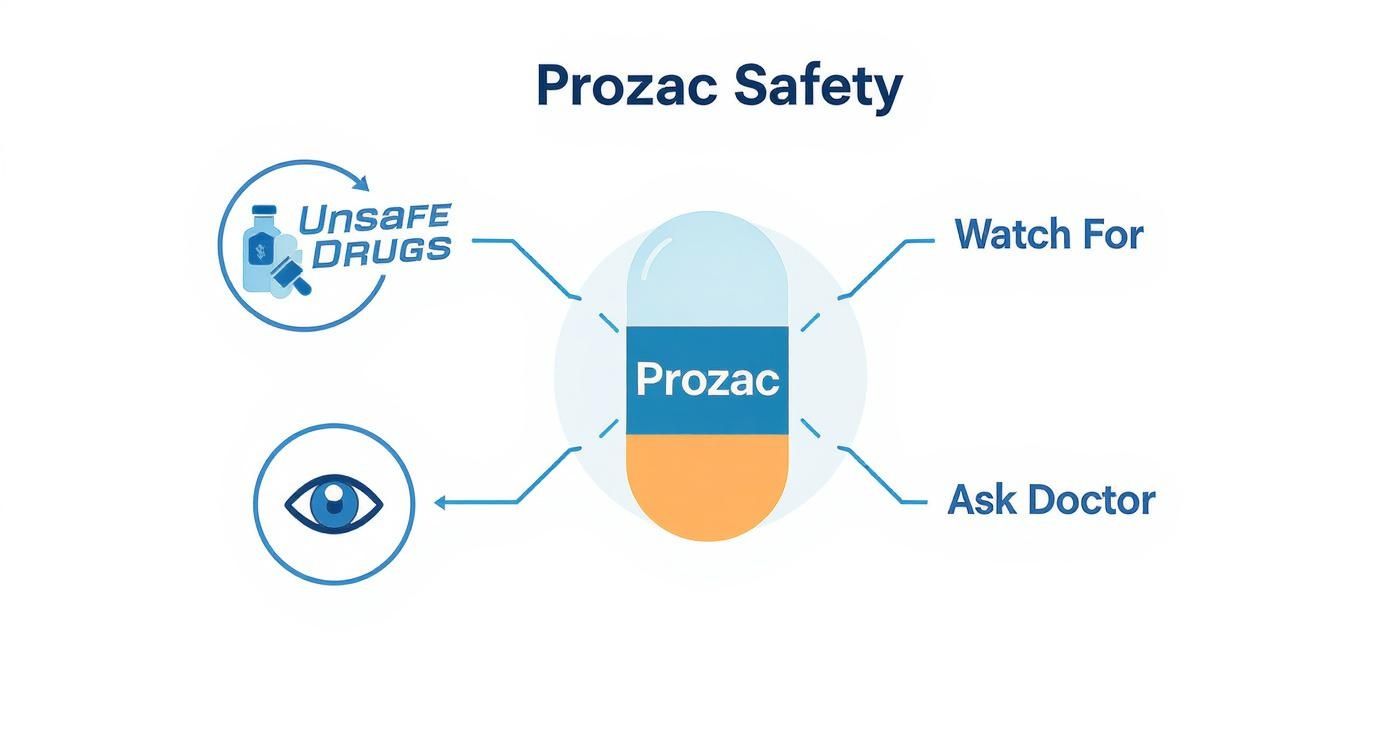
It’s a great visual reminder of our main jobs as caregivers: know the risky drug combinations, watch for warning signs, and never hesitate to ask the doctor questions.
The Body's Medication Processing Center
There’s another major reason for interactions, and this one happens in the liver. The liver has a team of helpers, called enzymes, that act like the body's drug-processing plant. They break down and clear out most of the medications we take. One enzyme in particular, CYP2D6, is a real workhorse.
Here's the problem: Prozac is known to slow down the CYP2D6 enzyme, putting the brakes on its activity. Think of this enzyme as the main conveyor belt at a factory. Prozac slows that belt way down, causing a major backup on the production line.
This slowdown is a huge deal. If your loved one takes another medication that gets processed on that same conveyor belt—like certain heart rhythm drugs or some painkillers—that other drug can't get cleared out properly. It starts to build up in the body, and its strength can climb to dangerous levels.
So, a normal dose of a heart medication or a painkiller could suddenly have the effect of a much higher dose—not because you gave too much, but because Prozac was creating a "traffic jam" in the liver. This is exactly why a doctor needs a complete list of every single thing your loved one is taking.
Keeping these two simple ideas in your back pocket—serotonin overload and the processing plant slowdown—gives you a solid foundation. You're no longer just following a list of rules; you understand why those rules exist. This knowledge is your best tool for spotting potential problems and protecting the person you care for.
Of all the potential drug interactions with Prozac, there's one that stands out as the most serious, and it's called serotonin syndrome. While it’s not common, it's something every caregiver needs to have on their radar.
Think back to our "messenger overload" story. This is what happens when that system goes into overdrive—too much serotonin floods the brain, causing a system-wide short circuit.
This isn't just a minor side effect. It’s a potentially life-threatening condition that can appear quickly when Prozac is mixed with another drug that also boosts serotonin. Knowing what to look for can make all the difference, empowering you to act with confidence.
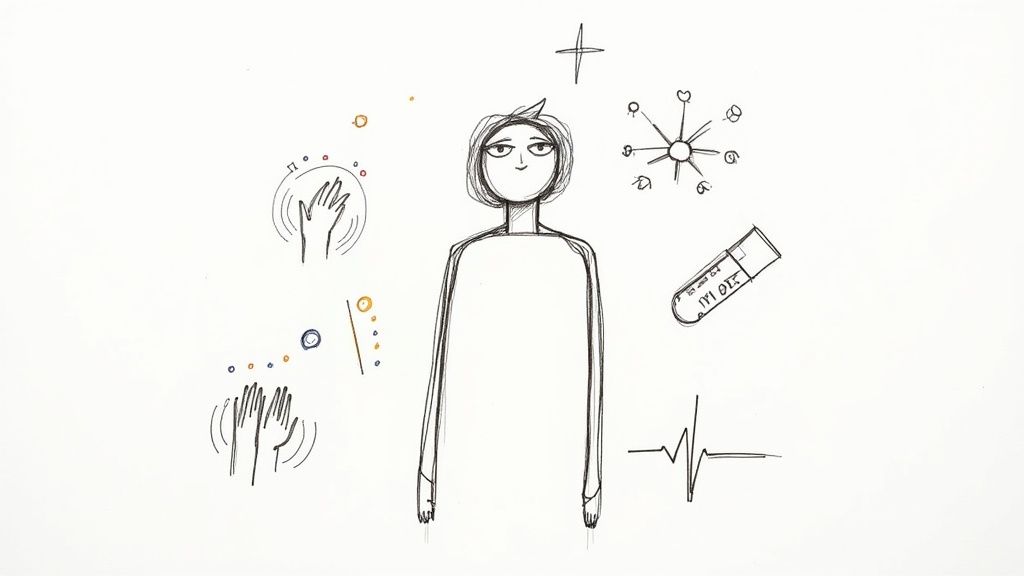
What Triggers Serotonin Syndrome?
Serotonin syndrome almost always happens because of a medication cocktail. It's the classic case of "too much of a good thing." The danger really ramps up when Prozac is taken with certain other drugs.
Let’s imagine your dad, Bill, has been on Prozac for his depression. A few months in, he starts getting bad migraines, and his doctor adds a triptan medication to his daily routine. The problem? Both Prozac and the triptan work by increasing serotonin. On their own, they’re helpful. But together, they can create a dangerous surge that pushes the body into serotonin syndrome.
This isn't the only risky combination. Keep an eye out for others, including:
- Other Antidepressants: Especially older ones like MAOIs. The combination is so hazardous they are almost never prescribed together.
- Pain Medications: Certain prescription painkillers, like tramadol, also play with serotonin levels.
- Herbal Supplements: St. John's Wort is a major one. It should never be combined with Prozac without a doctor's explicit green light.
One of the most dangerous interactions involves a class of older antidepressants called monoamine oxidase inhibitors (MAOIs). The risk is so high that the FDA requires strict "washout" periods. A person must wait at least 14 days after stopping an MAOI before starting Prozac. Going the other way, they need to wait a full five weeks after stopping Prozac before an MAOI can begin. You can review the full FDA guidance on these drug interactions with Prozac to see just how seriously this is taken.
Spotting The Early Warning Signs
The symptoms of serotonin syndrome can be subtle at first, often appearing within hours of starting a new medication or increasing a dose. Trust your instincts. If your loved one just seems "off" after a med change, don't ignore it.
Mild symptoms are your first clue, and they can be easy to brush off. Look for:
- Feeling agitated or restless: Are they pacing, fidgeting, or just can't seem to get comfortable?
- Shivering or goosebumps: Trembling or feeling chilled for no apparent reason.
- Sweating: More than usual, especially if they haven't been active.
- Dilated pupils: Their pupils might look bigger than normal.
As things get more serious, the signs become much more obvious and demand immediate medical help.
Think of it like a traffic light. Mild symptoms are your yellow light—slow down and call the doctor. Severe symptoms are a red light—stop everything and get emergency help.
When to Call for Immediate Help
Severe serotonin syndrome is a medical emergency. Don't wait around to see if it gets better on its own. If you notice any of the following, call 911 or head to the nearest emergency room immediately.
Seek emergency care for these symptoms:
- High fever: A temperature over 100.4°F (38°C) without any other explanation.
- Confusion or delirium: Not knowing where they are, being unable to follow a conversation.
- Rapid heart rate and high blood pressure: Their heart might feel like it's pounding out of their chest.
- Muscle rigidity or severe twitching: Uncontrollable jerking movements or stiff, tight muscles.
- Seizures: Any seizure is a sign of a major problem.
- Loss of consciousness: Becoming unresponsive or fainting.
You are their first line of defense. Knowing these signs means you can catch a potential drug interaction with Prozac before it spirals into a crisis. Your watchfulness is an incredible gift.
Navigating Over-the-Counter Drug Interactions
It's so easy to focus on the big-ticket prescription medications, but those seemingly innocent bottles in the pharmacy aisle can be just as tricky. We're talking about the everyday pain relievers and cold remedies that can cause serious drug interactions with Prozac. For us caregivers, knowing what to watch for here is a huge part of keeping our loved ones safe.
Let's zoom in on two specific groups of over-the-counter (OTC) medicines that need a little extra attention: common pain relievers and certain blood thinners. Once you understand why these combos are a problem, you’ll feel a lot more confident grabbing something to help with a headache or minor ache.
The Hidden Risk with Pain Relievers
When your mom complains of a headache, what's the first thing you reach for? Probably ibuprofen (Advil, Motrin) or naproxen (Aleve). It's almost instinct. These meds are part of a family called NSAIDs (nonsteroidal anti-inflammatory drugs), and while they’re great for pain, they have a hidden downside when Prozac is in the picture.
Think of it this way: both Prozac and NSAIDs can be a bit harsh on the stomach lining by themselves. Each one carries a tiny risk of causing irritation or even bleeding. But when you combine them, that risk doesn't just add up—it multiplies.
Here’s why: Prozac can interfere with how your blood clots by affecting tiny cells called platelets. NSAIDs do something very similar. Using them at the same time is like having two separate things weakening the protective barrier in the stomach, leaving it much more vulnerable to damage.
This is so important to remember: taking Prozac with an NSAID like ibuprofen can dramatically increase the risk of serious stomach bleeding. It's one of the most common—and most overlooked—drug interactions out there.
What You Need to Watch For
The signs of a bleeding problem aren't always obvious, so knowing what to look for can help you catch it early.
- Unusual Bruising: Are bruises popping up out of nowhere, or do they seem way bigger than the bump that caused them?
- Stomach Pain: Pay attention to complaints about a new burning feeling or nagging pain in the abdomen.
- Changes in Stool: This is a big one. Look for dark, tarry-looking stools, which can be a sign of internal bleeding.
- Vomiting Blood: This is a clear emergency. Vomit that looks like coffee grounds is also a major red flag.
The science behind this is solid. Studies have shown that when Prozac is combined with NSAIDs, the risk of upper gastrointestinal bleeding can jump significantly. And because Prozac stays in the body for so long, this interaction is a particularly high-priority concern. You can dig into the research behind this bleeding risk to get a deeper understanding.
Prozac and Blood Thinners
The same core issue applies to prescription blood thinners like warfarin (Coumadin) or even a daily low-dose aspirin. These drugs are designed to prevent blood clots, but Prozac can ramp up their effects, making the blood too thin.
Imagine your dad is on warfarin to prevent a stroke. His doctor has carefully dialed in the dose to hit that perfect sweet spot—thin enough to stop clots, but not so thin that he bleeds spontaneously. Adding Prozac can throw that delicate balance completely off, pushing him into a danger zone where even a tiny cut could become a big problem.
This is exactly why doctors need to know about every single thing your loved one is taking, including a simple daily aspirin. If Dad starts Prozac while he's on a blood thinner, his doctor will almost certainly want to check his blood clotting levels much more frequently, especially in the beginning.
Just knowing about these common OTC risks is empowering. It changes a simple trip to the pharmacy from a chore into a chance to actively protect your parent. Always read the labels on pain relievers. And if you're ever unsure, just ask the pharmacist for a safer option like acetaminophen (Tylenol), which generally doesn't carry the same bleeding risk with Prozac.
Understanding Pain Medication and Opioid Risks
Managing chronic pain is a daily reality for many of our parents, and that often means dealing with some pretty powerful medications. This gets even trickier when they're also taking Prozac. Paying close attention here is one of the most important things you can do to keep them safe.
Remember how Prozac can cause a "traffic jam" in the liver's processing system? That slowdown becomes especially dangerous when certain prescription pain meds, particularly some opioids, enter the picture. Getting a handle on this interaction is the key to preventing a serious, and entirely avoidable, problem.
The Opioid Overdose Risk
It turns out that certain opioids, like oxycodone, need that same CYP2D6 enzyme pathway to be broken down and flushed out of the body. But when Prozac is already slowing that pathway to a crawl, a normal, doctor-prescribed dose of oxycodone can't get processed correctly.
Instead, the pain medication hangs around and builds up in the bloodstream, sometimes to dangerously high levels. This isn't about someone taking the wrong dose; it's about Prozac fundamentally changing how the body handles the opioid. This dramatically increases the risk of an accidental overdose, even when the prescription is followed to the letter.
The research really drives this home. One large study found a shocking link between taking Prozac and starting oxycodone, showing a significantly higher risk of an opioid overdose compared to other similar antidepressants. You can dig into the findings on drug interactions with Prozac and see for yourself just how significant this is.
Protecting Your Loved One
When a doctor brings up a new pain medication, especially an opioid, this is your moment to step up as their advocate. You have the power to connect the dots and ask the questions that bridge the gap between their current meds and the new one.
Here are a few simple but crucial questions to have in your back pocket:
- "My mother is on Prozac. How exactly does this new pain medication interact with it?"
- "Will the Prozac change how her body processes this opioid?"
- "Are there any other pain relievers we could consider that don't have this interaction risk?"
- "What specific warning signs of an overdose should I be watching for at home?"
Trust your gut. If a doctor seems to wave off your concerns about drug interactions with prozac, it is always okay to ask for a second opinion. You can also speak directly with the pharmacist—they are the true specialists in how medications work together.
Other Important Medication Risks
While opioids are a huge concern, that liver "traffic jam" caused by Prozac affects other medications, too. It’s worth being aware of a few other types of drugs that need careful management.
Key Medications to Discuss with the Doctor:
- Certain Antipsychotics: Drugs like risperidone or aripiprazole can build up, raising the risk of side effects.
- Heart Rhythm Drugs: Medications such as flecainide or propafenone are processed by that same enzyme. Higher levels can be dangerous for heart health.
- Some Beta-Blockers: Metoprolol, a common blood pressure drug, can have much stronger effects when Prozac is in the mix.
The idea isn't to memorize a giant list of drugs. It's about understanding the pattern. Just knowing that Prozac can cause a "backup" empowers you to ask the right questions about any new prescription. Your proactive involvement is the best safety net your loved one has.
Your Action Plan for Safe Medication Management
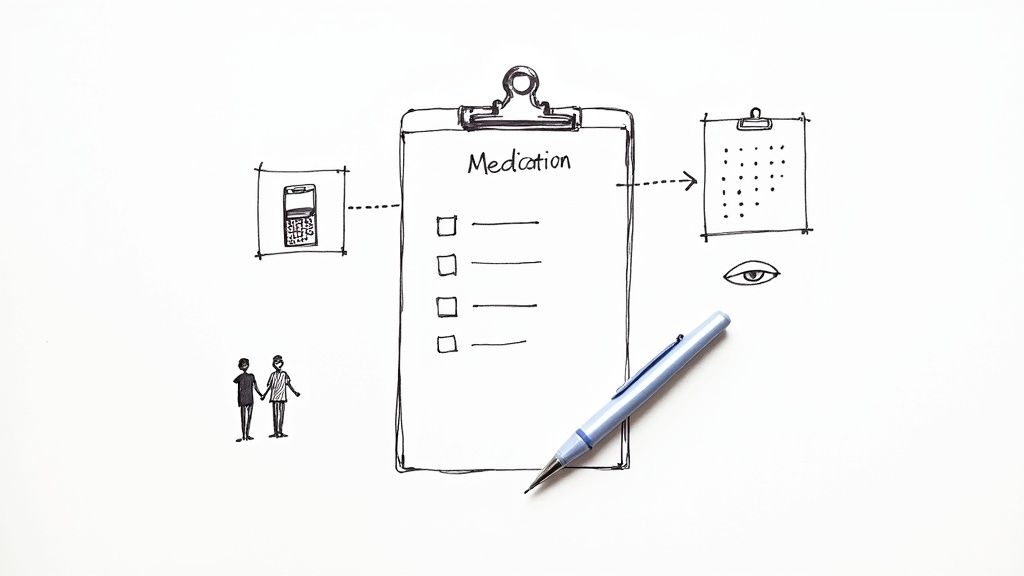
I know that was a lot of information, and it's easy to feel overwhelmed. But please, don't be. Knowledge is your best tool here, and we can turn everything we just covered into a simple, practical action plan. You’re in the perfect position to create a safety net for your loved one, and it all starts with a few manageable steps.
Think of yourself as the heart of their healthcare team. You're the one person who sees the whole picture, connecting the dots between different doctors, specialists, and the pharmacy. That role is absolutely vital.
Start with a Master Medication List
Your single most powerful tool is a complete, up-to-date medication list. I can't stress this enough—it’s not just helpful, it's the bedrock of preventing dangerous drug interactions with prozac.
Picture this: your dad’s heart doctor prescribes a new medication, completely unaware that his primary doctor just started him on Prozac. Without your master list bridging that gap, a serious interaction could slip right through the cracks.
Make sure the list has everything on it:
- All Prescriptions: Jot down the drug name, the dose, and what it’s for.
- Over-the-Counter Stuff: This means things like daily aspirin, ibuprofen for aches, allergy pills, or even antacids.
- Vitamins and Supplements: Don't forget St. John's Wort, fish oil, or that daily multivitamin. They count, too.
Think of this list as your loved one’s medical passport. It guarantees every single provider is working from the same playbook, which is the only way to ensure safe, coordinated care.
If you’re sharing care duties with siblings or other relatives, keeping this list current can feel like a job in itself. This is where a simple, shared tool can make all the difference. You can learn more about how the Don’tForgetDad app for Android helps families sync up medication schedules and share crucial health updates without missing a beat.
Share the List Relentlessly
Once that list is complete, make copies. Put one in your wallet, stick one on the fridge, and bring a fresh copy to every single appointment. I mean every one—the family doctor, the specialist, even a quick trip to the pharmacy to pick up a refill.
When a doctor is about to write a new prescription, hand them the list and ask the direct question: “How will this new medication fit in with everything else she is already taking?” That one question shifts you from a passive listener to a crucial member of the team.
Know the Warning Signs
Finally, be a loving observer, especially right after a new medicine is introduced or a dosage changes. You know your parent better than anyone. If something feels off, trust your gut.
Key things to watch for in those first few days:
- Sudden Confusion: Are they foggier or more disoriented than their baseline?
- New Physical Symptoms: Be on the lookout for dizziness, twitching, sudden sweating, or tremors.
- Changes in Mood: Notice any out-of-character agitation, intense anxiety, or extreme drowsiness.
Keep a small notebook and jot down what you see, along with the date and time. This kind of specific, factual log is so valuable when you talk to the doctor.
This isn’t about being anxious; it’s about being prepared. By keeping a list, sharing it everywhere, and observing closely, you are building layers of protection. Your consistent, small actions truly make all the difference in the world.
Common Questions About Prozac Safety
When you're helping manage a loved one's medications, it's natural to have questions pop into your head. It's a sign you're paying close attention. Let's walk through some of the most common concerns caregivers have about drug interactions with Prozac and get you some clear, straightforward answers.
Can My Loved One Drink Alcohol While Taking Prozac?
It’s truly best to avoid alcohol. When you mix Prozac with alcohol, it can increase side effects like drowsiness and dizziness. That's a big deal, especially for older adults where the risk of a fall is already a major concern.
Even more importantly, alcohol can actually worsen the very depression or anxiety that Prozac is meant to treat, essentially working against the medication's benefits. The best first step is always to have an open conversation with their doctor about alcohol. They can give you advice tailored specifically to your parent's health situation.
What Should I Do if I Suspect an Interaction?
Please, always go with your gut. If you see anything new or worrying—maybe sudden confusion, agitation, a high fever, or severe dizziness after they start a new medicine—call their doctor or pharmacist right away. It's never a bother to double-check.
If the symptoms feel severe, like a seizure, extreme confusion, or any trouble breathing, call 911 immediately. Make sure you have their full medication list handy to give to the paramedics; it's critical information that can save precious time.
Your loving attention is your most powerful tool. You know your loved one best, and noticing small changes early can prevent bigger problems. It's always better to be overly cautious than to wait and see.
Does Prozac Interact with Caffeine or Foods?
For the most part, Prozac is pretty easygoing when it comes to food. It doesn't have major interactions with specific foods and can be taken with or without a meal. That morning cup of coffee is usually fine for most people.
That said, both Prozac and caffeine can sometimes make a person feel jittery or a bit anxious. If you notice your loved one seems more on edge or isn't sleeping well after their coffee, it might be worth mentioning to their doctor. Cutting back on caffeine could be a simple tweak that makes a huge difference in how they feel.
For more practical tips and guides to help you support your loved one’s health, feel free to explore the other articles on the Don’tForgetDad caregiving blog. Every bit of knowledge empowers you to provide the best care possible.
Managing medications is a huge act of love, but it doesn’t need to be a constant source of stress. With Don’tForgetDad, you can set up a simple, shared system for medication reminders, so everyone in the family is on the same page. Turn worry into peace of mind by coordinating care effortlessly. Learn how Don’tForgetDad can support your family today.
As a small first step today, just take a minute to review your loved one's complete medication list. That simple sheet of paper is one of the most powerful safety tools you have.