 by Don'tForgetDad Team
When someone you love is in pain, figuring out their medication is often the first, most loving step you can take. With meloxicam, the most important rule is simple and reassuring: it is a once-a-day medication. This isn't a quick fix you take for sudden pain, but a steady, reliable partner that works over 24 hours to manage chronic discomfort from conditions like arthritis.
Your Simple Guide to Meloxicam Dosing
Watching a family member struggle with joint stiffness or pain is tough. You want to bring them comfort and relief, and understanding their medication is a powerful way to do just that. Meloxicam is designed for a simple, predictable routine, which can bring a sense of calm and control to both your life and theirs.
Think of it like a slow-release watering system for a plant. Instead of a big gush of water all at once, it provides a steady, gentle drip throughout the day. That's exactly how meloxicam works in the body—maintaining a consistent level of medicine to keep inflammation and pain at bay. This approach avoids the sharp ups and downs you might get with shorter-acting pain relievers.
The Standard Dosing Approach
Doctors almost always start with the lowest effective dose. This "start low, go slow" method is the safest way to find the sweet spot between pain relief and minimal side effects.
- Starting Dose: The journey typically begins with a 7.5 mg tablet, taken once every 24 hours.
- Maximum Dose: If that's not quite enough, a doctor might increase it to 15 mg once daily.
- The Golden Rule: It’s crucial to remember that this is a once-a-day commitment. Taking more won't speed up relief, but it will significantly increase the risks.
This visual guide breaks down the standard dosing for meloxicam.
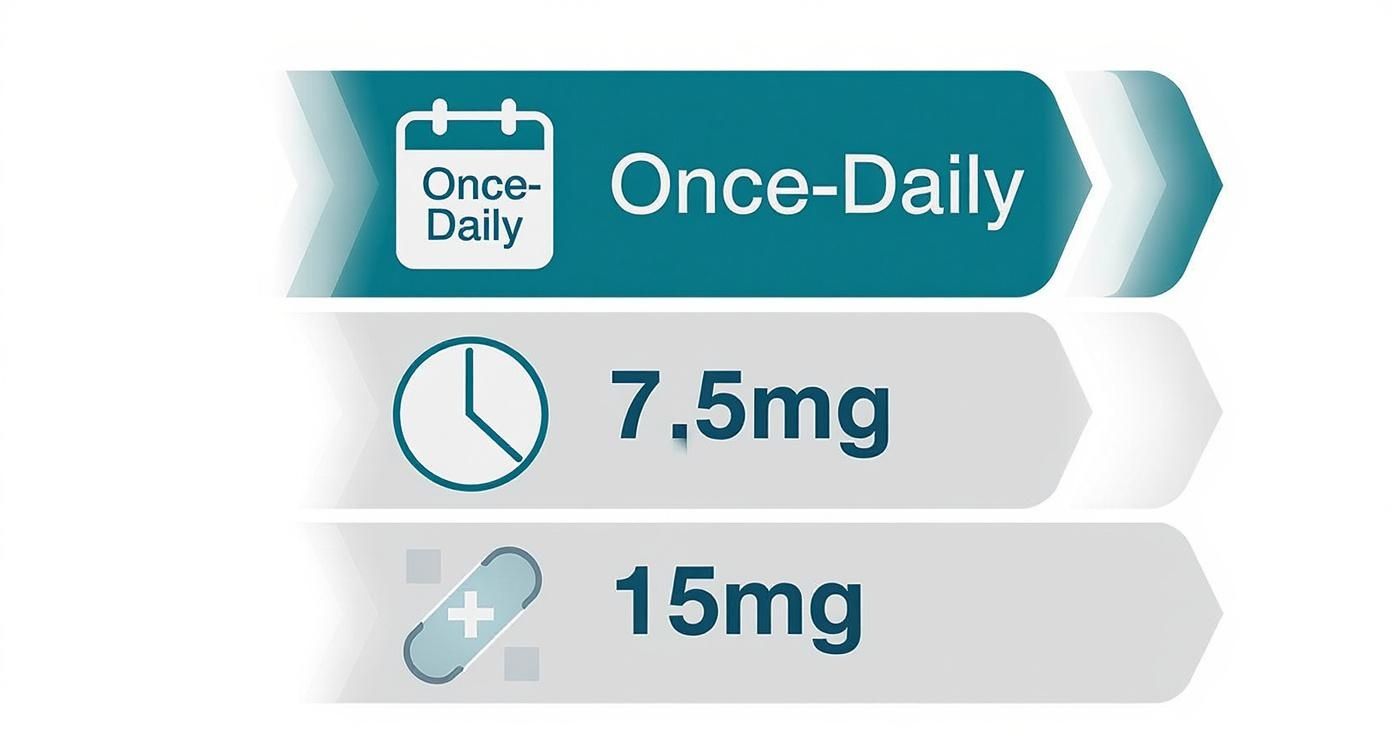
As the infographic shows, the foundation of meloxicam therapy is its once-daily frequency, with two common dosage strengths available.
Why This Schedule Matters So Much
The reason for this strict once-daily schedule is rooted in how the medication is built. Meloxicam has what’s known as a long "half-life"—a gentle term that just means it stays active in your system for a very long time. Because it works for so long, a single dose is all that's needed to maintain a therapeutic level for a full 24 hours.
For most adults with osteoarthritis or rheumatoid arthritis, the starting dose is 7.5 mg daily, which can be increased to 15 mg if needed. Sticking to this schedule is vital. Doses above 15 mg a day aren't recommended because they dramatically increase the risk of side effects, especially serious stomach issues.
To give you a quick reference, here’s a simple breakdown of the key dosing guidelines.
Meloxicam At-a-Glance Dosing Guide
| Aspect | Typical Guideline | Why It's Important |
|---|---|---|
| Frequency | Once per day, every 24 hours. | Meloxicam has a long half-life, providing pain relief for a full day. |
| Starting Dose | Typically 7.5 mg daily. | This "start low, go slow" approach minimizes the risk of side effects. |
| Maximum Dose | 15 mg once daily. | Doses higher than 15 mg significantly increase risks without much added benefit. |
This table reinforces the core principle: meloxicam is designed for a simple, consistent, once-daily routine to ensure it works safely and effectively.
For caregivers, establishing a consistent daily routine is an act of love. It’s about creating predictability and safety. When your loved one knows exactly what to expect, it reduces anxiety and helps them feel cared for.
As a family caregiver, you're the heart of your loved one's support system. We know this journey has its challenges, which is why we're passionate about creating tools that offer peace of mind. You can read more about our mission to support families like yours and discover how we can help.
Why Taking Meloxicam Once a Day Is Crucial
When you see someone you love in pain, your first instinct is to make it stop. It's so natural to wonder if an extra pill might bring more relief. While that might be true for some medications, with meloxicam, sticking to the once-a-day schedule isn’t just a recommendation—it’s the most important part of keeping them safe.
Think of meloxicam like one of those slow-release plant food spikes you push into the soil. It’s specifically designed to release a steady, consistent amount of medicine all day long, giving the body exactly what it needs without being overwhelmed. It's a long-acting formula that provides relief over a full 24 hours.
Taking it more often is like dumping a whole bucket of fertilizer on that plant at once. Instead of helping, it floods the system. An extra dose of meloxicam can seriously overload the body, creating health risks that completely cancel out any small benefit you might hope for.
The Science Behind the Once-a-Day Rule
So, why just once a day? The answer is all in its design. Meloxicam has what's called a very long half-life, which is just a gentle way of saying it stays active in the body for a really long time.
Meloxicam’s half-life is about 20 hours. This extended-release is precisely why a single dose is so effective at maintaining a steady, therapeutic level in the bloodstream all day. In fact, clinical data shows that pushing the dose beyond 15 mg per day doesn't actually improve pain relief, but it does lead to a two- to three-fold increase in serious gastrointestinal issues like ulcers or bleeding. You can learn more about the research behind meloxicam dosage and its effects on the body.
Sticking to the doctor’s plan is an act of protection. It ensures your loved one gets the relief they need without being put in harm’s way.
The Risks of Taking Too Much Too Often
On a really tough pain day, the thought of offering "just one more" can be powerful. But knowing the specific risks can help you stand firm. Taking meloxicam more than once a day puts a heavy strain on some of the body's most vital systems.
- Stomach and Gut Health: The most common danger is to the gastrointestinal tract. Too much meloxicam can erode the stomach's protective lining, which can lead to painful ulcers, bleeding, or even a perforation (a hole) in the stomach or intestines.
- Kidney Function: The kidneys are responsible for filtering medications out of the blood. Overloading them with too much meloxicam can cause damage, a risk that's even higher in older adults or anyone with existing kidney issues.
- Heart Health: The FDA has issued a strong warning for all NSAIDs, including meloxicam, because they can increase the risk of heart attack and stroke. That risk climbs with higher doses and longer-term use.
Trusting the process is one of the kindest things a caregiver can do. Following the doctor's once-a-day instruction shows that you trust the science designed to keep your loved one safe, providing comfort not just from pain, but from risk.
This knowledge turns you from a worried family member into a confident advocate for their health.
Knowing that one pill is doing its job for the entire day can bring you real peace of mind. It allows you to trust the treatment plan and focus on other ways to provide comfort, whether it's a warm compress, a gentle walk, or just being present with them.
Adjusting Doses for Different Health Needs

When it comes to medication, every person’s body tells a unique story. Just like a favorite recipe might need a little less salt for one person and a bit more spice for another, a meloxicam dose isn't a one-size-fits-all solution. It needs to be carefully tuned to fit your loved one’s specific health journey, ensuring it brings comfort without causing harm.
Thinking about how often to take meloxicam involves more than just reading the label; it’s about understanding the whole person. A doctor’s recommendation is a deeply personal prescription, crafted with care to match their age, health conditions, and any other medications they’re taking.
This personalization isn't just good practice—it's an act of deep care and safety. It acknowledges that what works perfectly for a neighbor might not be right for your family member, and that’s perfectly okay.
Why Age and Health Conditions Matter
As we get older, our bodies change in beautiful and complex ways. One of these changes is how we process medications. The liver and kidneys, which act as the body's natural filtering systems, often start to work a bit more slowly than they used to.
Imagine these organs are like kitchen drains. When we're young, they can handle a large flow of water easily. As we age, the pipes might narrow a little, and a strong gush of water could cause a backup. For this reason, doctors are often very thoughtful about prescribing lower doses of meloxicam for older adults.
A lower dose for an older adult isn't a sign of weakness; it's a sign of wisdom. It’s a careful, respectful approach that honors the body’s natural rhythm and protects it from being overwhelmed.
This same gentle approach applies to anyone with pre-existing health conditions. For someone with known kidney or liver issues, even a standard dose of meloxicam could put extra strain on these hardworking organs. By starting with a lower dose, the doctor is protecting them, ensuring the medication helps manage pain without creating new problems.
Navigating Common Medication Interactions
Many of our loved ones take more than one medication to manage their health. Juggling these prescriptions can feel like conducting an orchestra—each instrument needs to play in harmony with the others. Meloxicam can sometimes clash with other common medications, making it crucial to give the doctor a complete picture of everything your loved one takes.
This includes over-the-counter drugs, vitamins, and supplements. Even things that seem harmless can interact in unexpected ways.
Here are a few common types of medications that require a careful conversation with the doctor:
- Blood Thinners (like Warfarin): Both meloxicam and blood thinners can increase the risk of bleeding. Taking them together is like having two people thinning a sauce at once—it can quickly become too thin. This combination significantly raises the risk of stomach bleeding or serious bruising.
- Blood Pressure Medications (like ACE Inhibitors or Beta Blockers): Meloxicam can sometimes make these important medications less effective. This could cause blood pressure to creep up, so a doctor needs to monitor this relationship closely.
- Other NSAIDs (like Ibuprofen or Naproxen): It is critically important never to combine meloxicam with other NSAIDs. This is like adding fuel to a fire, dramatically increasing the risk of severe stomach ulcers and kidney damage.
- Certain Antidepressants (SSRIs): Some antidepressants, like fluoxetine (Prozac) or escitalopram (Lexapro), can also have a mild blood-thinning effect. When taken with meloxicam, they can increase the risk of bleeding.
Sharing a full medication list with the pharmacist and doctor isn't just a formality; it’s a vital safety check. It allows them to see the whole picture and make sure every part of the care plan works together safely and effectively.
What to Do When a Dose Is Missed
Life as a caregiver is a whirlwind of appointments, errands, and to-do lists that never seem to end. In the middle of it all, it’s completely understandable that a dose of medication might get forgotten. If this happens, take a deep breath. It’s okay. A single missed dose is not a crisis, and there’s a simple way to get right back on track.
First, check the clock. How long has it been since their usual dose time? The rule of thumb here is designed to be straightforward and, above all, safe.
If you remember the missed dose within a few hours of the usual time, it's generally fine to give it then. For instance, if the dose is normally taken at 8 a.m. with breakfast and you realize it at 11 a.m., go ahead and give it. That small delay won't throw off the medication's steady, 24-hour cycle of relief.
The "Too Close to the Next Dose" Rule
But what happens if the day gets away from you and it's suddenly evening? If it's almost time for the next scheduled dose, the safest thing to do is simply skip the missed dose entirely.
Think of it like their daily meals. If you missed giving them lunch, you wouldn't try to make them eat two full dinners at 6 p.m. to make up for it. That would just overwhelm their system. The same gentle logic applies here. Forcing the body to process two doses too close together can spike the risk of side effects.
The most important rule to remember is this: Never, ever double up on doses. Giving two pills at once to "catch up" can overload their system and significantly raise the risk of serious stomach or kidney issues. It’s far safer to miss one dose than to take two.
Just get back on their regular schedule the next day. Missing one pill won't erase all the progress they've made, and their routine will be back to normal with the very next dose.
Creating a Gentle and Consistent Routine
We all know that preventing a missed dose is a lot less stressful than fixing one. Building a simple, reliable routine brings a sense of calm and predictability to your day—a gift for both you and your loved one. Here are a few warm, practical ideas to create a supportive system:
- Pill Organizers: A weekly pill organizer is a caregiver's best friend. Filling it once a week turns a daily chore into a quick Sunday-night ritual. An empty compartment is a clear, visual cue that the medication has been taken.
- Daily Alarms: Set a recurring alarm on a phone, a tablet, or even an Alexa device. Label it with something kind and personal, like "Dad's Comfort Pill Time" or "Mom's 9 AM Medicine."
- "Habit Stacking": This is a simple but powerful trick where you tie medication time to an existing daily habit. For example, the rule could be, "We always take the meloxicam right after brushing our teeth in the morning," or "The pill is taken with the first sip of breakfast coffee."
By anchoring the medication to a non-negotiable part of the day, it becomes an automatic and effortless part of the rhythm of your lives.
Knowing the Signs Your Body Is Sending
As a caregiver, you're your loved one's closest ally and most trusted advocate. You see the small changes and notice the subtle shifts that no one else does. This unique connection is your superpower, especially when you're keeping an eye on a medication like meloxicam. Learning to recognize the signals your loved one’s body is sending isn’t about creating fear; it's about building your confidence so you can act with calm assurance.
When someone starts a new medication, it's normal for their body to take a little time to adjust. Some mild, temporary side effects are pretty common and often aren't a cause for alarm. The real key is understanding the difference between a minor issue and a serious red flag. You're the first line of defense, and your watchful eye is a vital part of their safety net.
Common and Mild Side Effects
Think of these as gentle signals from the body. They're often mild and might even fade on their own after a few days as the body gets used to the medication. It's still a good idea to jot them down and mention them at the next doctor's appointment.
Some of these common signs include:
- Mild Indigestion or Heartburn: A little bit of stomach upset can happen, which is exactly why taking meloxicam with food is so important.
- Diarrhea or Constipation: Changes in bathroom habits are a frequent side effect of many medications as the digestive system adjusts.
- A Bit of Drowsiness: Some people might feel a little more tired than usual, especially when they first start the medication.
These symptoms are worth watching, but they usually don't require an urgent phone call. For example, if your dad mentions his stomach felt a bit "gurgly" after his morning dose but he feels fine by lunchtime, you can simply make a note of it for later.
Red Flags That Need a Doctor's Attention
Then there are the more serious signals. These are the body’s way of saying, "Hey, something isn't right here." If you spot any of these signs, it's important to stop giving the medication and call the doctor's office right away. Trust us, you are not overreacting; you are being a proactive and protective caregiver.
Trust your intuition. You know your loved one better than anyone. If something feels off to you, it is always worth a phone call to their healthcare provider for peace of mind.
To help you know what to look for, we've put together a clear guide on these more urgent symptoms. Knowing the difference between "let's wait and see" and "we need to call now" is incredibly empowering.
When to Call the Doctor Meloxicam Side Effects
| Symptom | What It Might Feel Like | Action to Take |
|---|---|---|
| Severe Stomach Pain | A sharp, persistent, or burning pain in the abdomen that just doesn't go away. | Call the doctor immediately. |
| Dark or Tarry Stools | Stools that look black, are sticky like tar, or have visible streaks of red blood. | Call the doctor immediately. This can be a sign of internal bleeding. |
| Vomiting Blood | Vomit that is bright red or looks like used coffee grounds. | This is an emergency. Call 911 or go to the nearest emergency room. |
| New Swelling | Sudden, unexplained swelling, especially in the legs, ankles, or feet. | Call the doctor. This could be related to kidney function or fluid retention. |
| Unexplained Weight Gain | Gaining several pounds in just a day or two without a change in diet. | Call the doctor, as this often goes hand-in-hand with new swelling. |
| Chest Pain or Shortness of Breath | Any new chest pain, a feeling of tightness, or sudden difficulty breathing. | This is an emergency. Call 911 immediately. |
This table isn't meant to make you anxious. It's a tool to empower you. Knowing exactly what to look for transforms that vague sense of worry into watchful confidence, allowing you to provide the safest, most loving care possible.
Your Toolkit for Managing Meloxicam Safely
Juggling medications for a loved one can feel like one more heavy thing to carry. But the good news is that a simple, predictable system can lift that weight, turning worry into a peaceful, dependable routine. Think of this as your personal toolkit, filled with gentle strategies to make managing that meloxicam schedule feel calm and controlled.
These small habits are about so much more than just remembering a pill; they’re about building a circle of safety and care. They create a rhythm that you and your loved one can rely on, which reduces stress for everyone. With a clear plan in place, you can feel confident you’re providing the best possible support.
Creating a System of Gentle Reminders
The whole point is to make medication time an easy, automatic part of the day, not a source of anxiety. The right tools can make all the difference in getting a smooth, reliable process off the ground.
Here are a few simple, powerful ideas to get you started:
- Weekly Pill Organizers: This is a classic for a reason. Taking just ten minutes on a Sunday evening to set up the pills for the whole week eliminates daily guesswork. An empty compartment is a simple, visual confirmation that the dose was taken.
- Set Recurring Alarms: Use a phone, a smart speaker, or even an old-school digital clock to set a daily alarm. Give it a warm, personal name like, "Time for Mom's comfort pill," turning a clinical task into a moment of connection.
- Keep a Medication Log: A small notebook kept right next to the pill bottle can be your best friend. Just jot down the time the meloxicam was taken each day. This log is also the perfect place to note any side effects or particularly good days, creating a valuable record for doctor’s appointments.
Building a supportive system is an act of profound love. It says, "I've got this, and we're in this together." It replaces the mental burden of remembering with the peace of a reliable routine.
Using Technology to Share the Care
Today, caregiving often involves a whole team—family members, friends, or professional helpers who might not all live under the same roof. Technology can be a fantastic bridge, keeping everyone connected and on the same page. A shared system makes sure that even when you can't be there, the routine continues without a hitch.
Apps designed specifically for family caregiving can be incredibly helpful. They let multiple people check in, confirm a dose was given, and get an alert if something is missed. This shared responsibility prevents any one person from having to carry the entire load alone.
For instance, using an app to coordinate care means that if your brother is stopping by to see Dad in the morning, he knows exactly when the meloxicam needs to be taken. This prevents both missed doses and accidental double doses. You can explore a simple app for Android that helps families coordinate these important daily tasks. By sharing the responsibility, you also share the peace of mind.
Common Questions About Meloxicam
When you're helping a loved one manage their medication, it’s natural to have questions pop up. Here are a few of the most common ones we hear from families, with clear, straightforward answers to help you feel more confident.
Can My Loved One Take Meloxicam on an Empty Stomach?
It's always a good idea to have them take meloxicam with a full glass of water and a bit of food or milk. This simple step acts as a protective buffer for the stomach lining, helping to ward off common side effects like indigestion or an upset stomach.
Tying it to a mealtime routine—like right after they finish breakfast—is a great way to make it a consistent habit and keep their stomach comfortable.
How Long Does It Take for Meloxicam to Start Working?
Meloxicam isn't a quick fix like some of the pain relievers you might grab off the shelf. It’s designed to build up a steady level in the body to control inflammation over time.
Because of this, it can take a few days, and sometimes up to two weeks of consistent, once-a-day use, to really feel the full anti-inflammatory benefits. Patience is key here; sticking to that daily schedule is what lets the medication do its job effectively.
Is It Safe to Take Tylenol with Meloxicam?
Generally, yes. Taking acetaminophen (the active ingredient in Tylenol) is usually considered safe for extra pain relief because it works through a completely different pathway in the body than meloxicam does.
Crucial Safety Tip: You must avoid other NSAIDs like ibuprofen (Advil, Motrin) or naproxen (Aleve) while your loved one is taking meloxicam. Combining these dramatically increases the risk of serious stomach and kidney side effects. Always have a quick chat with your doctor or pharmacist before adding any new medication to the mix, even over-the-counter ones.
For more practical caregiving advice and resources, feel free to explore other articles on our caregiving support blog.
Coordinating care can be a challenge, but you don’t have to juggle it all alone. Don’tForgetDad offers a simple way to share medication schedules and important updates with your entire family support system, ensuring everyone is on the same page. Find peace of mind knowing that consistent, compassionate care continues, no matter where you are.
Learn more about how Don’tForgetDad can help your family
Your small, actionable takeaway for today: Set a recurring daily alarm on your phone for your loved one's meloxicam dose. Label it something warm and gentle, like "Time for your comfort pill." This simple step builds a reliable and caring routine.