 by Don'tForgetDad Team
Caring for a loved one is a journey filled with love, but it often comes with a constant, low-level hum of worry in the back of your mind. The medical internet of things is a new generation of technology designed to quiet that worry. It’s not about complicated gadgets; it’s about creating a simple, supportive connection to the people you care about most, offering peace of mind even when you're miles apart.
Welcome to the Future of Connected Care
If you've ever felt that familiar pang of wondering, "Did Dad remember his medication this morning?" or "Is Mom moving around okay today?" then you already understand the heart of the medical internet of things. Think of it as a quiet, digital friend that acts as your eyes and ears, sending gentle updates and important alerts right to your phone.
This guide isn’t about diving into confusing tech jargon. Instead, it’s a warm invitation to explore how these smart, connected devices can become a trusted partner in your caregiving journey. We’ll focus on the human side of this technology—how it helps your loved one feel independent, keeps them safe, and strengthens the loving bond you share.
What This Means for Your Family
The main idea is beautifully simple. It connects everyday health devices—like a smart pillbox or a wearable fall detector—to the internet. This connection allows them to share important information with the people who need it most, like you. The whole point is to move from reacting to problems to gently preventing them.
Here’s how this new approach can help:
- Less Worry, More Connection: Imagine getting a quiet notification on your phone that says, "Mom took her 9 AM medication." This small update can lift a huge weight, freeing you from constant check-in calls and allowing for more meaningful, loving conversations.
- Safety and Independence: For many seniors, holding onto their independence is everything. Devices like fall sensors or motion detectors work silently in the background, providing a safety net that respects their privacy and allows them to live confidently in their own home.
- Shared Peace of Mind: Caregiving is often a team effort. This technology allows family members and professional caregivers to stay on the same page, sharing responsibility and ensuring that nothing slips through the cracks.
At its heart, the medical internet of things isn’t about replacing the human touch; it’s about making it stronger. It’s technology that serves compassion, ensuring your loved one feels safe, supported, and connected every single day.
Ultimately, this technology is here to make your role a little easier and your loved one’s life safer and more comfortable. It bridges distances and turns that feeling of "what if?" into a comforting sense of "I know."
As you read on, think of one small, daily worry that could be eased with a simple update. That's the perfect place to start.
What Is the Medical Internet of Things?
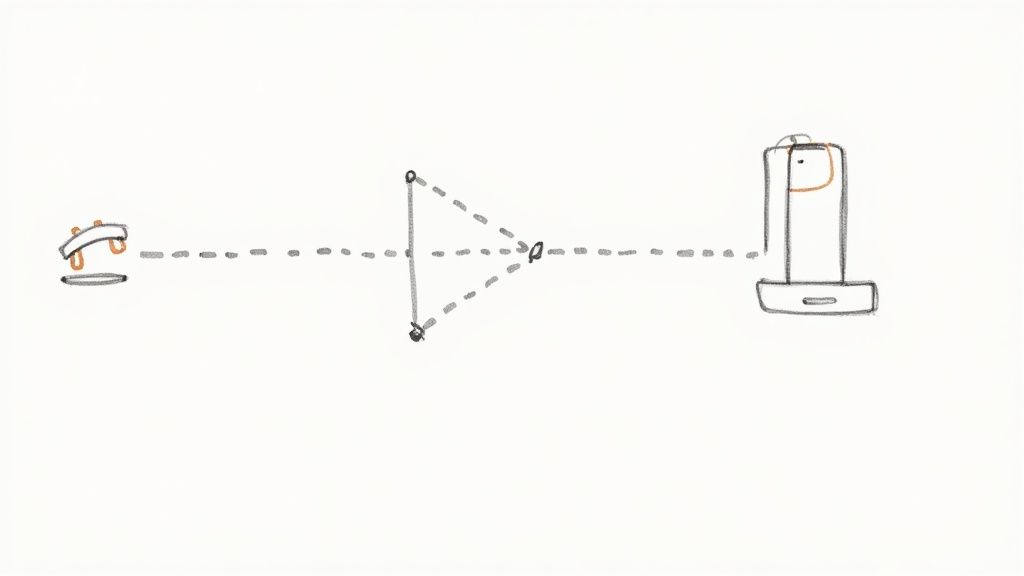
If you’ve ever used a smart speaker to play music or a smart thermostat to adjust the temperature, you’re already halfway to understanding the medical internet of things. It's the same simple idea, but instead of helping you manage your home, it helps you support a loved one’s health with incredible care and connection.
At its heart, this is just a family of smart health devices designed for everyday life. These aren't complicated hospital machines; they're user-friendly tools like wearable sensors, smart pill organizers, or blood pressure cuffs that talk to each other and, most importantly, to you.
This network quietly turns small pieces of health information into simple, helpful messages delivered right to your smartphone. For a caregiver, this means turning worry into reassurance and guesswork into confident, loving care.
The Three Simple Pieces
Think of the medical internet of things as a team of three helpers working together to create a safety net for your loved one. Each one has an important job to do.
- The Smart Device (The Helper): This is the physical tool that gathers a specific piece of information. It could be a smartwatch tracking heart rate, a smart scale measuring weight, or a sensor on a pillbox that knows when the lid is opened. These devices are like your gentle eyes and ears.
- The Network (The Messenger): Once the device gathers information, it needs a way to share it. The network—usually your home’s Wi-Fi—is the messenger. It securely sends that tiny bit of data from the device to the right place.
- The Application (Your Dashboard): This is where the magic happens for you. An app on your phone, like Don’tForgetDad, receives the information and shows it to you in a clear, simple way. It turns raw numbers into helpful alerts, like, “Dad missed his 9 AM medication,” or charts that show you how things are going over time.
This simple flow—from helper to messenger to your dashboard—is what makes this technology so powerful. It creates a direct line of sight into your loved one's well-being, allowing you to provide support from anywhere.
From Numbers to Peace of Mind
The real value isn’t just in getting information; it’s about what that information allows you to do. A single blood pressure reading is just a number. But seeing a trend of consistently high readings over a week, flagged by your app, is an insight that prompts a gentle phone call to check in, or a conversation with a doctor.
This technology is growing fast because it meets a real human need for connection and safety. The global market for these devices was valued at around USD 47.32 billion in 2023 and is expected to soar, showing just how many families are finding comfort in this connected approach to care. You can find more details in this market growth report.
It’s this ability to spot patterns and provide timely alerts that transforms the medical internet of things from a collection of gadgets into a true caregiving partner. It helps you see the small changes before they become big problems.
Ultimately, this system empowers you to offer loving support, respecting your loved one’s independence while ensuring their safety. It's a quiet promise that even when you can't be there, your care and attention are always felt.
Your actionable takeaway: Think about one daily routine or health measurement you often worry about. Could a simple smart device help monitor it and bring you a little more peace?
How Smart Devices Provide Peace of Mind
The true heart of the medical internet of things isn’t in the circuits and sensors, but in the quiet reassurance it brings to your day. It’s about transforming that constant, low-level worry into a feeling of calm and connection. This technology offers real, gentle solutions to the very concerns that can keep caregivers up at night.
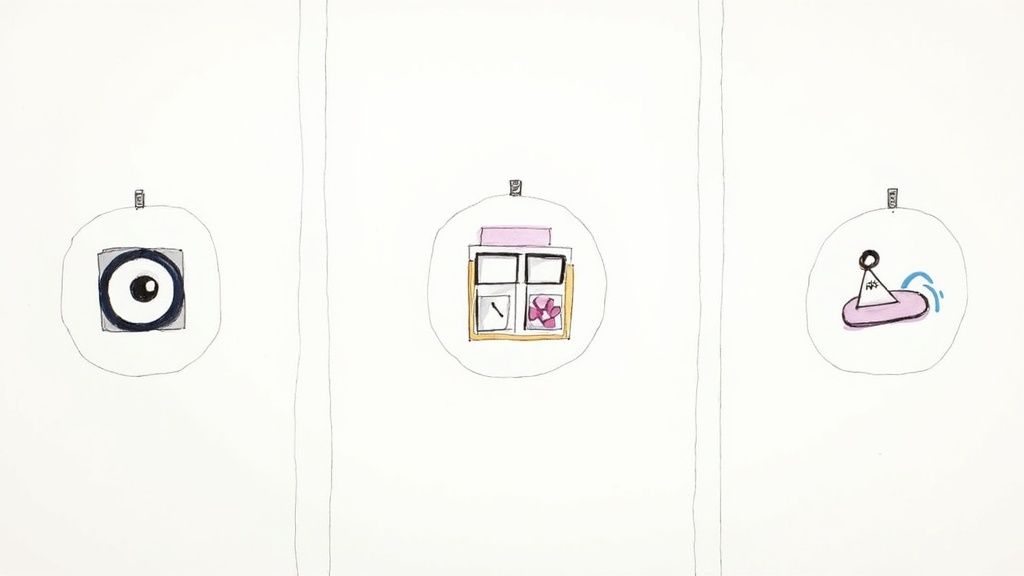
Let's look at three main ways these smart devices can lighten your emotional load and bring a much-needed sense of security. Each one acts as a quiet partner, helping you provide the best possible care, even when you can’t be there in person.
A Gentle Window into Their Day
One of the heaviest burdens for any caregiver is the unknown. You hang up after a morning check-in call and immediately start to wonder, Is everything still okay? Remote monitoring provides a gentle, non-intrusive way to answer that question without having to call again and again.
Imagine your father is living on his own, and you worry about him being lonely or inactive. A few discreet motion sensors in key spots like the kitchen or living room can give you a simple, privacy-respecting update. Instead of calling to ask if he's up and about, your app can show you he’s been in the kitchen, which might mean he’s made himself breakfast. It's a small piece of information that brings huge relief.
This isn’t about watching someone; it's about being aware. It’s the difference between anxious guessing and quiet confidence. This simple connection lets your loved one keep their precious independence while you get the peace of mind that comes from knowing they are safe and following their normal routine.
A Reliable Partner in Medication Management
"Did Mom take her heart medication this morning?" It’s a simple question that can cause so much stress, since a single missed dose can be a real problem. Smart pill dispensers are a perfect example of how the medical internet of things offers a direct solution for this common caregiving headache.
These devices do more than just hold pills. They can be programmed to light up or chime when it's time for a dose. More importantly, they connect directly to an app on your phone.
- A Gentle Nudge: If a scheduled dose isn't taken within a set time, the system sends a notification straight to you.
- A Loving Reminder: This quiet alert lets you make a quick, supportive call to your loved one, turning a potential health issue into a moment of connection.
- Shared Responsibility: This simple tool turns a source of daily anxiety into a manageable, shared task.
A smart pillbox doesn't just dispense medication; it dispenses peace of mind. It’s a silent confirmation that a critical part of your loved one's health routine is on track, every single day.
This kind of support helps build a solid routine, which is so important for managing health conditions. For a caregiver, it means you can go about your day with one less major worry on your mind.
An Instant Emergency Safety Net
Perhaps the deepest fear for any caregiver is the possibility of an accident—like a fall—when no one is around to help. This is where the medical internet of things provides its most important benefit: an immediate, automatic safety net.
Think about a scenario where your mother, who lives alone, slips and falls. She might be disoriented, unable to reach a phone, or even unconscious. A modern fall detection pendant or smartwatch senses the sudden impact and lack of movement, automatically triggering an alert.
This alert doesn't just ping your phone; it can be set to notify a whole list of family members or even connect directly with a 24/7 monitoring service. Within moments, help is on the way, even if your mother can't call for it herself. This immediate response can make all the difference in an emergency.
This technology isn't just for falls, either. Other sensors can detect if a door is opened at an unusual time—a huge concern for families dealing with dementia—or alert you to a smoke alarm that your loved one might not hear. These devices stand as a vigilant, silent guardian, ensuring that in a moment of crisis, your loved one is never truly alone.
By providing these layers of support, the medical internet of things helps you breathe just a little bit easier. It’s a quiet partner in your caregiving journey, working in the background to keep your loved one safe and you connected.
Your actionable takeaway: Consider one of these three areas—daily activity, medication, or emergency safety. Could a single smart device in just one of these categories significantly reduce your daily stress?
Putting This Tech into Practice: Real Stories
It’s one thing to talk about technology, but it’s another to see how it genuinely helps families like yours every single day. The real magic of the medical internet of things isn't in the tech itself, but in how it quietly fits into our lives, solving real-world problems and strengthening the bonds we share.
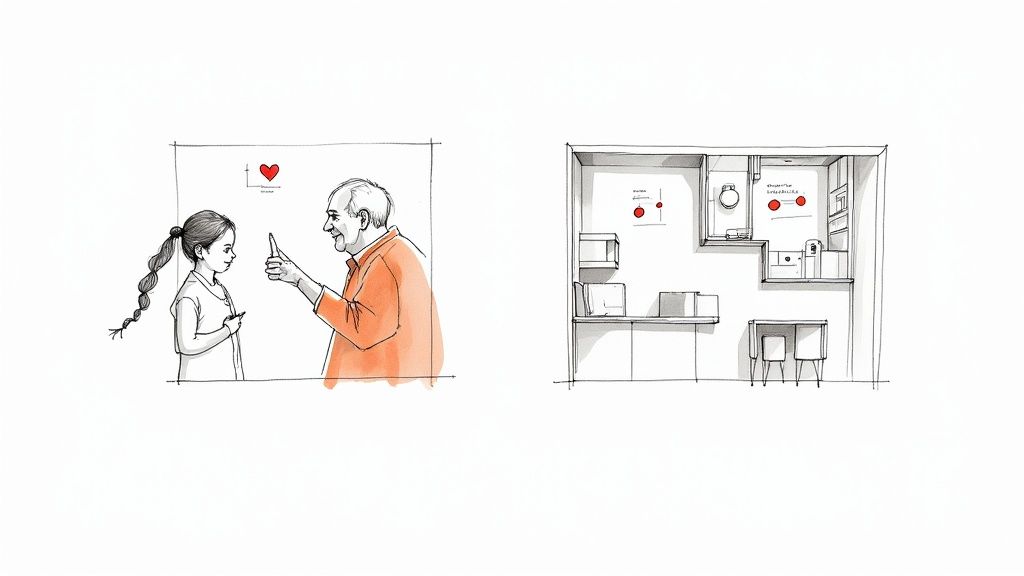
Let’s step into the shoes of two different families to see how they found a little more peace of mind. These stories aren’t about complicated gadgets; they’re about love, connection, and the simple desire to know that the people we care about most are safe and sound.
Meet Maria and Her Mom
Maria lives hundreds of miles away from her mother, who is carefully managing her heart health. That distance used to be a constant source of anxiety for Maria. She’d call every day, trying to gauge her mom's well-being through the tone of her voice, always wondering if she was getting the complete picture.
So, they decided to try a simple setup. Her mom now uses a smart blood pressure cuff that automatically sends the day's readings to an app on Maria's phone. She also wears a simple activity tracker that shares her daily step count.
The change was almost immediate.
- Morning Reassurance: Every morning, Maria can see her mom’s blood pressure reading was healthy. That small piece of information sets her mind at ease for the whole day.
- Helpful Conversations: One week, the app flagged a slightly elevated blood pressure trend. Instead of panicking, Maria had a gentle, informed conversation with her mom, who then realized she had been forgetting her afternoon medication.
- A Deeper Connection: Because Maria no longer spends every call asking health questions, their conversations have opened up. Now they talk about family news, hobbies, and joyful memories. Their relationship has grown stronger, free from the weight of constant worry.
This simple setup hasn't replaced their connection; it has made it richer. It allows Maria to be a supportive daughter, not just a remote caregiver, providing a quiet layer of support that honors her mom’s independence.
The Chen Family’s Smart Apartment
The Chen family adores their grandfather, who proudly lives alone in his own apartment. His independence is his greatest treasure, but the family couldn't shake the fear of him falling or needing help when no one was around. They needed a solution that provided a safety net without making him feel like he was being watched.
Their answer was a subtle system of motion sensors. These weren’t cameras, just small, discreet devices placed in the kitchen, living room, and bathroom.
This approach is all about understanding normal patterns. The system learned their grandfather's typical routine: he's usually in the kitchen for breakfast by 8 AM. It’s technology that provides awareness, not surveillance.
Now, if a morning goes by with no activity detected in the kitchen, the system sends a quiet alert to his children’s phones. This simple notification prompts a quick, caring check-in call. It's not an alarm, just a gentle nudge to connect.
The medical internet of things has given the Chen family a beautiful balance. Their grandfather keeps his cherished autonomy, and his children have the reassurance that a silent guardian is looking out for him. It's a great example of the kind of caregiving and tech-related support we explore on our Don'tForgetDad blog, where we share similar stories and tips.
While these home-based examples show the personal side of this technology, it's also being used on a larger scale. Hospitals use it for monitoring patients, and clinics use it to help with diagnostics. But the real growth is in remote monitoring that empowers families to bring this continuous care right into their own homes. You can learn more by reading about the growing market for these helpful medical devices.
These stories show that the goal of this technology is deeply human. It’s about using simple tools to foster safety, independence, and above all, connection.
A small tip: Start by thinking about one daily routine you worry about. There's likely a simple, caring tech solution that can help bring you both peace of mind.
Choosing the Right Technology for Your Family
Bringing new technology into your care routine is a big step, and it’s completely natural to have questions. Thinking about things like safety and simplicity isn't about creating worry—it’s about empowering you to make a confident, loving choice for your family.
The whole point is to find tools that add peace of mind, not stress. By asking a few key questions upfront, you can be sure the technology you choose becomes a helpful partner that fits into your life and respects your loved one’s needs.
Keeping Your Family's Information Safe
In a world where we share so much online, the privacy of health information is more important than ever. When a smart device collects data about your loved one, you need to feel certain that information is protected.
Think of it like this: good security is a digital lock on your family's health data. Reputable companies use something called encryption, which basically scrambles the information as it travels from the device to your app. This makes it unreadable to anyone who shouldn't have access.
When you're looking at different options, it's always a good idea to choose well-known, trusted brands that are open about how they protect your information. They should make it easy to understand, giving you the confidence that your loved one’s data is in safe hands.
Simplicity Is Key for Everyone
Technology is only helpful if it’s easy for everyone to use. A complicated gadget with confusing instructions will only lead to frustration. The best tools are designed with simplicity at their core—think large buttons, clear displays, and straightforward apps.
The most effective technology doesn't feel like technology at all. It should blend into the background of daily life, offering quiet support without demanding constant attention or technical know-how.
Before you choose anything, try to see the experience from both sides:
- For Your Loved One: Is the device simple to use? For example, does a pillbox just open at the right time without needing any programming from them?
- For You: Is the connected app, like the one we offer for Don’tForgetDad for Android, easy to navigate? Can you find what you need quickly and understand the alerts?
Choosing a user-friendly system ensures it will actually get used, turning it from a gadget in a box into a reliable part of your caregiving toolkit.
Making Sure Everything Works Together
Finally, you have to think about making sure everything works together. You wouldn't want to juggle five different apps for five different devices; that creates more work, not less.
Many modern systems are designed to work together on one platform, where you can see updates from a smart pillbox, a blood pressure cuff, and motion sensors all in one place. This creates a much more complete and useful picture of your loved one's well-being. This integrated approach is a huge reason the market is expanding so quickly, forecasted to grow from USD 44.21 billion in 2023 to nearly USD 170 billion by 2030. You can read more about these healthcare market trends to understand why seamless integration is becoming the new standard.
By focusing on security, ease of use, and making sure things work together, you can move forward with certainty.
Your small, actionable tip: When researching a device, look for customer reviews that specifically mention how easy it was for their parent or older relative to use. Real-world feedback from other families is often the best guide.
A Hopeful Look at the Future of Caregiving
The world of caregiving technology is always growing, heading toward a future that’s even more connected, kind, and supportive. The real promise of the medical internet of things is its power to help us care proactively, noticing a need before it becomes a crisis.
Imagine a future where a smart system in your loved one’s home gently notices subtle changes in their daily patterns—like walking a bit slower or sleeping less soundly. Before you might even notice, this technology could suggest it’s a good time for a routine doctor’s visit, helping to catch potential health issues at their earliest, most treatable stage. This isn't about replacing the human element of care; it's about making the loving connection at the heart of everything you do even stronger.
Technology will continue to evolve not to take the place of your loving support, but to give you better tools to express it, ensuring your loved one feels safe, cherished, and understood.
This future is one of empowerment and deep reassurance.
Your small step forward: Start a simple conversation with your loved one today. Ask them about one small thing in their daily routine that feels like a chore, and explore together if there's a simple piece of tech that could make it just a little bit easier. This spirit of partnership is the perfect beginning.
A Few Common Questions
It's completely normal to have questions when you're thinking about bringing new technology into your family's life. Asking these questions is a sign of a thoughtful, careful caregiver. Here are some straightforward answers to the concerns we hear most often from families just like yours.
Is This Technology Too Complicated for My Elderly Parent?
This is probably the most important question, and the answer is almost always a reassuring "no." The best medical internet of things devices are designed to be incredibly simple. For your loved one, the experience is often totally "passive"—meaning they don’t have to do anything at all.
For example, a fall detection pendant is just worn like a necklace, and motion sensors work silently in the background. Even devices that require some interaction, like a smart blood pressure cuff, are built with big buttons and clear, simple displays. The whole point is to reduce burdens, not add another complicated task to their day. It’s all about quiet support that respects their comfort and independence.
How Much Do These Devices Cost?
The cost can vary quite a bit, which is actually good news because it means there are options for almost every budget. A simple smart pillbox or a basic activity tracker can be surprisingly affordable, sometimes costing less than a new coffee maker.
Of course, more advanced systems—like a full home monitoring kit or devices that connect to a 24/7 professional service—will have a higher price tag. Some also have a monthly subscription fee.
The best way to think about the cost is to weigh it against the peace of mind it provides. Sometimes, a small investment can lift a very heavy emotional weight, making it a wonderful part of your caregiving plan.
How Do I Know My Loved One's Health Data Is Private?
Protecting your family’s private information is a top priority, and any trustworthy company in this field takes this responsibility very seriously. They use a powerful security measure called encryption, which acts like a strong digital lock. It scrambles the data as it travels from the device to your app so only you and the people you authorize can ever see it.
When you're choosing a device, always go with a reputable brand that's open and honest about its privacy policies. To feel confident, you can explore how a company handles your data. For instance, reading a clear and simple privacy policy will tell you exactly how your data is protected. This simple check helps ensure you’re partnering with a company that values your family's security as much as you do.
Our hopeful takeaway: Don't feel like you have to solve everything at once. Start by focusing on just one small need. Finding one simple, affordable device that eases a single daily worry is the perfect first step into this supportive world of connected care.
With Don’tForgetDad, you can bring this same sense of connection and reassurance to your family's daily routines. Our simple app helps coordinate medication reminders and important tasks, ensuring everyone stays on the same page and your loved one gets the consistent, loving care they deserve. Get started and experience a calmer caregiving journey at https://dontforgetdad.com.