 by Don'tForgetDad Team
At its heart, a medication management app is a caring digital helper that helps you track medications, set reminders, and manage prescriptions right from your phone or tablet. Think of it as a kind, dedicated assistant whose only job is to make sure your loved one takes the right dose at the right time, every single time.
Bringing Peace of Mind to Your Family's Health
If you're a caregiver, you know the daily juggling act. Between the pill bottles, confusing schedules, and the quiet worry in the back of your mind, managing a loved one's medication is a huge responsibility. You're not alone in feeling this way.
This guide is here to introduce a simple solution that can lift a surprising amount of weight off your shoulders: medication management apps. Don't think of them as another piece of complicated technology. Instead, picture a reliable partner that gently reminds, tracks, and organizes everything for you.
Our goal is simple: to show you how these tools can bring some calm to the chaos. That way, you can spend less time worrying and more time enjoying the moments that matter with your family.
Why This Matters So Much
For so many of us, medication management is one of the most stressful parts of the day. A single mistake—like a missed pill or an accidental double dose—can have serious health consequences. That pressure is immense, especially when you're also juggling work, kids, and your own life.
This is where a little help can make a massive difference. These apps are designed to take over the logistical side of things, freeing up your mental space and dialing down the daily anxiety that comes with such an important job.
"Effective medication management is more than just taking pills—it’s about creating a system that promotes safe, consistent, and informed medication use."
By adopting a simple tool, you’re doing more than just organizing pills; you're building a safety net. It’s a net that gives you reassurance while helping your loved one maintain a sense of independence and stability.
What You Can Expect from This Guide
We’ll walk through everything you need to know about these apps, from the very basics to choosing the perfect one for your family’s specific situation. The whole idea is to give you clarity and confidence.
Here’s a quick look at what we’ll cover:
- The Real Benefits: We'll dig into exactly how these apps can reduce stress and improve health, using real-world examples you can relate to.
- Must-Have Features: You’ll learn the key features to look for that make an app both powerful and, most importantly, easy for everyone to use.
- Choosing the Right App: We'll share practical tips for picking an app that fits your family's needs and comfort level with technology.
- A Gentle Rollout: Find compassionate ways to introduce this new tool to your loved one so it feels like a helpful partnership, not a chore.
Being a caregiver is a profound act of love, and you deserve support that makes the journey a little smoother. Just by reading on, you’re taking a small, practical step. You might be surprised at how much calm and control a simple app can bring back into your daily routine.
How Medication Management Apps Can Help You
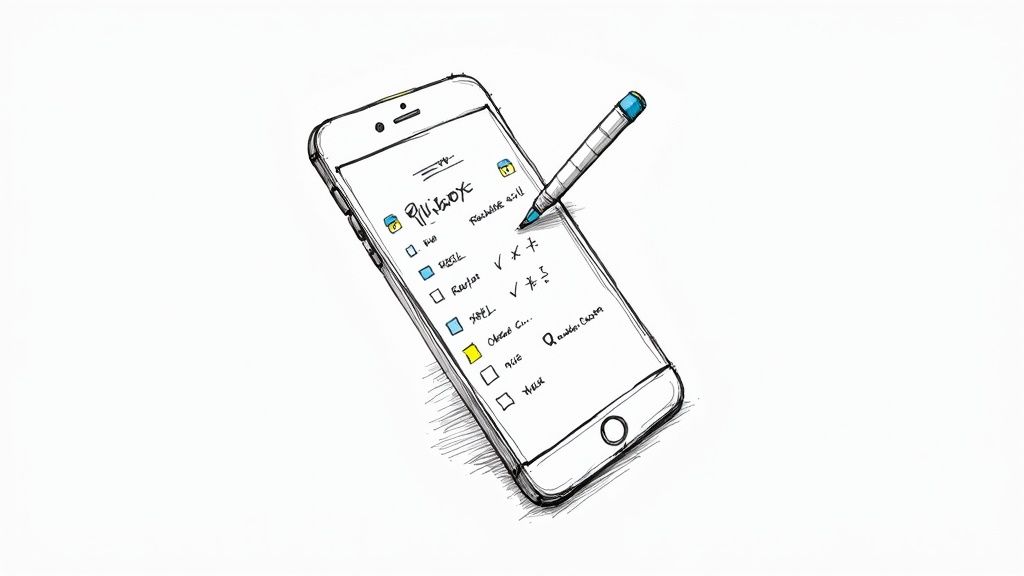
It’s easy to look at a new piece of technology and just see another complicated thing to learn. But a good medication management app isn't like that. At its heart, it's a simple digital helper designed to bring calm and order to one of the most stressful parts of caregiving.
Think of it as a smart pillbox that lives on your phone or tablet, ready to lend a hand exactly when you need it.
The main job of these apps is to make sure the right medication is taken, in the right amount, and at the right time. But their real value goes so much deeper than just being a fancy alarm clock.
Picture this: It's 8 AM, and your dad's phone chimes with a friendly reminder for his morning blood pressure pill. He takes it, taps a button in the app to confirm, and you instantly get a notification on your own phone. You didn’t have to call to check, and he didn't have to feel like he was being micromanaged. That's the kind of quiet reassurance these tools offer.
Reducing the Mental Load for Caregivers
As a caregiver, you're juggling a massive mental checklist every single day. Did Mom take her afternoon pills? Is Dad’s heart medication prescription running low? This constant stream of questions is flat-out exhausting and a fast track to burnout. A solid medication management app can take on a huge chunk of that burden.
Instead of trying to hold it all in your head, the app does the heavy lifting. It can send you an alert if a dose is missed, let you know when it's time for a refill, and even give you a place to jot down notes on side effects for the next doctor's visit. This shifts your role from being a constant worrier to a calm, informed supervisor.
The goal is to move from a place of constant anxiety to a state of confident oversight. These apps don't replace your care; they support it, giving you back precious mental energy to focus on your loved one.
This kind of digital support is becoming a critical part of modern healthcare. The market for these tools is growing fast—medication management apps alone are projected to make up over 60% of a market valued at around $2.5 billion by 2025. That growth tells you one thing: countless families are finding real relief and safety with these tools. Explore more about the medication reminder market to see the trends.
Empowering Seniors with Independence
For our aging parents, holding on to independence is everything. Nobody wants to feel like a burden or like they've lost control over their own daily life. The right app can be an incredible tool for empowerment.
It gives your loved one a clear, simple way to manage their own health routine. Take a grandmother who treasures living on her own but sometimes forgets her thyroid medication. An app with a loud, clear reminder and big, easy-to-press buttons allows her to stay on track all by herself.
She feels capable and in charge, and you get peace of mind knowing there's a safety net in place. This builds a sense of partnership rather than dependence, which is so much better for your relationship. It’s a true win-win that respects their dignity while ensuring their well-being.
Creating a Safer, Calmer Routine
At the end of the day, the biggest benefit is safety. Accidental missed doses or, even worse, double doses are a serious risk, especially for seniors juggling multiple health conditions. A digital log creates an undeniable record of what was taken and when, which completely eliminates the guesswork.
- No More Double Doses: The app clearly shows a dose has already been marked as "taken," heading off any confusion.
- Fewer Missed Pills: Gentle but persistent reminders make sure medications aren't forgotten, even on busy days.
- Better Doctor Visits: You can pull up a complete medication history right on your phone, leading to more productive conversations and better treatment decisions with the doctor.
By transforming a chaotic and stressful task into a predictable, manageable routine, you create a more peaceful environment for everyone involved.
The next time you feel that familiar pang of worry about medications, remember that a little help is just a tap away. Starting with a simple app can be a small change that brings a huge sense of relief.
The Non-Negotiable Features of a Great Medication App
When you first start exploring medication management apps, it’s easy to feel like you've fallen down a rabbit hole. There are so many options, each one promising to be the best. But here’s the secret: you don't need the flashiest or most complex tool. You need the one that actually works for your family's real life.
Let's cut through the noise and talk about the features that truly make a difference. These are the essentials that elevate an app from a glorified alarm clock to a reliable partner in care. Think of this as your practical checklist for finding an app that brings you genuine peace of mind.
Customizable Reminders and Alerts
No two medication routines are ever the same. Your mom might have a weekly pill, a daily tablet that has to be taken with food, and eye drops every four hours. A truly helpful app understands this. It doesn't force you into rigid "morning, noon, night" boxes.
Instead, you need truly customizable reminders. This means you should be able to:
- Set alerts for the exact days and times needed—like "every Tuesday at 9 AM."
- Choose different notification sounds. A gentle chime might be fine for one reminder, but you might need a more insistent buzz for a critical, time-sensitive medication.
- Attach specific notes to each alert, such as "Take with a full glass of water" or "Must be taken 30 minutes before eating."
This kind of detail is what makes a reminder truly useful. It mirrors the doctor’s precise instructions and leaves no room for error or confusion.
A Clear and Simple Medication Log
"Did Dad take his 2 PM blood pressure pill?" That question can send a jolt of anxiety through any caregiver. The best apps get rid of that worry with a simple, easy-to-read medication log.
Think of this as your family’s shared source of truth. After your loved one takes their medicine, they (or another caregiver) just tap a button in the app to mark it as done. That simple action instantly updates a log that you can see on your own phone, wherever you are.
It’s a deceptively simple idea with a massive impact. It ends the guesswork, prevents dangerous accidental double doses, and builds a perfect medication history you can show the doctor at the next visit.
Peace of mind isn't about control; it's about clarity. A shared medication log provides that clarity, turning worry into reassurance with a single tap.
Automated Refill Alerts
We’ve all been there—that sudden, gut-wrenching moment you realize a crucial prescription is down to its last pill. It triggers a frantic, last-minute dash to the pharmacy, which is stressful for everyone involved. This is where automated refill alerts become an absolute game-changer.
A good app lets you input how many pills are in the bottle when you get a new prescription. From there, it automatically counts down with each dose taken and sends you a heads-up when the supply is running low—say, with seven days left. This gives you plenty of breathing room to call in the refill without the panic. It’s a small feature that prevents major headaches and ensures there are no gaps in your parent’s care.
To help you sort through these key functions, here’s a quick breakdown of what to look for and why it matters.
Essential Features in a Medication Management App
| Essential Feature | What It Does | Why It's a Lifesaver for Caregivers |
|---|---|---|
| Customizable Alerts | Sets reminders for specific times, days, and frequencies with custom notes. | Ensures your loved one takes the right dose at the right time, exactly as the doctor prescribed. |
| Shared Medication Log | Creates a real-time, shareable record of every dose that's been taken or missed. | Ends the "Did they take it?" anxiety. You can check from anywhere, instantly. |
| Automated Refill Alerts | Tracks pill counts and notifies you when a prescription is running low. | Prevents the stress of last-minute pharmacy runs and avoids dangerous gaps in medication. |
| Multi-User Access | Allows multiple family members and caregivers to log in to the same account. | Keeps the entire care team—siblings, spouses, and aides—on the same page. |
| Missed-Dose Notifications | Sends an immediate alert to caregivers if a dose isn't marked as "taken." | Acts as a critical safety net, allowing you to follow up right away if a medication is forgotten. |
Having these core features in one place turns an app into a true support system, working quietly in the background to keep things running smoothly.
Features Built for the Whole Family
Let's be honest: caregiving is usually a team sport. Whether it’s siblings pitching in or a professional aide helping out, the right app should be built for collaboration. To get more ideas on coordinating care, you can explore more resources on our blog.
Look for these two key functions that keep everyone in the loop:
- Multi-User Access: This lets you, your sister, and your dad's home health aide all log into the same account. Everyone sees the same schedule, the same medication log, and the same important updates. No more confusing group texts!
- Missed-Dose Notifications: This might be the single most important feature for a caregiver who doesn't live nearby. If a pill isn't marked as taken within a set time, the app automatically alerts the caregivers. It's a safety net that lets you check in immediately and solve a potential problem before it becomes one.
When an app has these features baked in, it’s more than just software. It becomes a central hub for your care team—a quiet, dependable assistant that helps keep your loved one safe and gives you the reassurance you absolutely deserve.
How to Choose the Right App for Your Family
https://www.youtube.com/embed/su-x3GMNLIo
Picking the right medication management app isn't a tech problem—it's a human one. The goal isn't to find the fanciest app with the most bells and whistles. It's about finding a simple, reliable partner that fits seamlessly into your family's life.
Think of it like choosing a comfortable pair of walking shoes for your dad. You wouldn't buy him a pair of high-tech running shoes with a complicated lacing system. You'd find something supportive, easy to slip on, and comfortable. The same logic applies here. The best app is the one that makes life easier, not more complicated.
Let's walk through how to find that perfect fit.
Start With Ease of Use
The single most important factor is how simple the app is for your parent. If they open it and see a confusing jumble of tiny text, complex menus, and unclear icons, they'll close it and never look back. Frustration is the enemy of consistency.
As you explore options, ask yourself a few practical questions:
- Is the text big enough to read without squinting? Look for apps with clean fonts and high-contrast colors that are easy on aging eyes.
- Are the buttons obvious and easy to tap? A big, friendly button that says "I took my pills" is infinitely better than a tiny, ambiguous checkmark icon.
- Does it feel cluttered? The best apps for seniors have a clean, simple layout. They put the most important things front and center and hide the rest.
Sometimes, the simplest-looking tool is the most powerful because it does its one job perfectly without adding any extra stress to the day.
Look for Caregiver-Focused Features
A great app doesn't just work for your loved one; it has to work for you, too. As a caregiver, you need a way to stay in the loop, especially if you live miles away. That's why the ability to connect your phone to your parent's account is a must-have.
This feature, often called multi-user access or caregiver sync, is what delivers true peace of mind. When your mom taps the button to confirm her 8 AM pills, you get a quiet notification on your phone. No more nagging phone calls or lingering anxiety. Everyone is on the same page, effortlessly.
Your peace of mind comes from clarity, not control. The right app gives you a gentle window into your loved one’s routine, offering reassurance without having to constantly ask, "Did you remember to take your medicine?"
This simple, three-step flow—reminders, logging, and refills—is the backbone of a successful medication routine.
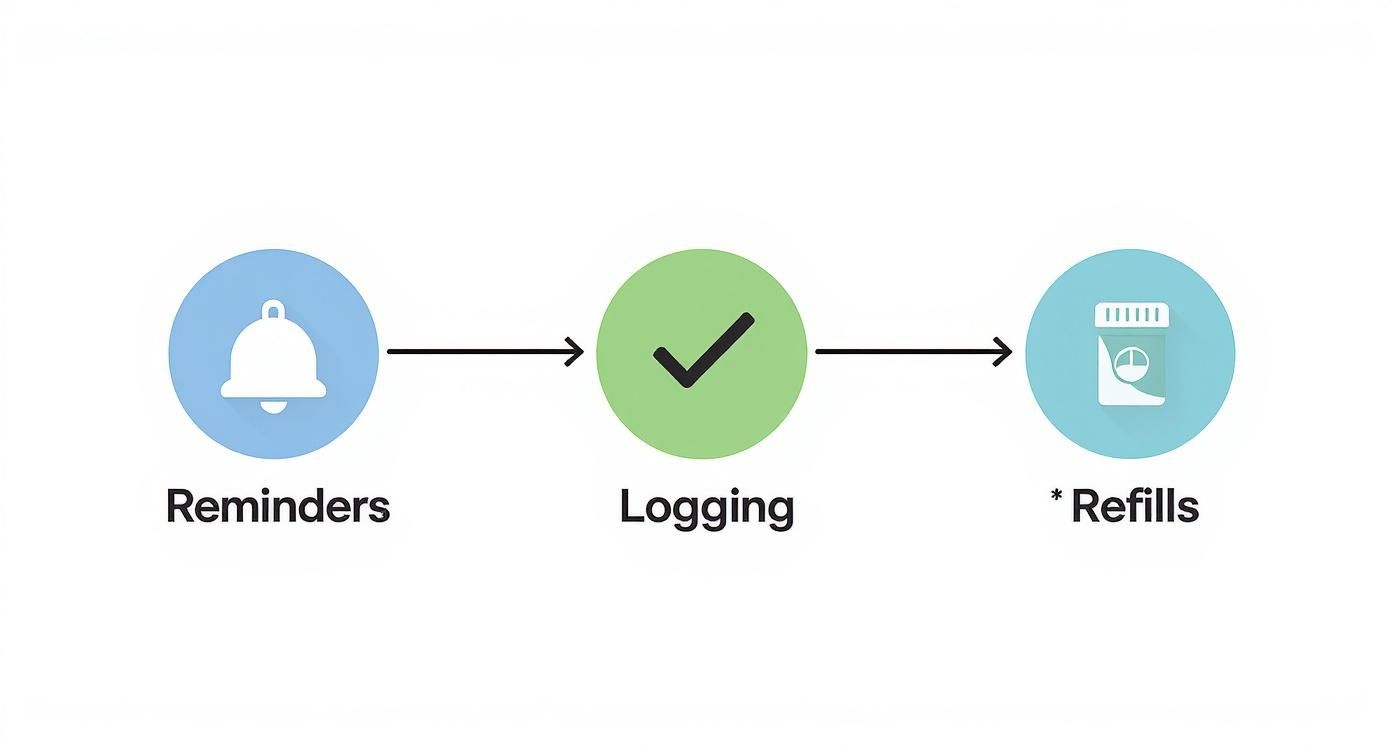
The diagram shows how each step builds on the last, creating a complete and stress-free system that works for everyone.
Understand Free vs. Paid Apps
You'll find plenty of free apps out there, and some are quite good. But it's important to understand the trade-offs. Free apps are usually supported by ads, which can be distracting, confusing, or even lead a senior to accidentally click away from the app entirely.
Many free versions also put limits on critical features. You might only be able to add a few medications or be blocked from syncing with a caregiver's phone.
Paid apps usually offer a much cleaner, ad-free experience. For a small subscription, you unlock the features that really matter for families: unlimited caregiver syncing, detailed progress reports, and better customer support. Apps like the Don’tForgetDad app for Android are built from the ground up with this kind of family collaboration in mind.
Don't Forget Privacy and Security
You are trusting this app with deeply personal health information, so security isn't just a feature—it's a necessity. Look for apps with a clear, easy-to-understand privacy policy. A trustworthy developer will state upfront that they encrypt your data and will never sell it to advertisers or other third parties.
This digital trust is a serious business. The related drug reference app market was valued at US$4.2 billion in 2024 and is growing fast, a sign that the industry is committed to providing secure and reliable health information.
Ultimately, the best way to choose is to try a couple of options out with your loved one. Download two of your top contenders and sit down together. Just looking at the main screen can tell you almost everything you need to know. It’s a small first step that can lead to a much calmer, more organized future for your entire family.
Gently Introducing a Medication App to Your Loved One
Talking about bringing new technology into a parent's life can be… tricky. It’s a delicate conversation, and the key is to lead with love, patience, and a genuine sense of partnership. Your goal isn’t to take over, but to introduce a tool that supports their health and independence.
This isn’t about control; it’s about reassurance. It's your chance to show them you’re on their team, always looking for simple ways to make life a little easier and safer for everyone involved.
Frame It as a Tool for Empowerment
For many older adults, the idea of needing help with something as personal as medication can feel like they're losing a bit of independence. That's why it's crucial to frame a medication management app not as a crutch, but as a tool that empowers them.
Start the conversation gently. You could try something like, "Mom, I was thinking about your medication routine and how we could make it less of a hassle. I found this app that’s like a smart assistant—it just handles the boring reminders so you don't have to keep track of it all in your head."
Explain how the app helps them stay in control of their own health, safely and confidently, right from their own home. It’s simply a way to keep things organized, just like they use a calendar for appointments or a list for groceries.
The most successful approach is one that feels collaborative. It’s not about you managing them; it's about both of you managing their health together, with a little help from a simple tool.
By focusing on the benefits that actually matter to them—like having fewer things to remember and more peace of mind—you can shift the idea from something intimidating into something genuinely helpful.
Make It a Shared and Positive Experience
Once your loved one seems open to the idea, the next step is to make the setup process a shared, positive experience. Please don't just install it for them and walk away. Sit down together with a cup of coffee and turn it into a fun, collaborative project.
Here are a few simple ways to encourage a sense of ownership:
- Let Them Choose: Involve them in the small decisions. Ask things like, "Which reminder sound do you like best? This one is a gentle chime, and this one is a bird chirping."
- Set It Up Together: Walk them through entering the very first medication. Let them see how easy it is to add the pill name and set the time for the reminder.
- Run a Practice Drill: Set a test reminder for five minutes from now. When it goes off, show them how to tap the "Taken" button. That little practice run can demystify the whole process and build their confidence right away.
This hands-on, supportive approach turns a potentially stressful task into a moment of connection. It reassures them you’re right there to help every step of the way, reinforcing your role as a loving partner in their health.
Offer Ongoing, Gentle Support
Getting used to a new habit takes time, so be prepared to offer gentle support as they learn the app. Let them know it’s perfectly okay if they forget to log a dose or need help finding a feature. Make sure they know they can always call you with questions, no matter how small.
Your patience and encouragement are the most important ingredients here. By introducing the app with kindness and making it a team effort, you're doing more than just organizing medications—you're building a stronger, more supportive bond.
A small tip to start: Once the app is set up, maybe schedule a quick daily call for the first few days just to ask how it’s going. This shows you’re invested and there to help them succeed.
Your Partner in Care and a Hopeful Path Forward
Let's be honest, taking on the role of a family caregiver is a massive responsibility. Adopting a medication management app isn't just about adding another piece of tech to your life. It’s a conscious choice to trade that nagging, persistent worry for a sense of calm and reassurance.
Think of it as reclaiming your time and energy. Instead of constantly checking clocks and pill bottles, you’re creating more room for the things that really matter—connection, laughter, and just being present with the people you love.
This one step does something incredible for both your loved one’s health and your own sanity. The best tools are the ones you barely notice; they handle the heavy lifting behind the scenes so you can focus on the heart of caregiving.
Your journey as a caregiver is vital, and you don’t have to do it alone. The right support can transform a stressful routine into a peaceful, manageable part of your day.
The team behind Don’tForgetDad gets it because we’ve been there ourselves. As you can read more about us, our whole mission started from a place of love and a real need to make this process less overwhelming. We firmly believe technology should serve families, not make their lives more complicated.
A Small Step for a Hopeful Future
The path to a less stressful, more supported caregiving experience can start right now. It doesn't begin with a download, but with a simple conversation.
Here's a small, practical thing to try tonight: ask your parent, "What's one thing that would make taking your medicine feel easier?" That single question can open the door. It’s the first step on a hopeful path toward shared peace of mind, proving that sometimes, the smallest changes bring the greatest comfort.
Answering Your Top Questions
Stepping into the world of medication management apps can bring up a lot of questions. That’s completely normal. You're looking for a tool to make life easier and safer, and you need to feel confident in your choice. Let’s walk through some of the most common questions caregivers ask.
Is It Really Safe to Trust an App With This?
This is usually the first thing on everyone's mind, and for good reason. The short answer is yes, but only if you choose a well-built, reputable app.
Think of it like online banking. The best medication apps use strong encryption to protect your family’s health information, making it unreadable to anyone else. A trustworthy developer will also have a crystal-clear privacy policy that explicitly states they won’t sell your data. Your family's privacy isn't just a feature; it's a fundamental right, and a good app is built on that foundation.
I'm Worried My Parent Won't Be Able to Use It. Is It Too Complicated?
This is a huge, very real concern for so many families. The great news is that the best apps are designed specifically for people who didn't grow up with smartphones. They focus on simplicity with large text, clean layouts, and big, obvious buttons that are easy to tap.
If your parent is comfortable making a phone call or looking at family photos on their device, they can almost certainly handle a well-designed medication app with a little help from you at the start. It's all about finding the right tool that meets them where they are.
A good app should feel like a friendly helper, not a frustrating piece of technology. The goal is comfort and confidence, not a complicated new gadget to learn.
What Happens if They Just Forget to Use the App?
This is where the real magic for caregivers comes in. A great app isn't just a pillbox alarm for your parent; it's a communication hub for you. By linking your phone to their account, you create a seamless safety net.
Here's how it works:
- You get a quiet little notification when a dose is marked as "taken."
- More importantly, you get an immediate alert if a dose is missed.
This completely changes the dynamic. Instead of calling multiple times a day to ask, "Did you take your pills?", you only need to check in when you know for a fact that help is needed. It’s a game-changer for your peace of mind and their sense of independence.
What's the Cost? Are Free Apps Good Enough?
You'll find a whole range of options out there, from free to paid subscriptions. Free apps can be a decent starting point, but they often have downsides, like distracting pop-up ads or limits on how many medications you can add.
Paid apps, which usually cost just a few dollars a month, tend to provide a much cleaner and more comprehensive experience. That small subscription fee is what unlocks the most powerful features for caregivers, like syncing across multiple family members' phones and getting detailed reports on their progress. The entire market for these tools was valued at around USD 8.09 billion in 2024, which shows just how vital they've become. Discover more insights about the medication management system market. A tiny investment here can truly pay off in stress reduction and safety.
Taking this step is all about finding a calmer, more organized way forward. The key is to find a tool that makes both you and your parent feel supported and in control.
At Don’tForgetDad, we know caregiving is an act of love. We built our app to support that love with simple, dependable reminders and features that keep the whole family connected and on the same page. See how shared peace of mind can feel and give our app a try today.