 by Don'tForgetDad Team
An effective alarm medication reminder can turn a daily source of family stress into a moment of connection and care. Think of it as a gentle, reliable partner—one that ensures your loved one takes their medicine on time, every time, and gives you the peace of mind that comes from knowing they are safe and supported.
Why a Gentle Reminder Matters for Your Family
Caring for a loved one is a journey of the heart. But it often comes with a heavy mental load. You're already juggling so much—appointments, meals, and daily check-ins. On top of all that, making sure they take their medications correctly can be one of the most stressful duties.
It’s that constant, looping question in the back of your mind: "Did Dad remember his blood pressure pill this morning?"
Picture this all-too-common scenario. You’re in the middle of a meeting, and your phone buzzes. It’s the calendar alert for your dad’s 10 AM medication. You step out to call him, but he doesn’t pick up. Is he okay? Did he just forget? You shoot a quick text to your sister, who's also busy, asking if she can check in.
The coordination, the worry, the constant interruptions—it becomes a familiar and draining part of your day. This isn't just about one pill; it’s about their safety, their health, and the emotional weight of that responsibility on your shoulders.
Reclaiming Your Peace of Mind
This is exactly where a dedicated alarm medication reminder changes the story. It’s not just another alarm clock. It’s a caring system designed with families in mind, providing a supportive safety net that allows everyone to breathe a little easier.
Here’s how it helps:
- Creates a Dependable Routine: A consistent schedule is vital for managing health conditions. A gentle alarm helps build a calm, predictable routine, removing the chance of a simple mistake.
- Reduces Family Worry: It puts an end to the constant phone calls and texts, turning what can feel like nagging into supportive nudges from a friendly, neutral source.
- Promotes Independence: Your loved one keeps a sense of dignity by managing their own doses, while you stay lovingly informed in the background without needing to check in constantly.
The growing need for these caring tools is clear. The global market for medication reminder devices expanded from around USD 1.8 billion in 2018 to approximately USD 2.8 billion by 2024, which shows just how many families are searching for better solutions. You can read the full analysis on StrategicRevenueInsights.com to see the data behind this trend. Exploring different caregiving strategies can also be incredibly helpful, and you can find more practical tips on the Don’tForgetDad blog.
A reliable reminder system does more than just track pills. It returns precious time and mental energy to your family, allowing you to focus on connection, not just coordination.
Ultimately, a good medication reminder brings calm to a chaotic part of the day. It’s all about creating a dependable routine that protects your loved one’s health and restores your own peace of mind.
Setting Up Your First Medication Alarm with Love
Taking that first step to get a medication schedule organized can feel like a massive weight lifting off your shoulders. It’s all about turning that constant, nagging worry in the back of your mind into a clear, manageable plan that everyone in the family can see and support together.
Let's walk through just how simple it is to get started.
The process begins by creating a couple of profiles—one for you as the caregiver and another for the person you're supporting. This isn’t a complex technical setup. It’s really just about putting names to roles, which makes the whole system feel personal and easy to understand from the very beginning.
Creating Your Family Circle of Care
Think of this as building your small, private care team. First, you'll create an account for yourself. After that, you'll set one up for your loved one—we'll call him 'Dad' for this example. This gives him a dedicated space within the app, keeping his specific schedule and needs neatly organized in one place.
For instance, Dad's profile becomes the central hub for his two most important daily pills:
- Morning: The small, round pill for his blood pressure.
- Evening: The oval-shaped one for his cholesterol.
Once Dad's profile is ready, the system gives you a unique Join Code. This simple code is the key that connects your whole family.
This process is what turns medication confusion into a clear, shared responsibility, giving everyone a bit of breathing room.
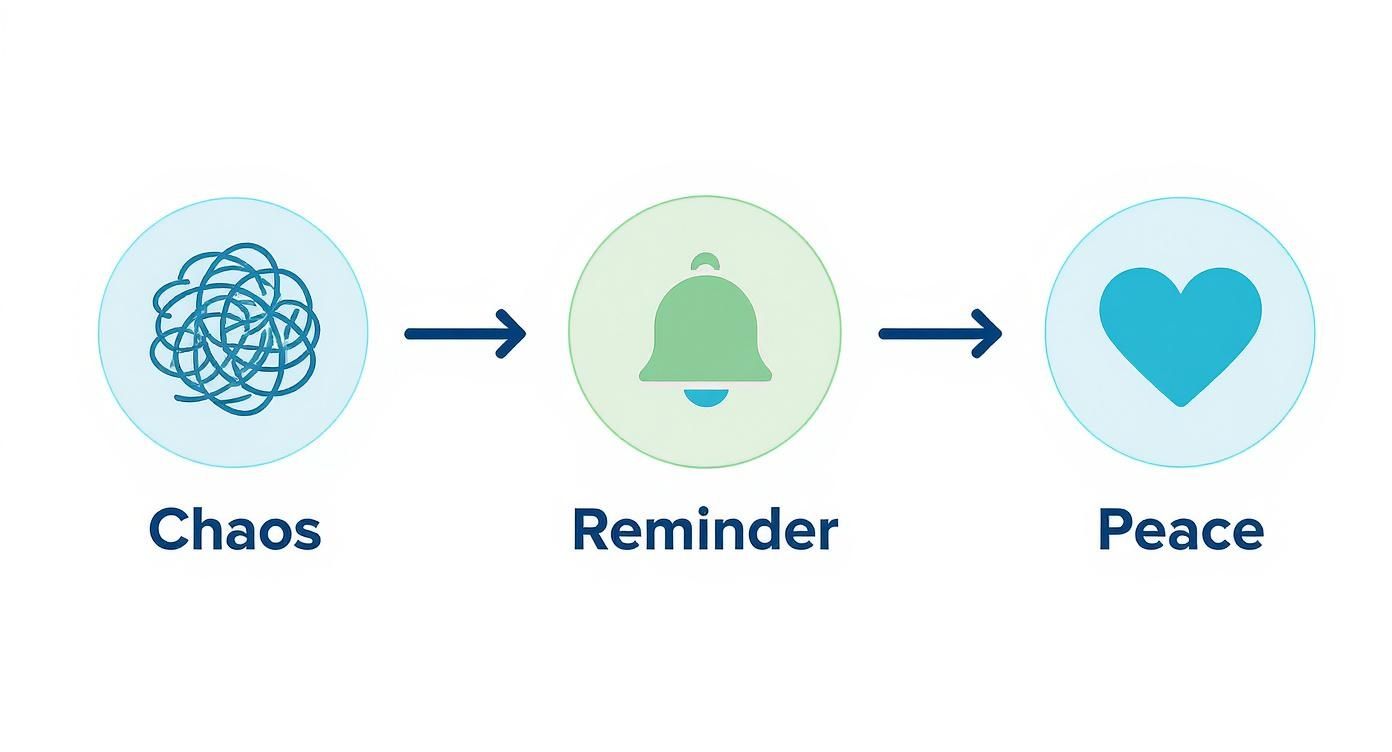
This visual really captures that journey from tangled confusion to the calm that a simple, reliable reminder can bring into your lives.
Sharing the Responsibility, Simply
What if your brother helps out on weekends, or your sister handles Tuesday afternoons? The Join Code makes that kind of teamwork feel effortless. You just share Dad's unique code with them.
When they enter it into their own app, they are instantly linked to Dad's profile. Just like that, everyone on the team sees the same schedule, gets the same alerts, and can help make sure Dad never misses a dose. No more confusing group texts or missed calls trying to figure out who checked in last.
This shared connection is truly the heart of collaborative care. It means the responsibility no longer has to fall solely on your shoulders. You're creating a circle of support that is both visible and loving.
Setting up your first alarm medication reminder isn't just a practical task; it's an empowering step toward better care and less personal stress. For families using Android devices, you can explore the features and download the app by checking out our guide on getting started with the Don’tForgetDad app for Android.
Building a Clear and Simple Medication Schedule
Alright, you've got your family circle set up. Now for the most important part: creating a medication schedule that actually works. This isn't just about typing in times from a prescription bottle. It’s about turning a doctor's instructions into a clear, stress-free daily routine that everyone understands. A well-built schedule is the heart of any reliable alarm medication reminder system.
Let’s walk through a real-life scenario. Imagine your dad needs to take three different things a day, each with its own rule. It can get overwhelming fast, but if we break it down with care, it’s completely manageable.
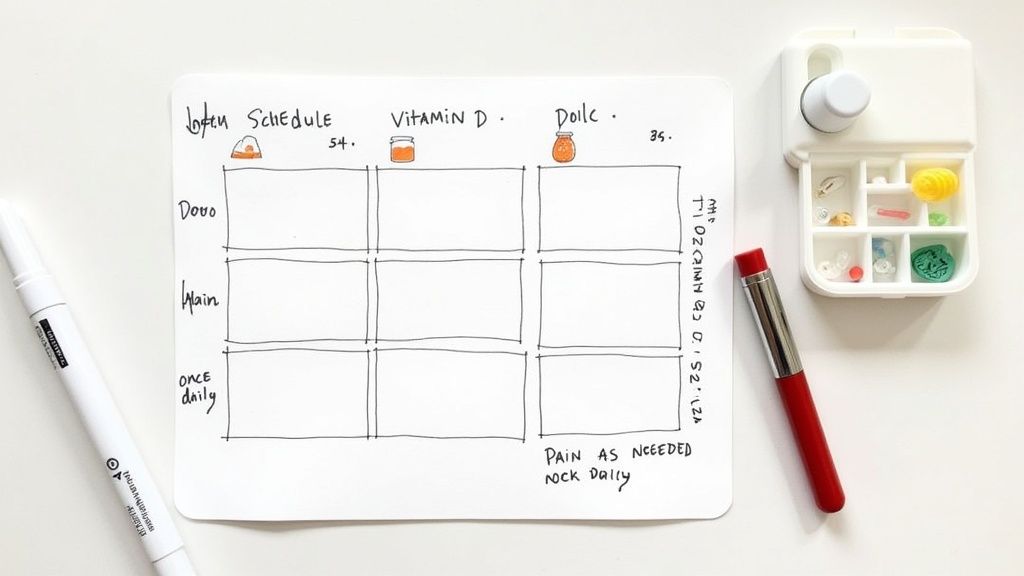
From Prescription to a Practical Plan
The key is clarity, especially when pills look alike or have long, complicated names. "Lisinopril" might mean nothing to your dad, but a simple description can make all the difference in the world. This is your chance to label each medication with a note that makes perfect sense to him.
Here’s how you could set up that schedule for Dad:
- Once-a-day Vitamin D: Let's schedule this for 9:00 AM every morning. You can label it: "Vitamin D - Large Yellow Pill." That simple, visual cue immediately helps him know which one to take.
- Twice-a-day Antibiotic: This one needs to be taken 12 hours apart. You can set alarms for 8:00 AM and 8:00 PM and label it: "Antibiotic - Take with Food." That little note is a gentle but critical instruction.
- As-needed Pain Reliever: These are always tricky because they don't have a fixed time. An app lets you log these doses by hand whenever they're taken, which keeps the whole family in the loop. You could label it "Pain Pill - For Bad Knee."
By using these descriptive, human-friendly labels, you're removing the guesswork. Your dad no longer has to squint at the tiny text on a bottle; he just needs to match your simple description to the pill in his organizer. It's a small change that brings a lot of confidence.
The Power of a Friendly Voice
For many of our parents, especially those with vision challenges or who just find phone screens a bit fiddly, a standard beep or buzz simply isn't enough. It's just noise. This is where a voice reminder becomes an absolute game-changer. Instead of a generic tone, your loved one can hear a clear, friendly voice with a specific instruction.
Imagine your mom's phone gently announcing, "Time for your heart pill, the small white one." This personal touch is not just helpful—it’s comforting. It feels less like a machine and more like a gentle nudge from you.
The market for these assistive technologies is growing for a good reason. Medication voice reminder devices are projected to expand from a market size of about USD 1.3 billion in 2024 to USD 1.49 billion by 2025, driven by the need to support seniors with visual impairments or limited dexterity. You can discover more about the growth of voice reminder technology and see how it’s helping families just like yours.
This feature is more than a convenience; it builds confidence and supports independence. A spoken cue can cut through the noise of a television or a busy household in a way a simple alert just can't, ensuring the reminder is always heard.
Choosing the Right Reminder for Your Loved One
Deciding between a standard visual alert and a voice-enabled one comes down to your loved one’s specific needs and comfort level. A visual pop-up is great for someone who is comfortable with their phone and keeps it handy. But for someone with vision loss or who gets flustered by technology, a clear, spoken reminder is often a much better fit.
This table can help you think through which option might work best.
| Feature | Visual Pop-Up Alarm | Voice Reminder Alarm |
|---|---|---|
| Best For | Tech-comfortable seniors with good vision who keep their device nearby. | Seniors with visual impairments, dexterity issues, or who find screens confusing. |
| Alert Style | On-screen notification with text and a standard alarm tone. | A clear, spoken message detailing the specific medication and instructions. |
| Effectiveness | Can be missed if the phone is silenced or in another room. | Harder to ignore; can cut through background noise like a TV. |
| Personalization | Limited to the text you enter in the reminder label. | Feels more personal and reassuring, like a direct message from a loved one. |
Ultimately, the goal is to choose the method that causes the least amount of stress and provides the most reliable and gentle nudge.
Customizing Notifications for Peace of Mind
A simple beep from a phone is easy to ignore, especially when the TV is on or your loved one is busy in another room. A reminder is only as good as its ability to be noticed, which is why personalizing how and when those alerts arrive is so important. This is where a great alarm medication reminder goes beyond a basic alarm and becomes a true partner in care, giving you genuine peace of mind.
It’s all about creating a system that fits your family’s unique rhythm. The first alert is for your loved one—a clear, gentle nudge that it’s time for their medication. But the real reassurance comes from what happens if that first prompt goes unanswered.
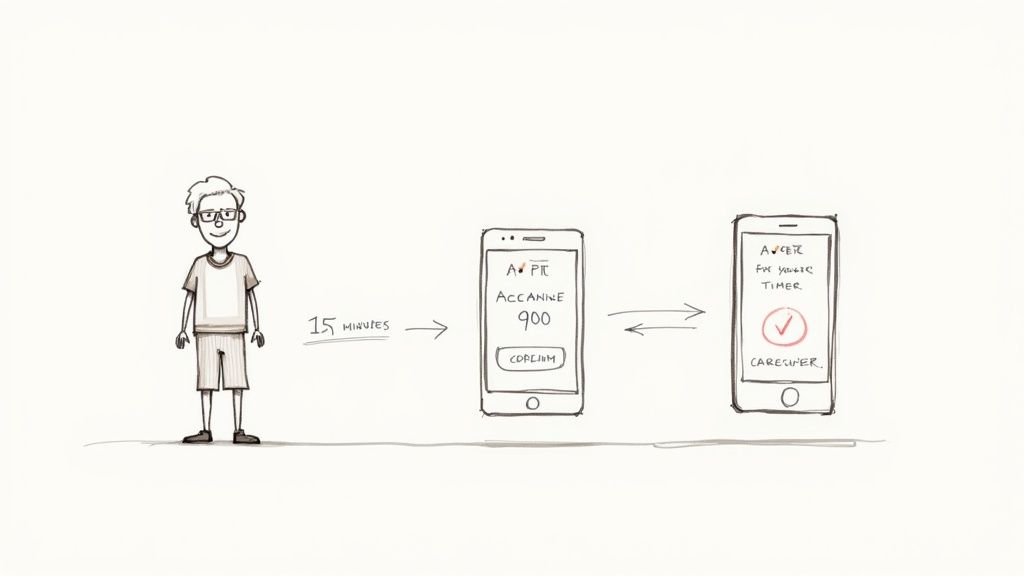
Creating a Smart and Gentle Safety Net
Think of this next part as your digital safety net. You can create a gentle "escalation" plan for any missed doses. This isn’t about watching their every move; it’s about having a quiet backup system running in the background, ready to help only when it’s truly needed.
Let's imagine your mom needs to take her heart medication every morning at 9:00 AM. Here’s how you could set up a caring and effective path:
- The Initial Nudge: Right at 9:00 AM, Mom’s phone chimes with her reminder. She sees the notification, takes her pill, and taps a button in the app to confirm she’s done. Simple.
- The Grace Period: You can set a reasonable window of time—maybe 15 minutes. This gives her a little flexibility so she doesn't feel rushed if she’s finishing breakfast or on a phone call.
- The Caregiver Alert: If she hasn't confirmed taking her pill by 9:15 AM, the system automatically sends a notification directly to your phone. It’s a quiet alert that might say, "Mom hasn't confirmed her 9:00 AM medication."
This single feature completely changes the dynamic of caregiving. You’re no longer the one responsible for remembering to check in. The system lets you know only when your attention is actually needed, freeing up your mental energy for the thousand other things you have to do.
This isn't just another notification; it's a transfer of the mental load. The app takes on the job of constant monitoring, allowing you to trust that if something is missed, you will be the first to know.
From Nagging to Nudging with Love
This approach fundamentally shifts the tone of your relationship. You don't have to be the one making that follow-up call that can sometimes feel like nagging. The technology handles the initial nudge, and you only step in when necessary. This helps preserve your loved one’s sense of independence and dignity.
This gentle escalation fosters a feeling of partnership. Your loved one feels empowered to manage their own routine, knowing you’re there to back them up, not hover over them. It allows you to grant them the autonomy they cherish while you get the quiet confidence that a crucial safety measure is always in place.
Building Trust with Technology, Together
Bringing any new technology into a loved one's life, especially a parent’s, is about so much more than showing them which buttons to press. It’s about building a bridge of trust. Many seniors have a healthy skepticism about new apps—they worry they’ll be too complicated, intrusive, or might put their privacy at risk. Our job as caregivers is to show them that a tool like an alarm medication reminder is there to support their independence, not take it away.
It all boils down to making the experience feel comfortable and human. The goal is to position the app as a friendly helper, not a technical chore. By taking a few simple, thoughtful steps, you can help them feel confident right from the start.
Making Technology Accessible and Friendly
Small adjustments to their smartphone can make a world of difference. Before you even download the app, you can prep their device to be more senior-friendly. This simple act shows you’re thinking about their needs from the very beginning.
Here are a few practical tips to get you started:
- Bump Up the Font Size: Go into the phone’s main settings and make the text larger and bolder. This one change can immediately reduce eye strain and make everything on the screen easier to see and read.
- Put the App Front and Center: Move the Don’tForgetDad icon to the very first home screen. This means they won't have to hunt through pages of other apps to find it.
- Declutter the Home Screen: Think about removing any unused or confusing apps from that main screen. A cleaner, less cluttered view makes it much easier to find what’s important.
These little tweaks create a more welcoming environment. It shows that the technology can adapt to them, not the other way around.
Protecting Your Family’s Privacy is Our Priority
Privacy is a completely valid concern. It's only natural for your loved one to wonder, "Where is all my health information going?" It’s important to reassure them that their data is safe and handled with the utmost respect. We built Don’tForgetDad with this trust at its core, and you can learn more about our commitment to your family's privacy on our site.
Your family’s information—like medication names and schedules—is protected and is never sold or shared with third-party advertisers. Think of it like a private digital notebook shared only between you and the family members you personally invite. This secure, respectful approach is becoming the standard for modern digital health tools. In fact, the global market for pill reminder apps is expected to reach approximately USD 1.2 billion by 2025, a growth driven by families demanding secure and reliable tools. You can discover more insights about the pill reminder app market on DataInsightsMarket.com.
Technology should foster a sense of partnership, not intrusion. When your loved one sees that a tool respects their dignity and protects their information, it becomes a welcome support system.
Your Top Questions, Answered with Care
When you’re setting up something as important as a medication reminder, a few questions are bound to come up. It’s completely normal to want to understand all the details before you dive in. We’ve been there, too.
To help you feel confident right from the start, we've gathered a few of the most common questions we hear from families. Think of this as a quick chat to clear up any lingering worries and get you on your way.
What If My Parent's Phone Is Offline?
This is easily one of the first questions we get, and it’s a smart one. You’re probably thinking, "What happens if Dad's Wi-Fi cuts out, or he’s forgotten to turn his cell data back on?"
Here’s the good news: quality reminder apps like Don’tForgetDad are designed so the alarms work perfectly even without an internet connection. The schedules you create are stored right on the phone itself. As long as the device has power, that local buzz, beep, or voice reminder will go off right on schedule.
The one part that does need an internet connection is the alert sent to your phone if a dose is missed. That signal has to travel from their device to yours. This is why building a simple daily habit of making sure the phone is charged and connected is so important—it keeps that crucial safety net in place.
Can I Manage Schedules for Both of My Parents?
Absolutely. Life is rarely simple, and many of us find ourselves helping coordinate care for more than one person. It’s incredibly common to be the point person for both Mom and Dad, each with their own unique set of medications and schedules.
A well-designed app will let you create separate, distinct profiles for each person you care for, all from your single account. This keeps everything clean and organized. You can easily switch between your mom’s medication list and your dad’s without any risk of mixing things up. It’s a must-have feature for anyone juggling multiple caregiving roles.
The ability to manage multiple profiles in one place is key. It turns your app into a central command center for family care, simplifying what could otherwise be a very confusing task.
How Can I Help a Parent Who Isn't Tech-Savvy?
Introducing new technology to someone who is hesitant can feel like a challenge, but the secret is to make their part of the job as simple as humanly possible. Your goal is to do all the heavy lifting upfront, so their only task is to respond to a friendly, familiar nudge.
- You Do the Setup: Get everything loaded and scheduled on their device yourself. Enter all the medications, set the times, and customize the alert sounds.
- Keep It Simple: Once it's set up, place the app icon right on their home screen where it’s always visible and easy to find.
- Use a Friendly Voice: A custom voice reminder like, “Hey Mom, it’s time for your heart pill,” is so much clearer and more comforting than a generic, jarring alarm tone.
Take a few minutes to walk them through the one simple action they need to take—maybe it’s just tapping a large, clear button to confirm they’ve taken their dose. By removing all the technical hurdles, you make the whole experience feel supportive and helpful, not stressful.
Your small, hopeful step for today is to simply start. Don’t wait for the perfect moment. Taking these small, manageable actions is what builds a reliable, stress-free routine for tomorrow, filled with more connection and less worry.
Don’tForgetDad turns worry into reassurance with simple, shared medication reminders for the whole family. Start creating your circle of care today.