 by Don'tForgetDad Team
When you're standing in the pharmacy aisle, trying to choose the right pain reliever for someone you love, all those boxes can feel a bit overwhelming. Let's make it simple: the main difference between Advil and ibuprofen is that Advil is a brand name, and ibuprofen is the gentle, hardworking ingredient inside.
Think of it like this—they are the very same medication, ready to do the same good work of easing pain and lowering a fever.
Unpacking the Advil vs. Ibuprofen Puzzle

Making choices about medication can feel like a heavy responsibility. You just want to do what's best. The first step to feeling confident is understanding that a brand name like Advil and its generic version, ibuprofen, are partners in care. It’s just like buying tissues—you can choose Kleenex, or you can choose the store brand. Both will be there to offer comfort when you need it.
Advil is simply the most well-known brand that sells the drug ibuprofen. Ibuprofen itself is part of a family of drugs called nonsteroidal anti-inflammatory drugs (NSAIDs). Its job is to gently quiet the body's signals that cause pain, fever, and inflammation. That’s why it can bring so much relief for everything from a sudden headache to the steady ache of arthritis.
Quick Comparison: Advil vs. Generic Ibuprofen
To help you see it clearly, here’s a warm, side-by-side look at what you’re really choosing between on that shelf.
| Feature | Advil (Brand Name) | Generic Ibuprofen |
|---|---|---|
| Active Ingredient | Ibuprofen | Ibuprofen |
| Medical Purpose | Eases pain, lowers fever, and calms inflammation | Eases pain, lowers fever, and calms inflammation |
| Cost | Usually a bit higher due to branding and marketing | Generally more affordable, offering the same relief |
| Formulations | Comes in many forms (tablets, liquid gels, children's) | Varies by maker, but common, easy-to-use forms are available |
| Effectiveness | Medically the same as generic ibuprofen at the same dose | Medically the same as Advil at the same dose |
The most important thing to remember is that the FDA holds generic drugs to the same high, caring standards as their brand-name versions. A 200mg generic ibuprofen tablet offers the same quality, strength, and gentle effectiveness as a 200mg Advil tablet. The real difference you’ll notice is usually the price, which can be a welcome relief for your family’s budget.
As a caregiver, your goal is safe and effective comfort. Knowing that generic ibuprofen provides the exact same medical benefit as Advil can lift a weight off your shoulders, especially when you're managing ongoing care expenses.
Here, we understand that caregiving is a journey of the heart, full of learning and looking for support. We've been there, too. As a family-founded company, we're dedicated to providing clear, practical resources for people just like you. You can learn more about our story and mission at https://dontforgetdad.com/about.
The rest of this guide will walk you through other important things to consider, helping you feel fully prepared to make the best choice for the person you care for. Your thoughtful action today might just be choosing the right bottle off the shelf, but that simple choice is a powerful act of love.
What Else is in the Pill? A Look at Inactive Ingredients
When you're caring for a loved one, you notice the little things. You want to be sure about every part of their care, and that includes what’s in their medication. We know Advil and generic ibuprofen share the same active ingredient, but what about all those other words on the label? Those are the inactive ingredients, and they play an important supporting role.
Think of ibuprofen as the star of the show—it’s the one that gently fights pain and inflammation. The inactive ingredients are the caring stage crew. They don't relieve pain themselves, but they make sure the star can do its job safely and effectively.
Why Are Other Ingredients Needed?
These ingredients might have long, scientific-sounding names, but their jobs are quite simple. They're there to make sure every pill is consistent, safe, and works just the way it's supposed to.
Here’s what some of them do:
- Binders: Act like a gentle glue to hold the tablet together and keep it from crumbling in the bottle.
- Coatings: That smooth, often colorful shell isn't just for looks. It makes the pill easier to swallow and can help protect the stomach lining.
- Fillers: These add just enough bulk so that a very small amount of medicine can be formed into a pill that’s easy for your loved one to handle.
- Preservatives: These keep the medication stable and effective right up to its expiration date, so you know it’s ready when you need it.
For almost everyone, these extra ingredients are completely harmless. They’re simply there to help the medicine work as it should.
Why This Might Matter for Seniors
While these ingredients are perfectly safe for most people, we know that older bodies can sometimes be more sensitive. This is where a little extra attention to the label becomes a simple act of love. In rare cases, a specific inactive ingredient could cause a reaction in someone who has a known allergy or sensitivity.
It's not about being worried, but about being aware. Knowing what's in a medication helps you have more confident conversations with pharmacists and doctors, ensuring every choice is the right one for your family member.
For example, imagine your dad has a known allergy to a specific red dye. You might check the inactive ingredients to make sure the pill's coating is dye-free. Or if your mom has a severe lactose intolerance, you'd want to check that it isn't used as a filler. These situations aren't common, but your awareness is a beautiful form of protection. This is also one of the few practical differences you might find between Advil and a generic brand, as they often use slightly different recipes for their inactive ingredients.
The scale of the ibuprofen market is massive—it was valued at USD 700.8 million in 2023. This huge market includes the raw ingredient, which is then sold to different manufacturers. Some create branded products like Advil, while countless others produce generic versions, each with its own unique blend of inactive ingredients. If you're interested, you can learn more about the ibuprofen market dynamics and growth projections.
A Quick Tip for Peace of Mind
Reading a medication label doesn't have to feel like a test. The next time you have a bottle of Advil or ibuprofen in your hand, just take a gentle look at the "inactive ingredients" list. You don't need to be a chemist or memorize the names. Just getting familiar with them builds your confidence. It’s a small habit that turns a simple task into a powerful way to show you care.
Choosing the Right Form and Dosage for Seniors
When someone you care for is hurting, you just want to find a safe and gentle way to help. But when it comes to Advil and ibuprofen, it's not as simple as grabbing the first box you see. For our older loved ones, the specific form of the pill and the dose are loving details that can make all the difference.
Making this choice is about finding the right fit for a specific person and their specific pain, whether it's the familiar ache from arthritis or a surprise headache on a sunny afternoon.
Matching the Form to Their Needs
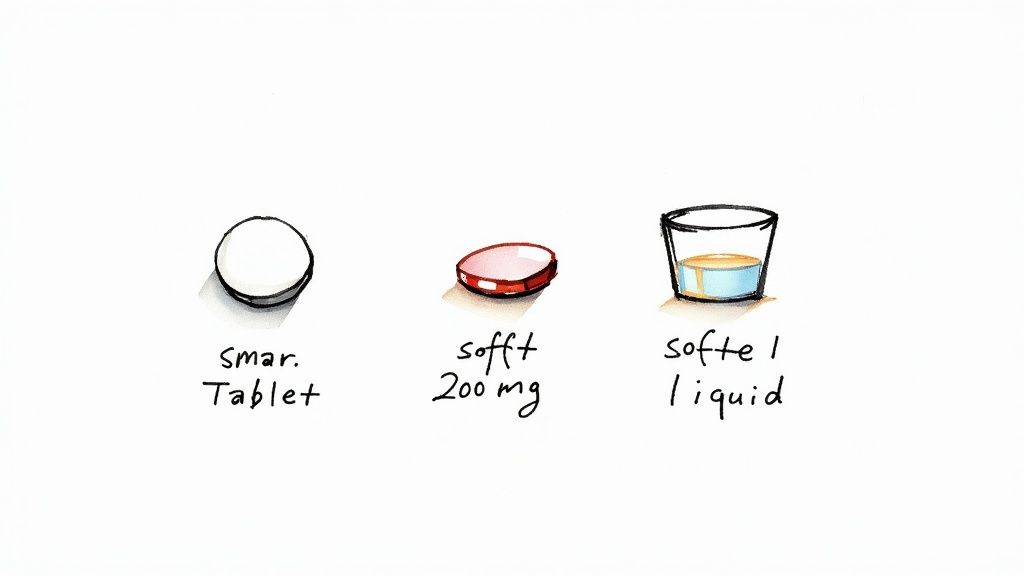
You’ll find ibuprofen, both the brand-name and generic kind, in a few different formats. Knowing the gentle pros and cons of each will help you pick one that's not just effective, but also easy and comfortable for them to take.
Let’s break down the common options you'll see on the shelf:
- Standard Tablets: These are the most common and usually the most budget-friendly. They're a solid choice for someone who has no trouble swallowing pills and needs relief for something predictable, like an arthritis flare-up.
- Coated Tablets or Caplets: The smooth coating on these makes them much easier to swallow. If your parent has ever said that regular tablets feel scratchy or "get stuck," this simple switch can feel like a huge relief.
- Liquid Gels (Liqui-Gels): You’ve probably seen the ads for Advil Liqui-Gels. Inside the soft capsule, the ibuprofen is already dissolved in liquid. The idea is that the body can absorb it faster, which is wonderful for sudden, sharp pain like a toothache where you want relief to arrive as quickly as possible.
- Liquid Suspensions: For seniors who find swallowing pills difficult or stressful (a condition called dysphagia), liquid ibuprofen is a true blessing. It removes the worry of choking and allows for very precise, gentle dosing.
Ibuprofen is a massive global market, with production hitting around 25.23 thousand tonnes in 2024. Standard tablets are the clear favorite, accounting for over 41.6% of sales in 2023 because they are so straightforward. This popularity helps explain why brands like Advil, built on easy-to-use tablets, are such household names. You can read more about these trends at Chemanalyst.com.
The "Start Low and Go Slow" Approach
For older adults, the guiding principle for any pain reliever is beautifully simple: use the lowest dose that helps, for the shortest time needed. As we age, our bodies process medications a bit differently, which can increase the chance of side effects.
A standard over-the-counter dose is 200mg. For mild to moderate pain—think a tension headache or a sore back from a happy afternoon in the garden—this is the perfect place to start. It’s always best to begin with a single 200mg tablet and wait patiently to see if it brings comfort before even thinking about taking more.
While doctors can prescribe higher doses of ibuprofen, this should only ever be done under their warm and direct guidance. They are the only ones who can truly weigh the benefits against the risks for your loved one.
The real goal is comfort, not a complete absence of pain. Starting with a lower dose honors the body's wisdom and puts safety first. It’s a gentler, more thoughtful way to care.
Before you make a final decision, a quick chat with a pharmacist or doctor is one of the kindest things you can do. They can look at your loved one's whole health story—including all their other medications and any conditions like kidney or heart concerns—to give you the safest recommendation.
That conversation is a small step that makes a huge impact. It turns a worried caregiver into a confident, peaceful health advocate.
Navigating Ibuprofen Safety Risks in Older Adults
When you're looking after an older loved one, their safety is everything. It’s easy to think of ibuprofen as completely harmless—it’s in almost every medicine cabinet, after all. But for older adults, even common medications need a more thoughtful touch. Their bodies simply process things differently now, so being extra mindful is a beautiful act of love.
This isn't about creating worry. It's about being a well-informed, proactive partner in their health. Understanding the potential risks of ibuprofen for seniors is the first step to using it safely, making sure it brings comfort without causing harm.
The Stomach and Gut Connection
One of the biggest things to be mindful of with ibuprofen, an NSAID, is its effect on the stomach. You've probably heard someone say it's "hard on the stomach," and this is especially true for older adults. Ibuprofen works by blocking the signals that cause pain, but in the process, it can also reduce the natural, protective lining of the stomach wall.
For a senior whose stomach lining may already be more delicate, this can lead to upset, heartburn, or even more serious issues like ulcers.
Thankfully, there’s a simple but powerful way to protect their stomach: always give ibuprofen with food or at least a small snack. Just think of a few crackers, a piece of toast, or a glass of milk as a soft cushion for the medicine, significantly lowering the risk of irritation.
Understanding Kidney and Heart Health
Our kidneys work hard our whole lives, and their function can naturally become more delicate as we age. Since ibuprofen is cleared from the body by the kidneys, taking it regularly can put extra strain on them. If your loved one already has kidney challenges, this is a really important conversation to have with their doctor.
Ibuprofen can also affect blood pressure and cause the body to hold on to more fluid. For someone already managing a heart condition or taking blood pressure medication, adding an NSAID into the mix requires a doctor's warm and careful guidance.
It's so important to see these medications as part of a bigger picture of health. A doctor can look at your loved one’s entire health story and help you decide if ibuprofen is the safest choice, or if another pain reliever might be a gentler fit.
This is exactly why keeping an open, honest line of communication with their healthcare team is one of the most loving things you can do. You see what’s happening at home, and sharing those observations helps the doctor make the best possible recommendations for their care.
Potential Medication Interactions
Many older adults take multiple medications to stay healthy, and it can be a real balancing act. Ibuprofen can interact with some very common prescriptions, which is why having their doctor or pharmacist review all their medications is an absolute must.
Here are a few common examples of medicines that need a careful look when paired with ibuprofen:
- Blood thinners (like warfarin): Taking ibuprofen with these can increase the risk of bleeding, so a doctor’s approval is essential.
- Blood pressure medications: Ibuprofen can sometimes make these medicines a little less effective.
- Certain antidepressants (SSRIs): Combining these with ibuprofen can slightly raise the risk of stomach bleeding.
- Low-dose aspirin: For a senior taking aspirin to protect their heart, ibuprofen can sometimes interfere with its life-saving effects.
This list isn't meant to be scary; it's meant to show the power of teamwork. Your pharmacist is one of your best allies—they can quickly check for potential interactions and give you clear, kind advice.
A Gentle and Proactive Approach to Care
Navigating these risks doesn't mean ibuprofen is off-limits. It just means we approach it with more awareness and care. The difference between Advil vs ibuprofen doesn't matter here; these safety considerations apply to the active ingredient itself, no matter which box it comes in.
Think of it this way: just as you’d check a walkway for tripping hazards for your loved one, you’re also clearing the path for their medication to work safely. You're looking ahead with a loving heart.
The most important takeaway is that you are in control of these safety measures. By making sure ibuprofen is taken with food, keeping the doctor in the loop, and asking the pharmacist questions, you create a circle of protection around the person you care for. Your watchfulness is the most powerful tool you have.
Making a Cost-Effective Choice for Your Family
When you're managing a household budget, especially while caring for a loved one, every little bit helps. The cost of over-the-counter medications can really add up over time, so let's talk about one of the most practical differences between Advil and generic ibuprofen: the price tag.
You've probably noticed it yourself—the generic ibuprofen is almost always much more affordable than the brand-name Advil box sitting right next to it. This can be a huge relief for caregivers who buy pain relievers often. But it’s only natural to wonder: am I giving up quality for a lower price?
Does a Lower Price Mean Less Effective?
Let's put that worry to rest right away: absolutely not. The U.S. Food and Drug Administration (FDA) has incredibly high standards for all generic drugs. Before a generic version can be sold, it has to prove that it has the exact same active ingredient, strength, and form as its brand-name partner.
This means a 200mg generic ibuprofen tablet has the same gentle, pain-fighting ingredient and power as a 200mg Advil tablet. You are not cutting corners on care by choosing the more budget-friendly option. You are simply making a smart, caring choice.
So why the price difference? It really just comes down to business. Brands like Advil have to cover the initial costs of research, development, and big advertising campaigns. The brand's market value reflects this, hitting an estimated $21.01 billion in 2023, while the entire ibuprofen market was valued at $1.46 billion in 2024. You can read more about the growth of the ibuprofen market on straitsresearch.com.
Choosing generic ibuprofen isn’t about being cheap; it's about being a thoughtful, informed consumer of healthcare. It allows you to provide the exact same effective relief while freeing up resources for other important parts of your loved one's care.
Practical Tips for Saving Money
Next time you’re at the pharmacy, don’t hesitate to ask the pharmacist about the generic options. They are a wonderful, kind resource and can confirm that the store brand offers the same medical benefit you’re looking for.
It's also a great idea to check with your insurance provider. Some plans cover generic medications with a lower co-pay than brand-name drugs, which can lead to even more savings for your family.
Making a cost-effective choice is a compassionate part of caregiving. By reaching for the store-brand bottle of ibuprofen, you’re providing the same quality of care while being a thoughtful steward of your family’s finances. That's a decision you can always feel good about.
A Practical Medication Guide for Caregivers
As a caregiver, you're juggling a million things with a loving heart, and managing medications is one of the most important. It’s easy to feel overwhelmed, but you're not in this alone. This guide is designed to give you some simple, real-world tools to handle medication safely, reducing your stress and letting you focus on what matters most: your loved one.
Understanding the difference between Advil and ibuprofen is a great start, but how you give the medicine is what truly keeps them safe and comfortable. Let's walk through a few simple habits that can make a world of difference.
Creating a Simple Medication Log
One of the kindest things you can do for yourself and your loved one is to start a simple medication log. It doesn't have to be fancy—a small notebook or a note on your phone is perfect. This little habit is your best friend in preventing accidental double-dosing, a mistake that's so easy to make when you’re tired and busy.
Every time you give a dose of ibuprofen, just quickly jot down:
- The time it was given: This helps you keep track of the crucial 4-6 hour window between doses.
- The dosage: Was it one 200mg tablet? Or a different amount guided by the doctor?
- Taken with food: A quick "yes" reinforces the golden rule of always taking ibuprofen with a snack to protect their stomach.
Imagine another family member steps in to help. With this log, they can see exactly what’s been given, and there’s no confusion or worry. It’s a simple tool for creating shared peace of mind.
Setting Gentle and Effective Reminders
Don't try to rely on memory alone; you have enough on your mind. Let your phone be your gentle helper. Setting a recurring alarm is a wonderful way to build a consistent and reliable routine for medication times.
For families juggling care, there are also apps designed specifically to help everyone stay connected. If you need a simple way to manage schedules and keep everyone in the loop, our guide to the best caregiver apps for Android might be a warm and helpful resource. These tools can send reminders to multiple people, helping to share the load with love.
This decision tree helps visualize when it makes sense to reach for brand-name Advil versus a generic ibuprofen.
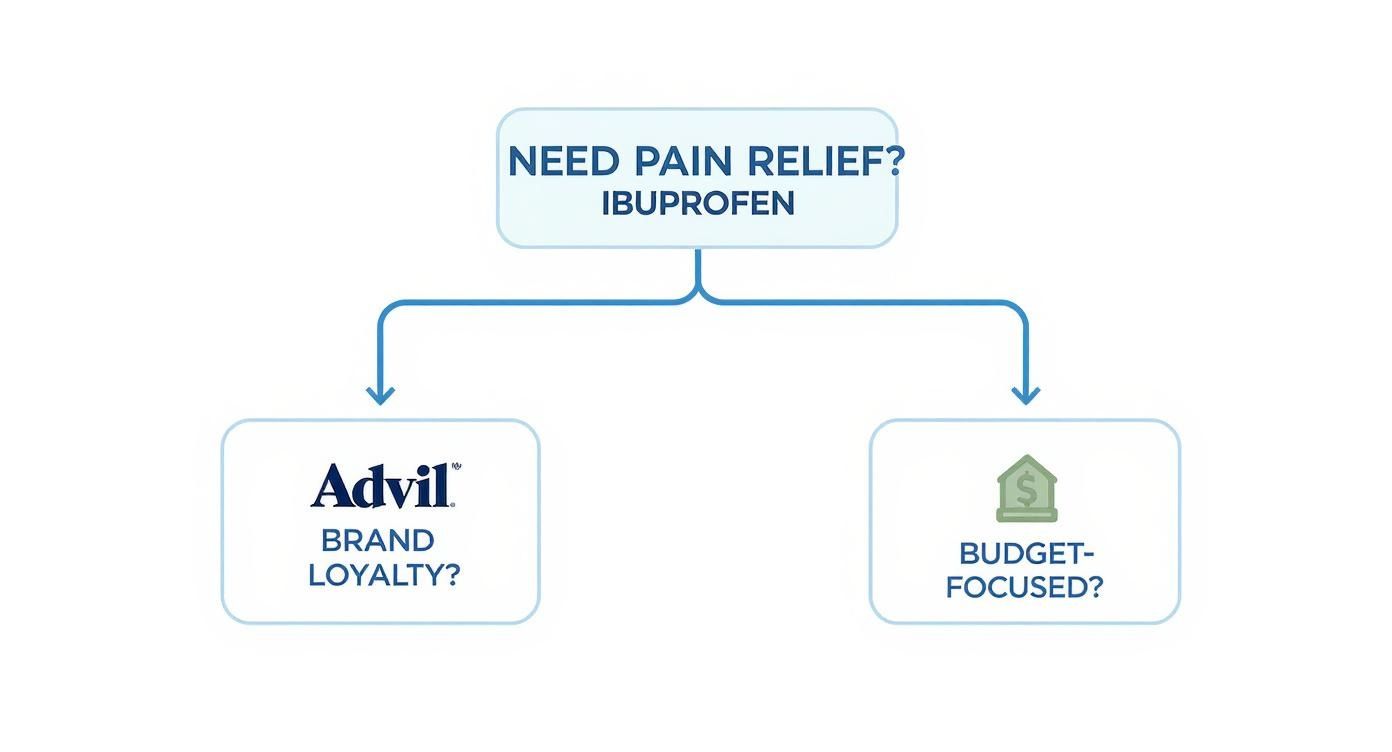
As you can see, while the active ingredient is identical, the choice often boils down to practical factors like cost, formulation preference, or simple brand trust.
Recognizing Red Flag Symptoms
You are their first line of defense. Your loving observation and intuition are invaluable. While ibuprofen is generally safe when used as directed for short periods, it’s vital to know which symptoms are just minor side effects and which are "red flags" that need a doctor's attention. Always trust your heart—if something feels wrong, it's always worth a phone call.
Here’s a quick-reference table to help you spot potential warning signs when a loved one is taking ibuprofen.
When to Call the Doctor: Red Flag Symptoms
| Symptom to Watch For | What It Could Mean | Immediate Action |
|---|---|---|
| New or worsening stomach pain | This could signal stomach irritation, or something more serious like an ulcer. | Stop giving ibuprofen and call their doctor for warm guidance. |
| Swelling in the ankles or feet | This could be a sign that the body is holding onto extra fluid, which can strain the heart and kidneys. | Contact their healthcare provider to report the symptom. |
| Dark, tarry stools or vomiting blood | These are urgent signs of possible bleeding in the digestive tract. | This is an emergency. Please seek immediate medical attention. |
| A new skin rash or hives | This might be an allergic reaction to an ingredient in the medication. | Stop giving the medicine and consult their doctor or pharmacist. |
Being aware of what to look for transforms worry into confident action. Just by knowing these signs, you are proactively protecting the person you care for.
One final hopeful tip: use your phone to snap a picture of all their medication boxes. Having a quick visual of the exact dosages and brand names is incredibly helpful if you have to call a pharmacist or during a doctor’s visit. Every small step toward organization is a step toward peace on your caregiving journey.
Common Questions About Ibuprofen for Seniors
When you're helping manage a loved one's health, asking questions is a sign of great care. They show you're paying close attention. Let's walk through some of the most common concerns caregivers have about ibuprofen, so you can feel more confident and peaceful in the decisions you make.
Is Advil Stronger or Faster Than Generic Ibuprofen?
This is a great question. For the most part, no. The active ingredient is what matters most. A 200mg Advil tablet has the exact same dose of medicine as a 200mg generic ibuprofen tablet, so their strength is identical.
However, some brand-name products, like Advil's liquid-filled capsules, are designed to dissolve more quickly. This can sometimes lead to slightly faster relief, which might be nice for a sudden, sharp pain. But the overall pain-relieving power comes from the ibuprofen itself, not the brand on the box.
Can Seniors on Blood Pressure Medication Take Ibuprofen?
This is a very important question, and the answer must come from their doctor. Ibuprofen can sometimes interfere with how well certain blood pressure medications work. It can also cause the body to hold onto fluid, which can sometimes raise blood pressure.
Before giving a loved one ibuprofen, especially if they are taking other medications, a quick call to their doctor or pharmacist is the safest and most loving path forward. It’s a simple step that protects their health.
Trusting your healthcare team is a powerful act of care. They can see the whole picture and help you find the safest path to pain relief, ensuring all medications work together in harmony.
How Long Can a Senior Safely Take Ibuprofen?
It's best to think of ibuprofen as a helper for short-term relief—a few days at most for minor aches and pains. Using it every day for a long time, unless specifically guided by a doctor, raises the risk of side effects like stomach irritation or kidney problems, especially for older adults.
If the pain continues for more than 10 days, it’s a gentle sign from the body that it's time to check in with a doctor. They can help find the real cause of the pain and create a safer, more sustainable plan for comfort.
Connecting with others who understand your journey can also make a world of difference. For more stories and practical advice from fellow caregivers, you are always welcome to explore our community on the DontForgetDad blog.
Asking these questions is one of the most important things you can do. Your care and attention turn everyday choices into acts of profound love. As a small, actionable step, take a moment today to check your loved one’s medicine cabinet and make a note to ask the pharmacist about generic options on your next trip. This simple act is a beautiful way to care for them and for your family’s budget.
Managing a parent’s medications?
Don’t Forget Dad alerts the whole family the moment a dose is missed — no more second-guessing whether Dad took his ibuprofen. Free on iOS and Android.
At Don’tForgetDad, we help families coordinate care with gentle reminders and shared peace of mind. Learn how our simple tool can support your caregiving journey at https://dontforgetdad.com.